Saddleback Caterpillar Moth

Saddleback Caterpillar Moth

Acharia stimulea

Daily sighting probability ~10% · With luck
at Shenandoah National Park

In 3 days ~20% in a week ~40%

15 Verified sightings at Shenandoah National Park From 2019 to 2026
66 In all 4 parks
September Best month
☀️ Diurnal When it's spotted

About the Saddleback Caterpillar Moth

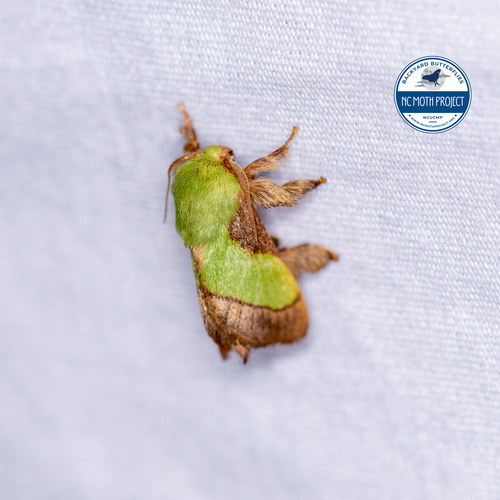
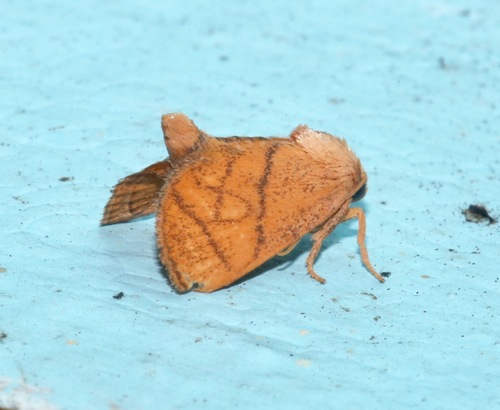
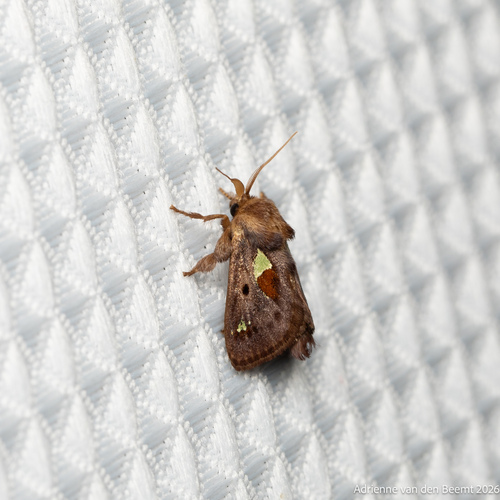
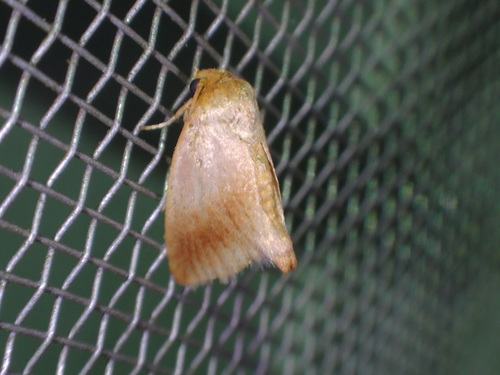
The saddleback caterpillar (Acharia stimulea, formerly Sibine stimulea) is the larva of a species of moth native to eastern North America. It is also found in Mexico. The species belongs to the family of slug caterpillars, Limacodidae.

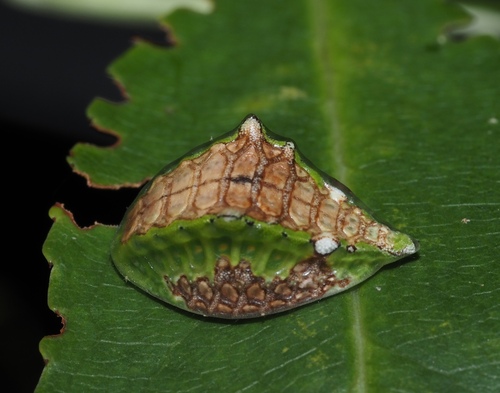
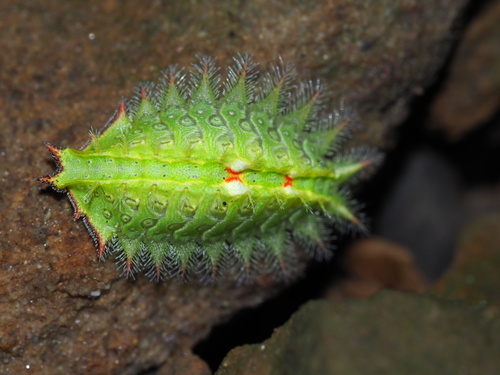
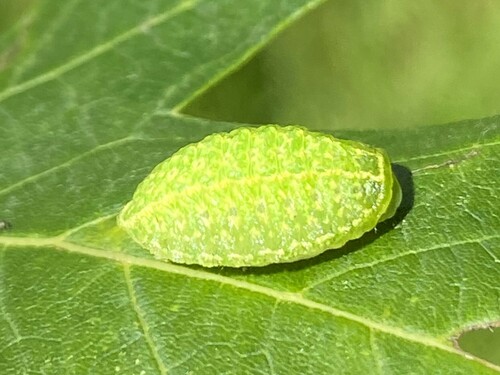
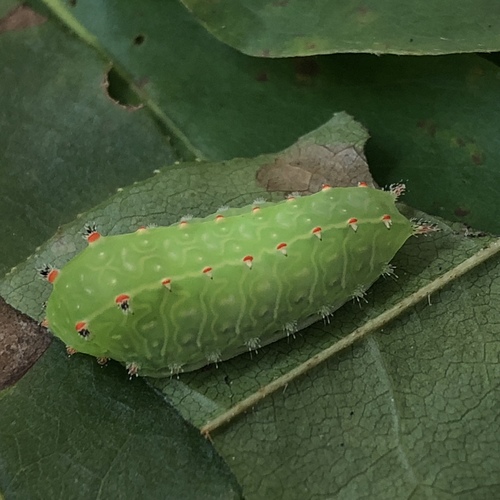
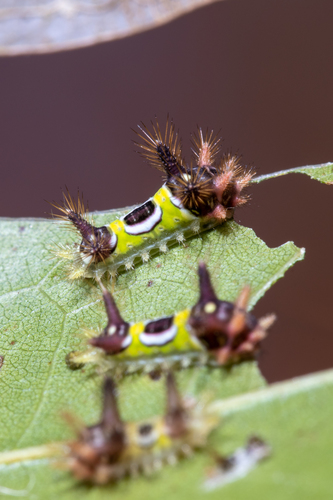
The larva (caterpillar) is primarily green with brown at both ends and a prominent white-ringed brown dot in the center which resembles a saddle. It has a pair of fleshy horns at both ends. These and most of the rest of the body bear urticating hairs that secrete an irritating venom. Contact with the hairs causes a painful, swollen rash and sometimes nausea in humans. In some cases, more severe reactions to the venom can occur, including a systemic condition called erucism or acute urticaria, for which severe symptoms may include migraines, gastrointestinal symptoms, asthma complications, anaphylactic shock, rupturing of erythrocytes, and hemorrhaging. The hairs should be removed from the skin immediately to prevent more venom spread. The cocoon may also have irritating hairs, and hairs from the larva can fall on surrounding objects.

The larvae feed on plants. In Florida and Alabama in the United States, it feeds on palms such as the Manila palm (Adonidia merrillii). Wikipedia →
Global Distribution

Parks Where Found

# Park Country Daily sighting probability
1 Great Smoky Mountains National Park 🇺🇸 United States
~10%
2 Point Pelee National Park 🇨🇦 Canada
~10%
3 Shenandoah National Park 🇺🇸 United States
~10%
4 Everglades National Park 🇺🇸 United States
<5%

Cities Where Found

# City Country Daily sighting probability
1 Baltimore 🇺🇸 United States
~10%
2 Philadelphia 🇺🇸 United States
<5%
3 Washington 🇺🇸 United States
<5%
4 Miami 🇺🇸 United States
<5%
5 New York City 🇺🇸 United States
<5%

Before you go

What are the chances of seeing a Saddleback Caterpillar Moth in Shenandoah National Park?

With luck

About 10% of wildlife watchers report a Saddleback Caterpillar Moth sighting in Shenandoah National Park on a given day, based on 15 verified sightings from GBIF citizen-science data from 2019 to 2026. It is the 251st most-seen of the 723 insects we can rate there. Over three days the chance rises to about 20%, and over a week to about 40%, if each day is a fresh chance.

When is the best time to see a Saddleback Caterpillar Moth in Shenandoah National Park?

September

In that month about 20% of wildlife watchers report a Saddleback Caterpillar Moth in Shenandoah National Park on a given day, against under 5% in November to July, the lowest months.

What time of day is best to see a Saddleback Caterpillar Moth?

Between 9 am and noon

Across all the parks we cover, that three-hour window holds the most Saddleback Caterpillar Moth sightings with a recorded time, and about 7 in 10 of them come between 6 am and 6 pm: it is a daytime animal.

Is Shenandoah National Park the best place to see a Saddleback Caterpillar Moth?

Among the best

Of the 4 parks where we can rate Saddleback Caterpillar Moth sightings, Shenandoah National Park ranks 3rd at about 10%, level with the leaders once rounded. The best odds are in Great Smoky Mountains National Park (United States, about 10%) and Point Pelee National Park (Canada, about 10%).

Which relatives of the Saddleback Caterpillar Moth live in Shenandoah National Park?

Same family: Limacodidae

The closest relatives of the Saddleback Caterpillar Moth that you can see in Shenandoah National Park (family Limacodidae, Slug Caterpillar Moths) are Skiff Moth (about 10%), Crowned Slug Moth (about 10%) and Smaller Parasa Moth (about 10%), with each one's daily chance of a sighting.

Where does the Saddleback Caterpillar Moth sighting chance come from?

GBIF citizen-science records

It is estimated from how often the Saddleback Caterpillar Moth is recorded against all the insects logged in Shenandoah National Park (15 verified sightings from 2019 to 2026), calibrated against known sighting rates. Figures are rounded to the nearest 10% because citizen-science data supports honest approximations, not decimals, and months with records from fewer than five people show "—". How it works.

← Back to Shenandoah National Park