

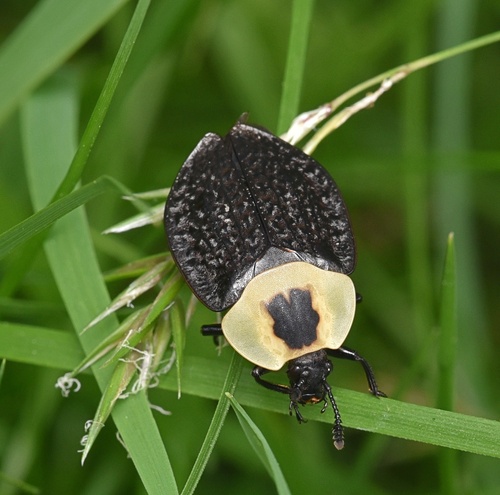
White-Fringed Weevil

White-Fringed Weevil

Naupactus leucoloma

Daily sighting probability ~10% · With luck
at Shenandoah National Park

In 3 days ~20% in a week ~40%

12 Verified sightings at Shenandoah National Park From 2019 to 2026
17 In all 2 parks
September Best month
☀️ Diurnal When it's spotted

About the White-Fringed Weevil

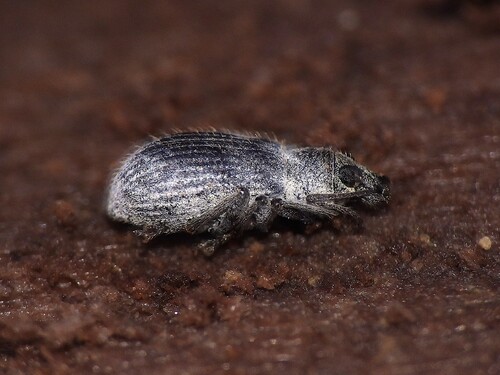
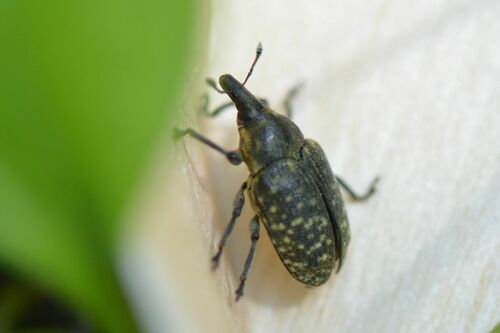
Naupactus leucoloma is a species of broad-nosed weevil in the beetle family Curculionidae. The adult of Naupactus leucoloma is dark grey in colour with two lighter-coloured bands running longitudinally down its thorax and head. They are between 8-12mm long, and 4mm wide at the abdomen. The body of N. leucoloma is covered with hairs that are longer on the forewing. Wings of N. leucoloma vary greatly in size between individual specimens, but the forewings are fused, thus making the adults unable to fly. Males are not known to exist with N. leucoloma outside of their native range, and all individuals are females in the naturalised range. Reproduction is through parthenogenesis. Males of N. leucoloma are rare and only occur in the native range of South America, but also may be extinct.

The larvae of N. leucoloma are about 12mm long, and occur in the soil. They have no legs similar to other species of weevils, their heads are partially retracted into the thorax, and they are yellowish white in colour, with black mandibles protruding from the head.

Naupactus leucoloma is native to much of Argentina, from the Jujay and Salta provinces northwest, right down... Wikipedia →

Global Distribution

Parks Where Found

# Park Country Daily sighting probability
1 Shenandoah National Park 🇺🇸 United States
~10%
2 Great Smoky Mountains National Park 🇺🇸 United States
<5%

Cities Where Found

# City Country Daily sighting probability
1 Hobart 🇦🇺 Australia
~10%
2 Auckland 🇳🇿 New Zealand
~10%
3 Santiago 🇨🇱 Chile
~10%
4 Baltimore 🇺🇸 United States
~10%
5 Melbourne 🇦🇺 Australia
~10%
6 Washington 🇺🇸 United States
<5%
7 Buenos Aires 🇦🇷 Argentina
<5%
8 Brisbane 🇦🇺 Australia
<5%
9 Philadelphia 🇺🇸 United States
<5%
10 Sydney 🇦🇺 Australia
<5%

Before you go

What are the chances of seeing a White-Fringed Weevil in Shenandoah National Park?

With luck

About 10% of wildlife watchers report a White-Fringed Weevil sighting in Shenandoah National Park on a given day, based on 12 verified sightings from GBIF citizen-science data from 2019 to 2026. It is the 325th most-seen of the 723 insects we can rate there. Over three days the chance rises to about 20%, and over a week to about 40%, if each day is a fresh chance.

When is the best time to see a White-Fringed Weevil in Shenandoah National Park?

September

In that month about 20% of wildlife watchers report a White-Fringed Weevil in Shenandoah National Park on a given day, against under 5% in October to August, the lowest months.

What time of day is best to see a White-Fringed Weevil?

Between 4 and 7 pm

Across all the parks we cover, that three-hour window holds the most White-Fringed Weevil sightings with a recorded time, and about 8 in 10 of them come between 6 am and 6 pm: it is a daytime animal.

Is Shenandoah National Park the best place to see a White-Fringed Weevil?

Yes

Of the 2 parks where we can rate White-Fringed Weevil sightings, Shenandoah National Park has the highest daily chance: about 10%. Next come Great Smoky Mountains National Park (United States, under 5%).

Which relatives of the White-Fringed Weevil live in Shenandoah National Park?

Same family: Curculionidae

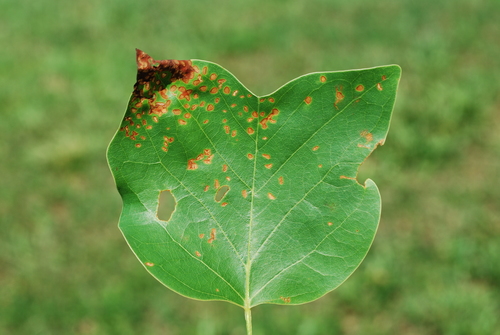
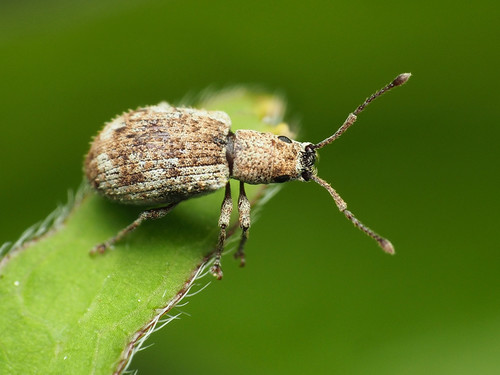
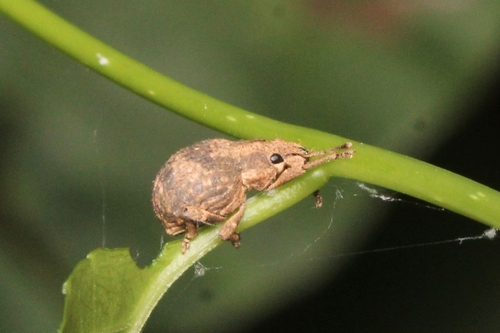
The closest relatives of the White-Fringed Weevil that you can see in Shenandoah National Park (family Curculionidae, True Weevils) are Yellow Poplar Weevil (about 10%), Asian Oak Weevil (about 10%) and Peach Root Weevil (about 10%), with each one's daily chance of a sighting.

Where does the White-Fringed Weevil sighting chance come from?

GBIF citizen-science records

It is estimated from how often the White-Fringed Weevil is recorded against all the insects logged in Shenandoah National Park (12 verified sightings from 2019 to 2026), calibrated against known sighting rates. Figures are rounded to the nearest 10% because citizen-science data supports honest approximations, not decimals, and months with records from fewer than five people show "—". How it works.

← Back to Shenandoah National Park