Beaded Chestnut

Beaded Chestnut

Agrochola lychnidis

Daily sighting probability ~10% · With luck
at Sierra de Guadarrama National Park

In 3 days ~10% in a week ~30%

32 Verified sightings at Sierra de Guadarrama National Park From 2019 to 2026
32 In 1 park
November Best month
🌙 Nocturnal When it's spotted

About the Beaded Chestnut

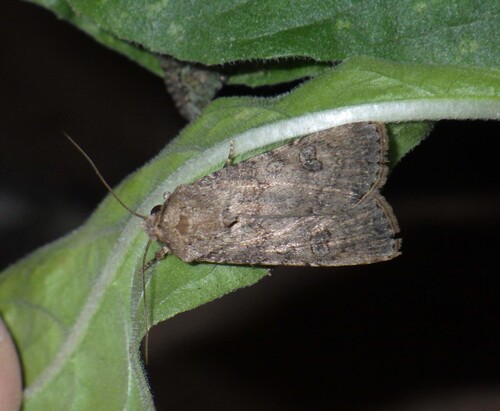
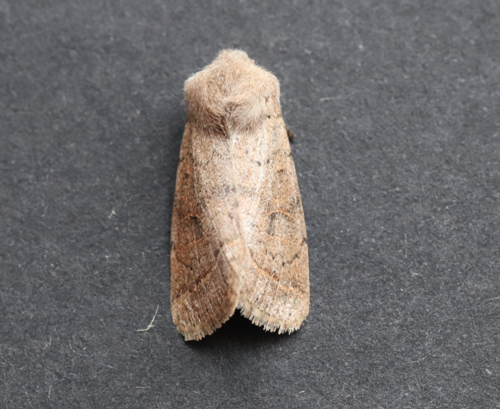
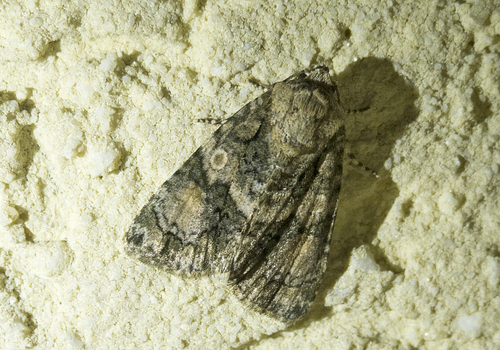
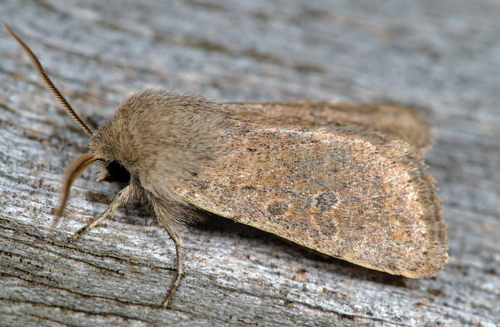
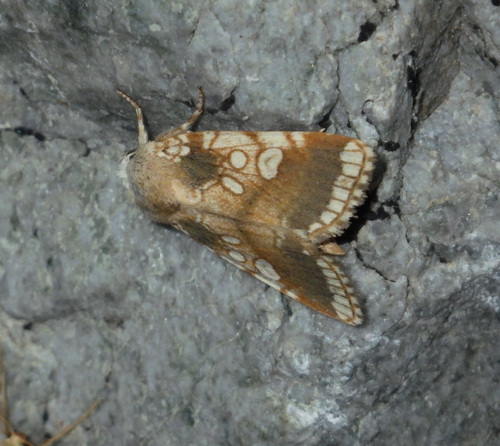
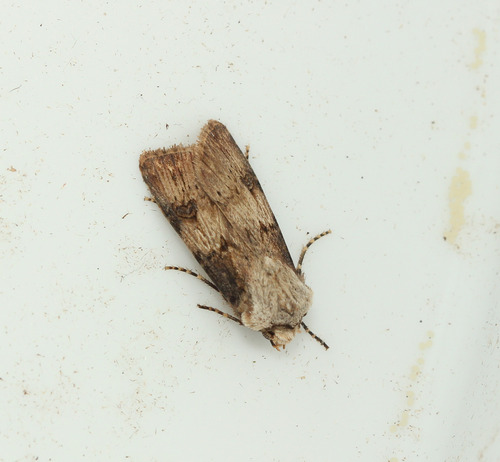
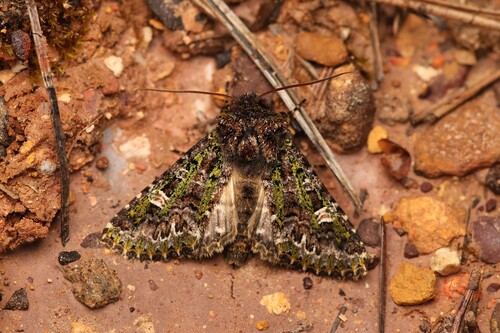
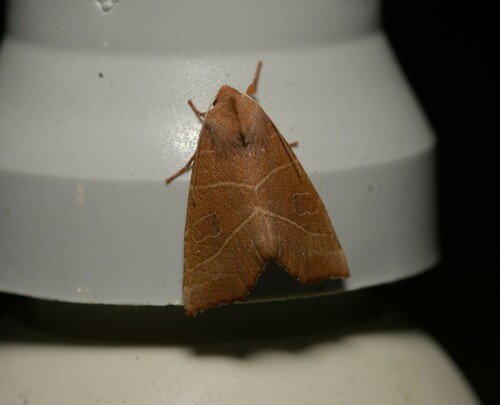
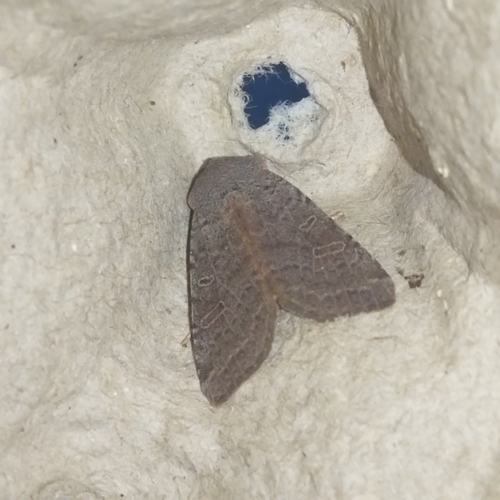
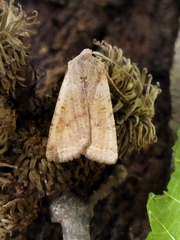
Agrochola lychnidis, the beaded chestnut, is a moth of the family Noctuidae. The species was first described by Michael Denis and Ignaz Schiffermüller in 1775. It is distributed throughout the whole of Europe from Ireland to the Urals. It also occurs in western North Africa and Asia Minor.

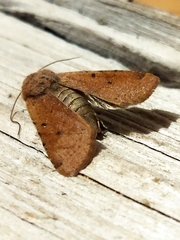
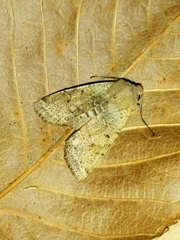
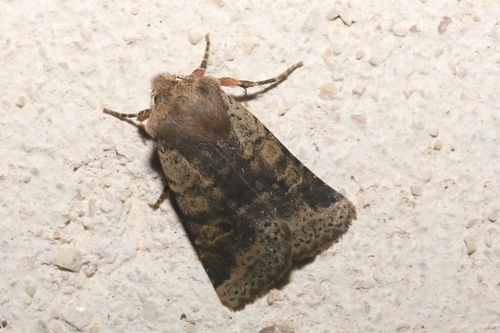
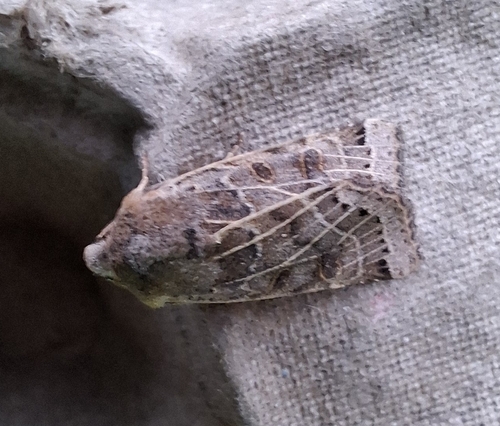
The wingspan is 30–35 mm. Forewing bright rufous or reddish ochreous with the veins paler, often dusted with darker; inner and outer lines double, dark, with the centre rufous, often very faint, but always marked by black spots on costa; submarginal line preceded by a row of dark lunules between the veins and by a dark bar at costa; median shade distinct; stigmata blackish, distinct, especially the narrow oblique orbicular; hindwing dark grey, the fringe rufous. This species varies in colour exceedingly; the brighter rufous specimens, with pale veins, represent typical lychnidis F.; the duller brownish forms, also with pale veins, are pistacina F.; - rubetra Esper the bright rufous unicolorous form with all markings indistinct, and the costal edge often conspicuously white at middle, of which ferrea Haw. is an offshoot, having only the 4 costal blotches and the stigmata dark; the paler, reddish ochreous, unicolorous form is obsoleta Tutt; of the forms without red colouring, serina Esp. has the markings plain, while in pallida Tutt they are obscure, the ground colour being greyish ochreous or yellowish;of the brownish rufous or brownish grey forms, brunnea Tutt is a more sombre form than pistacina without pale nervures; canaria Esp. is a form in which the lines and veins and edges of the stigmata are dull fulvous and the ground colour blackish, as a rule much darker in the male than in the female; dark specimens like these also occur but with the light shades only dull brown and the dark interspaces not so black; caerulescens Calb. from Italy, is a bluish or lilac grey insect; this form also occurs in Asia Minor; a large number of examples from Amasia, especially females, agree exactly, while the rest, mainly males become greyish luteous, as in serina, with the markings varying in intensity".

When newly laid the egg is yellowish, but changes to olive-brown. The larva is green inclining to yellowish, freckled with greyish, and dotted with whitish; there are three fine whitish lines along the dorsum, and a broad white lateral stripe. Wikipedia →
Global Distribution

Parks Where Found

# Park Country Daily sighting probability
1 Sierra de Guadarrama National Park 🇪🇸 Spain
~10%

More parks will be added in future updates.

Cities Where Found

# City Country Daily sighting probability
1 London 🇬🇧 United Kingdom
~10%
2 Vienna 🇦🇹 Austria
<5%

Before you go

What are the chances of seeing a Beaded Chestnut in Sierra de Guadarrama National Park?

With luck

About 10% of wildlife watchers report a Beaded Chestnut sighting in Sierra de Guadarrama National Park on a given day, based on 32 verified sightings from GBIF citizen-science data from 2019 to 2026. It is the 281st most-seen of the 597 insects we can rate there. Over three days the chance rises to about 10%, and over a week to about 30%, if each day is a fresh chance.

When is the best time to see a Beaded Chestnut in Sierra de Guadarrama National Park?

November

In that month about 20% of wildlife watchers report a Beaded Chestnut in Sierra de Guadarrama National Park on a given day, against under 5% in January to September, the lowest months. That is one of Sierra de Guadarrama National Park's wettest months, with about 110 mm of rain against 20 mm in July.

What time of day is best to see a Beaded Chestnut?

Between 8 and 11 pm

Across all the parks we cover, that three-hour window holds the most Beaded Chestnut sightings with a recorded time, and about 8 in 10 of them come between 6 pm and 6 am: it is mostly seen at night.

Where else can you see a Beaded Chestnut?

Only Sierra de Guadarrama National Park, in our data

Sierra de Guadarrama National Park is the only park on Wallace's Line with enough records to rate Beaded Chestnut sightings: about 10% of wildlife watchers there report one on a given day.

Which relatives of the Beaded Chestnut live in Sierra de Guadarrama National Park?

Same genus: Agrochola

The closest relatives of the Beaded Chestnut that you can see in Sierra de Guadarrama National Park (genus Agrochola) are Agrochola ruticilla (about 10%) and Lunar Underwing (about 10%), with each one's daily chance of a sighting.

Where does the Beaded Chestnut sighting chance come from?

GBIF citizen-science records

It is estimated from how often the Beaded Chestnut is recorded against all the insects logged in Sierra de Guadarrama National Park (32 verified sightings from 2019 to 2026), calibrated against known sighting rates. Figures are rounded to the nearest 10% because citizen-science data supports honest approximations, not decimals, and months with records from fewer than five people show "—". How it works.

← Back to Sierra de Guadarrama National Park