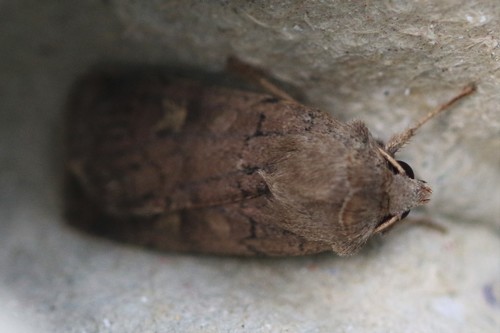
Black Rustic

Black Rustic

Aporophyla nigra

Daily sighting probability ~10% · With luck
at Sierra de Guadarrama National Park

In 3 days ~20% in a week ~30%

17 Verified sightings at Sierra de Guadarrama National Park From 2019 to 2026
23 In all 2 parks
November Best month
☀️🌙 Day & Night When it's spotted

About the Black Rustic

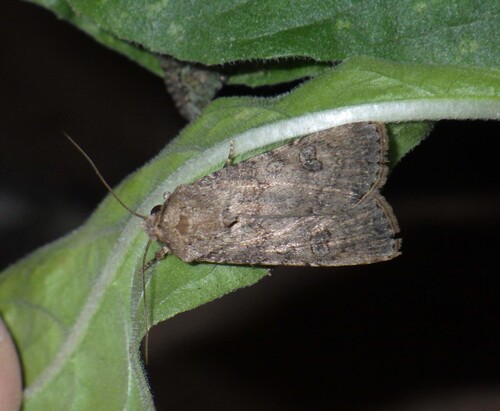
Aporophyla nigra, the black rustic, is a moth of the family Noctuidae. The species was first described by Adrian Hardy Haworth in 1809. It is found from North Africa, through southern and central Europe to Anatolia, in the north it is found up to Scotland and southern Norway. It is also found in the Caucasus, Israel and Lebanon.

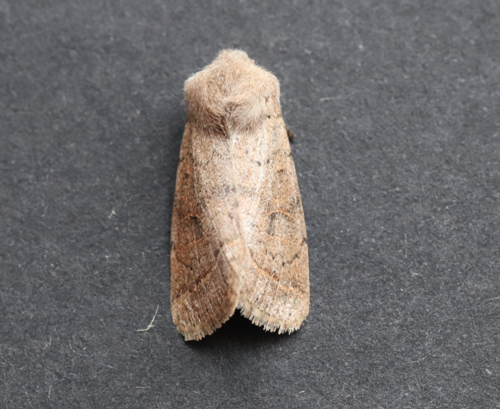
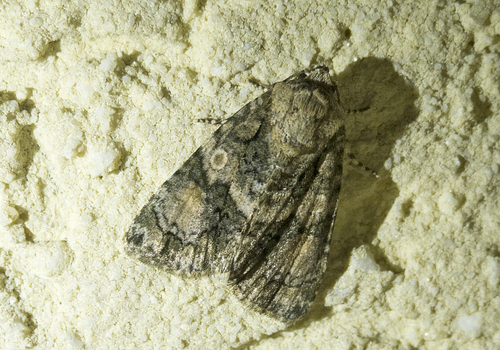
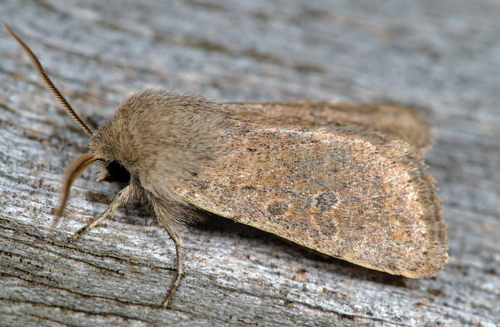
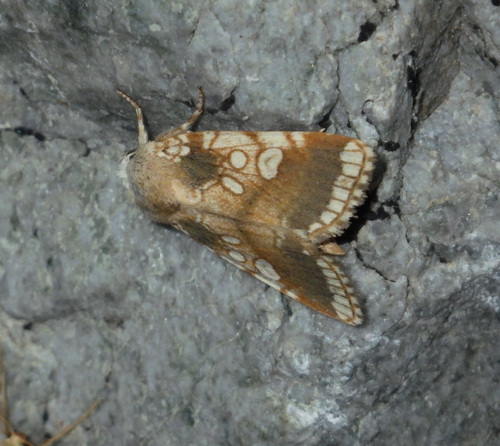
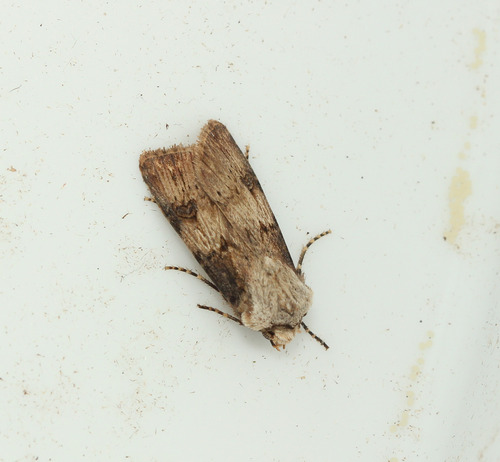
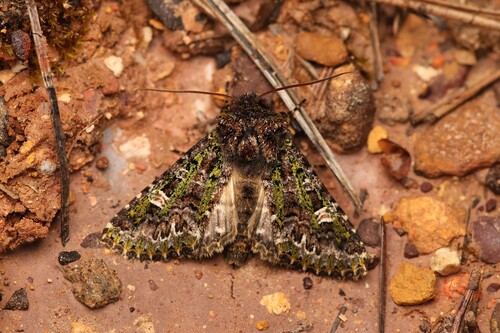
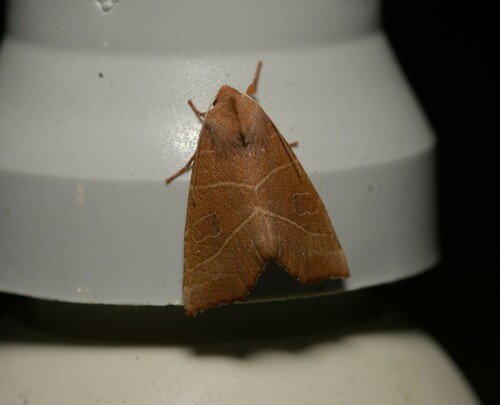
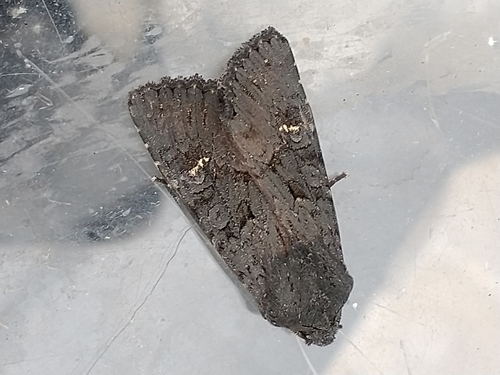
The wingspan is 40–48 mm. Forewing deep black, the outer area beyond outer line often appearing brown; the inner and outer lines and the edges of stigmata deeper black; outer edge of reniform marked with yellowish spots; subterminal line rarely visible; hindwing in male white, sometimes with veins and termen clouded with fuscous, in female smoky grey brown, more whitish towards base; — ab. seileri Fuchs includes the intenser black forms without any trace of brown.

Adults are on wing in September and October and sometimes also in December and January. Larva yellow green, with three well-marked red dorsal lines and a similar coloured lateral line; spiracles white; or green with the dorsal lines confluent, brown red, divided finely by white; the brown-red subdorsal and spiracular lines confluent into a broad band, with a yellow... Wikipedia →

Global Distribution

Parks Where Found

# Park Country Daily sighting probability
1 Snowdonia National Park 🇬🇧 United Kingdom
~10%
2 Sierra de Guadarrama National Park 🇪🇸 Spain
~10%

Cities Where Found

# City Country Daily sighting probability
1 Liverpool 🇬🇧 United Kingdom
~10%
2 London 🇬🇧 United Kingdom
~10%
3 Porto 🇵🇹 Portugal
~10%
4 Madrid 🇪🇸 Spain
~10%
5 Birmingham 🇬🇧 United Kingdom
<5%

Before you go

What are the chances of seeing a Black Rustic in Sierra de Guadarrama National Park?

With luck

About 10% of wildlife watchers report a Black Rustic sighting in Sierra de Guadarrama National Park on a given day, based on 17 verified sightings from GBIF citizen-science data from 2019 to 2026. It is the 207th most-seen of the 597 insects we can rate there. Over three days the chance rises to about 20%, and over a week to about 30%, if each day is a fresh chance.

When is the best time to see a Black Rustic in Sierra de Guadarrama National Park?

October and November

In those months about 20% of wildlife watchers report a Black Rustic in Sierra de Guadarrama National Park on a given day, against under 5% in January to September, the lowest months. Those are among Sierra de Guadarrama National Park's wettest months, with about 110 mm of rain a month against 20 mm in July.

What time of day is best to see a Black Rustic?

Between 9 pm and midnight

Across all the parks we cover, that three-hour window holds the most Black Rustic sightings with a recorded time, and about half of them come between 6 am and 6 pm: it is seen both by day and at night.

Is Sierra de Guadarrama National Park the best place to see a Black Rustic?

Among the best

Of the 2 parks where we can rate Black Rustic sightings, Sierra de Guadarrama National Park ranks 2nd at about 10%, level with the leaders once rounded. The best odds are in Snowdonia National Park (United Kingdom, about 10%).

Which relatives of the Black Rustic live in Sierra de Guadarrama National Park?

Same family: Noctuidae

The closest relatives of the Black Rustic that you can see in Sierra de Guadarrama National Park (family Noctuidae, Cutworm Moths and Allies) are Silver Υ (about 10%), Turnip Moth (about 10%) and Common Quaker (about 10%), with each one's daily chance of a sighting.

Where does the Black Rustic sighting chance come from?

GBIF citizen-science records

It is estimated from how often the Black Rustic is recorded against all the insects logged in Sierra de Guadarrama National Park (17 verified sightings from 2019 to 2026), calibrated against known sighting rates. Figures are rounded to the nearest 10% because citizen-science data supports honest approximations, not decimals, and months with records from fewer than five people show "—". How it works.

← Back to Sierra de Guadarrama National Park