The Streak

The Streak

Chesias legatella

Daily sighting probability <5% · Rare
at Sierra de Guadarrama National Park

In 3 days ~10% in a week ~30%

8 Verified sightings at Sierra de Guadarrama National Park From 2019 to 2026
16 In all 2 parks
October Best month
☀️🌙 Day & Night When it's spotted

About the The Streak

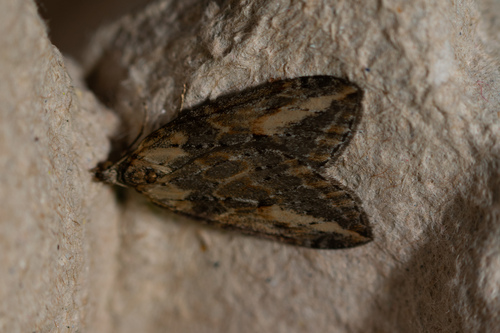
The streak (Chesias legatella) is a moth of the family Geometridae. It is found in northern and western Europe and north Africa. It is common in Britain, but local and confined to the north in Ireland. The species was first described by Michael Denis and Ignaz Schiffermüller in 1775.

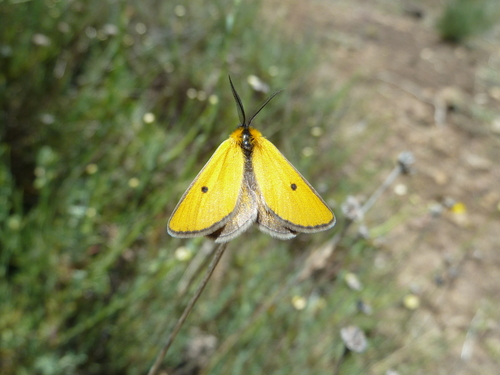
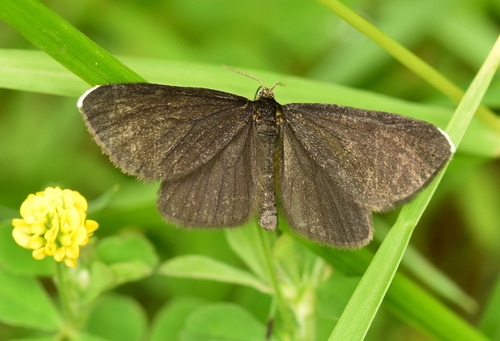
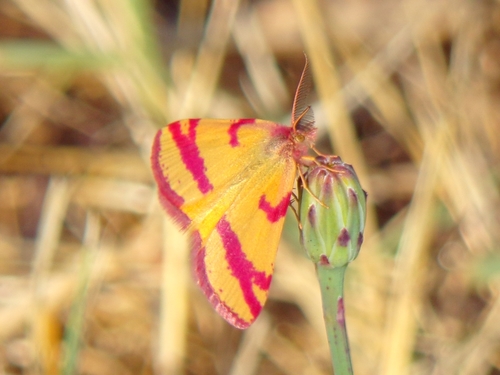
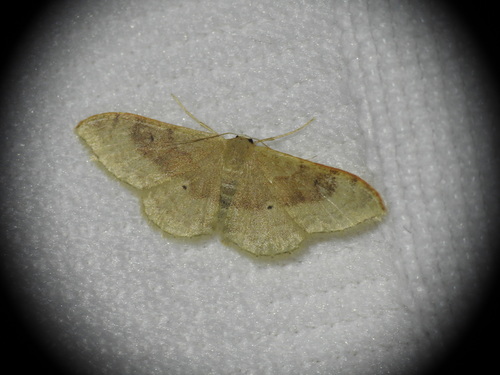
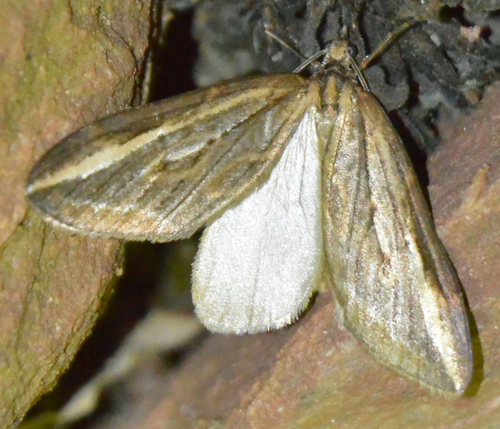
The species is quite variable, the forewings being buff or brown, but is always easily identified by the bold whitish apical streak which gives it its common name. The hindwings are pale grey or buff. The wingspan is 35–38 millimetres (1.4–1.5 in). See Prout

for a full description. The larva is usually dark green with darker, paler-edged dorsal line, a broad whitish or yellowish subdorsal. It has a conspicuous white lateral stripe and 3 white lines ventrally. The spiracles are red, ringed with black. It is adaptive to its environment, a yellow form being frequent on plants on which there is much bloom, while a much blackened form has been recorded from dry, stunted plants. The pupa is red-brown, dorsally rather darker, wings tinged with green.

The moth flies, usually at dusk, in September and October [1] and is sometimes attracted to light. The larva usually feeds on broom but has been recorded on yellow bush lupin. The species overwinters as an egg. The pupa is buried deeply in the ground without

a cocoon. ^The flight season refers to the British Isles. This may vary in other parts of the range. Wikipedia →
Global Distribution

Parks Where Found

# Park Country Daily sighting probability
1 Sierra de Guadarrama National Park 🇪🇸 Spain
<5%
2 Wadden Sea National Park 🇩🇪 Germany
<5%

Before you go

What are the chances of seeing a The Streak in Sierra de Guadarrama National Park?

Rare

Under 5% of wildlife watchers report a The Streak sighting in Sierra de Guadarrama National Park on a given day, based on 8 verified sightings from GBIF citizen-science data from 2019 to 2026. It is the 388th most-seen of the 597 insects we can rate there. Over three days the chance rises to about 10%, and over a week to about 30%, if each day is a fresh chance.

When is the best time to see a The Streak in Sierra de Guadarrama National Park?

September to November

In those months about 10% of wildlife watchers report a The Streak in Sierra de Guadarrama National Park on a given day, against under 5% in December to August, the lowest months.

What time of day is best to see a The Streak?

Between noon and 3 pm

Across all the parks we cover, that three-hour window holds the most The Streak sightings with a recorded time, and about 7 in 10 of them come between 6 am and 6 pm: it is seen both by day and at night.

Is Sierra de Guadarrama National Park the best place to see a The Streak?

Yes

Of the 2 parks where we can rate The Streak sightings, Sierra de Guadarrama National Park has the highest daily chance: under 5%. Next come Wadden Sea National Park (Germany, under 5%).

Where does the The Streak sighting chance come from?

GBIF citizen-science records

It is estimated from how often the The Streak is recorded against all the insects logged in Sierra de Guadarrama National Park (8 verified sightings from 2019 to 2026), calibrated against known sighting rates. Figures are rounded to the nearest 10% because citizen-science data supports honest approximations, not decimals, and months with records from fewer than five people show "—". How it works.

← Back to Sierra de Guadarrama National Park