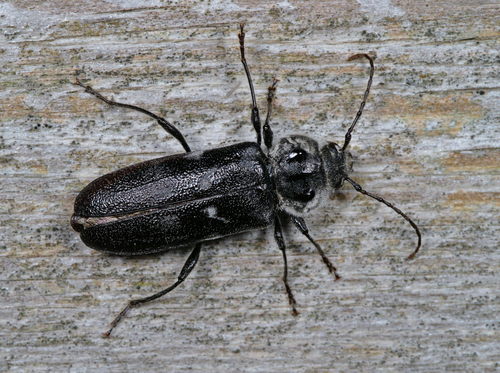
Two-Banded Longhorn Beetle

Two-Banded Longhorn Beetle

Rhagium bifasciatum

Daily sighting probability ~10% · With luck
at Sierra de Guadarrama National Park

In 3 days ~20% in a week ~30%

13 Verified sightings at Sierra de Guadarrama National Park From 2019 to 2026
247 In all 6 parks
June Best month
☀️ Diurnal When it's spotted

About the Two-Banded Longhorn Beetle

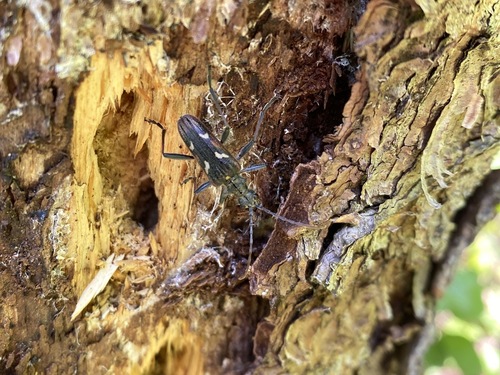
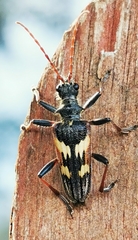
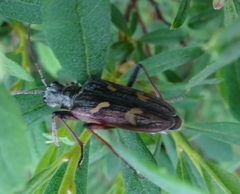
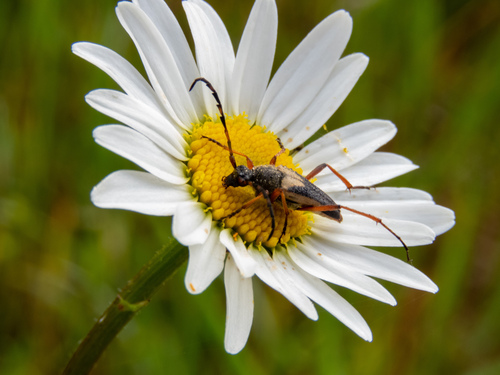
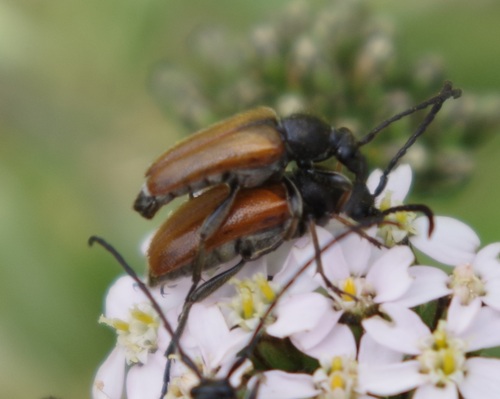
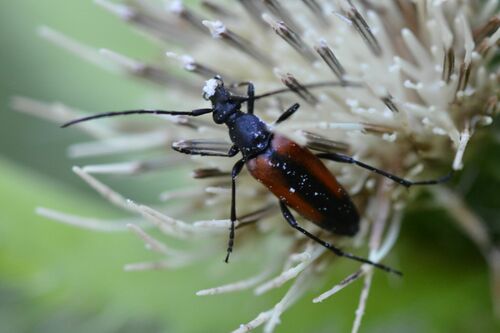
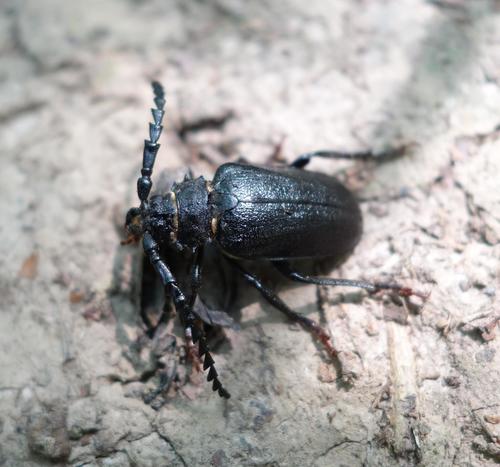
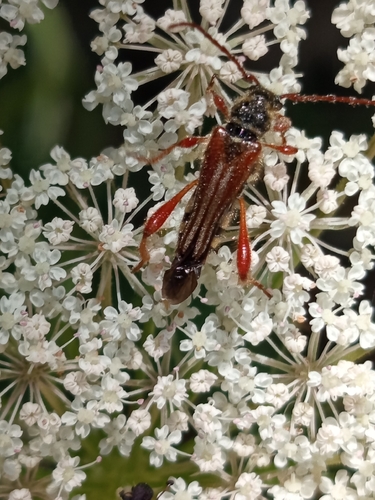
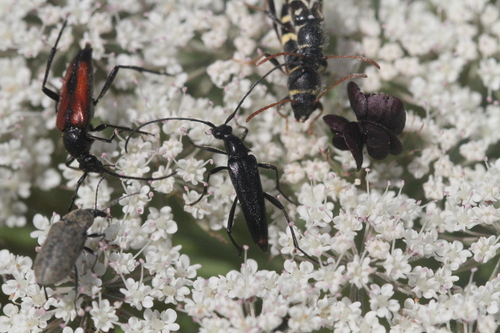
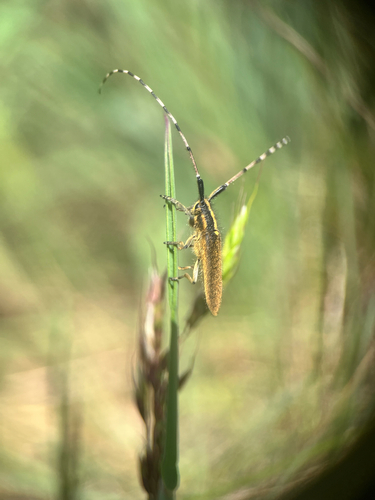
Rhagium bifasciatum, sometimes called the two-banded longhorn beetle, is one of the most common longhorn beetles in Europe, Turkey and the Caucasus, although it is absent from the far north-east of Europe and some offshore islands, such as Malta. It may reach 22 millimetres (0.87 in) long and can be distinguished by the two prominent pale yellow bands on each of the elytra, although up to seventeen different patterns have been recognised.

Like other longhorn beetles, R. bifasciatum lays its eggs in dead wood, mostly of coniferous trees, where they bore deep, broad tunnels until they are ready to pupate after about two years. The adults feed on a wide variety of coniferous and broad-leaved trees. Wikipedia →

Global Distribution

Parks Where Found

# Park Country Daily sighting probability
1 Cairngorms National Park 🇬🇧 United Kingdom
~30%
2 Snowdonia National Park 🇬🇧 United Kingdom
~20%
3 Bavarian Forest National Park 🇩🇪 Germany
~10%
4 Triglav National Park 🇸🇮 Slovenia
~10%
5 Sierra de Guadarrama National Park 🇪🇸 Spain
~10%
6 Wadden Sea National Park 🇩🇪 Germany
<5%

Before you go

What are the chances of seeing a Two-Banded Longhorn Beetle in Sierra de Guadarrama National Park?

With luck

About 10% of wildlife watchers report a Two-Banded Longhorn Beetle sighting in Sierra de Guadarrama National Park on a given day, based on 13 verified sightings from GBIF citizen-science data from 2019 to 2026. It is the 258th most-seen of the 597 insects we can rate there. Over three days the chance rises to about 20%, and over a week to about 30%, if each day is a fresh chance.

When is the best time to see a Two-Banded Longhorn Beetle in Sierra de Guadarrama National Park?

May–June and September

In those months about 10% of wildlife watchers report a Two-Banded Longhorn Beetle in Sierra de Guadarrama National Park on a given day, against under 5% in July–August and October–April, the lowest months.

What time of day is best to see a Two-Banded Longhorn Beetle?

Between 1 and 4 pm

Across all the parks we cover, that three-hour window holds the most Two-Banded Longhorn Beetle sightings with a recorded time, and about 9 in 10 of them come between 6 am and 6 pm: it is a daytime animal.

Is Sierra de Guadarrama National Park the best place to see a Two-Banded Longhorn Beetle?

5th of 6

Of the 6 parks where we can rate Two-Banded Longhorn Beetle sightings, Sierra de Guadarrama National Park ranks 5th at about 10%. The best odds are in Cairngorms National Park (United Kingdom, about 30%), Snowdonia National Park (United Kingdom, about 20%) and Bavarian Forest National Park (Germany, about 10%).

Which relatives of the Two-Banded Longhorn Beetle live in Sierra de Guadarrama National Park?

Same family: Cerambycidae

The closest relatives of the Two-Banded Longhorn Beetle that you can see in Sierra de Guadarrama National Park (family Cerambycidae, Longhorn Beetles) are Stictoleptura stragulata (about 10%), Fairy-Ring Longhorn Beetle (about 10%) and Iberodorcadion perezi (about 10%), with each one's daily chance of a sighting.

Where does the Two-Banded Longhorn Beetle sighting chance come from?

GBIF citizen-science records

It is estimated from how often the Two-Banded Longhorn Beetle is recorded against all the insects logged in Sierra de Guadarrama National Park (13 verified sightings from 2019 to 2026), calibrated against known sighting rates. Figures are rounded to the nearest 10% because citizen-science data supports honest approximations, not decimals, and months with records from fewer than five people show "—". How it works.

← Back to Sierra de Guadarrama National Park