Rock Grayling

Rock Grayling

Hipparchia hermione

Daily sighting probability ~20% · Possible
at Sierra Nevada National Park

In 3 days ~50% in a week ~80%

45 Verified sightings at Sierra Nevada National Park From 2019 to 2026
222 In all 5 parks
July Best month
☀️ Diurnal When it's spotted

About the Rock Grayling

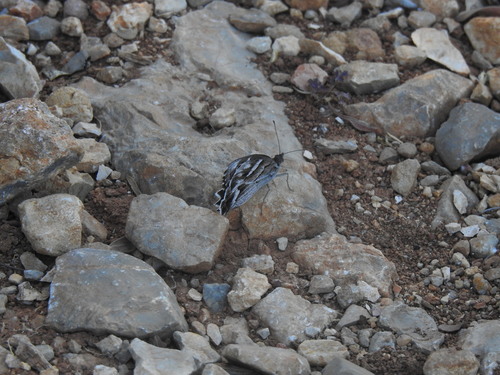
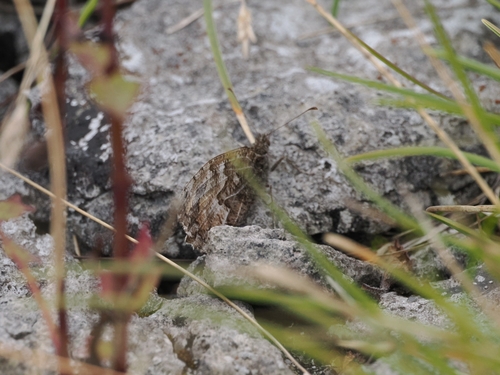
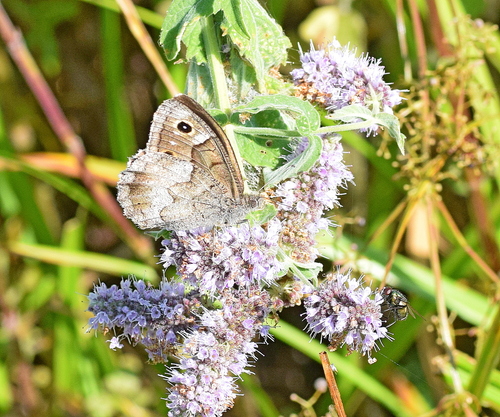
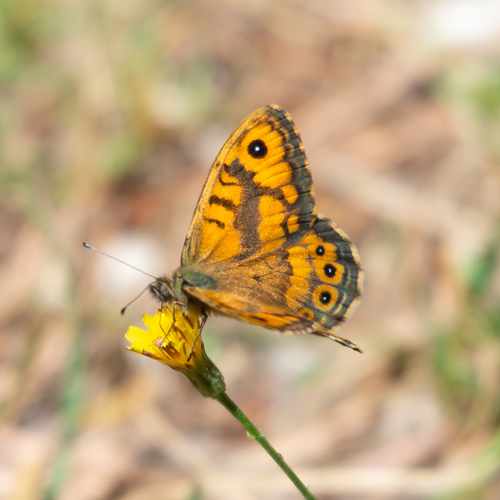
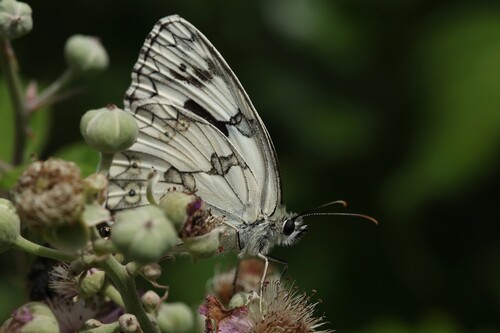
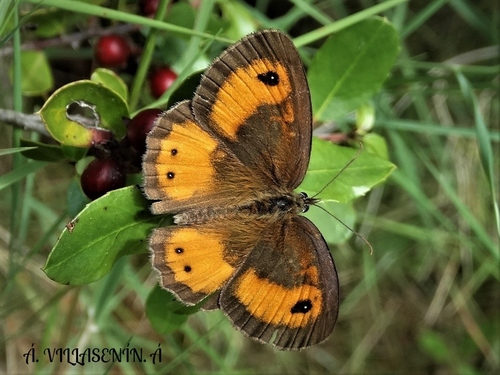
Hipparchia hermione, the rock grayling, is a butterfly of the family Nymphalidae. The species can be found in Central Europe, Southern Europe, Eastern Europe, North Africa, Anatolia and the Caucasus. The wingspan is 27–34 millimetres (1.1–1.3 in).The ground colour is dark brown. There is a white submarginal band, bordered with an interrupted fringe and a large black ocellus at the apex of the forewing. The hindwing has a small ocellus with a very discrete pupil.

The underside of the forewing is similar: brown with a white submarginal band and the black ocellus with white pupil at the apex, while the hindwing is marbled with brown and white with a broad white band. No sexual dimorphism.

Similar to Hipparchia fagi, but on the underside the deep dark basal area of both wings contrasts much more sharply with the light band, and the latter, which is almost pure white on the hindwing, contrasts again conspicuously with the broad dark distal margin. The conspicuousness of the pattern on the underside of the hindwing is especially noticeable in the male, but even in the duller coloured female the band on the hindwing beneath is still quite distinct, although sparsely irrorated with black.

It is smaller than fagi. The butterflies fly from June to September on steep rocky slopes, in open forest, margins and forest clearings and in shrubland. The larvae feed on various types of grass. Wikipedia →

Global Distribution

Parks Where Found

# Park Country Daily sighting probability
1 Picos de Europa National Park 🇪🇸 Spain
~20%
2 Sierra Nevada National Park 🇪🇸 Spain
~20%
3 Sierra de Guadarrama National Park 🇪🇸 Spain
~20%
4 Mercantour National Park 🇫🇷 France
~10%
5 Pyrénées National Park 🇫🇷 France
<5%

Before you go

What are the chances of seeing a Rock Grayling in Sierra Nevada National Park?

Possible

About 20% of wildlife watchers report a Rock Grayling sighting in Sierra Nevada National Park on a given day, based on 45 verified sightings from GBIF citizen-science data from 2019 to 2026. It is the 43rd most-seen of the 479 insects we can rate there. Over three days the chance rises to about 50%, and over a week to about 80%, if each day is a fresh chance.

When is the best time to see a Rock Grayling in Sierra Nevada National Park?

July

In that month about 40% of wildlife watchers report a Rock Grayling in Sierra Nevada National Park on a given day, against under 5% in October to May, the lowest months. That is one of Sierra Nevada National Park's driest months, with about 30 mm of rain against 130 mm in March.

What time of day is best to see a Rock Grayling?

Between 10 am and 1 pm

Across all the parks we cover, that three-hour window holds the most Rock Grayling sightings with a recorded time, and about 9 in 10 of them come between 6 am and 6 pm: it is a daytime animal.

Is Sierra Nevada National Park the best place to see a Rock Grayling?

Among the best

Of the 5 parks where we can rate Rock Grayling sightings, Sierra Nevada National Park ranks 2nd at about 20%, level with the leaders once rounded. The best odds are in Picos de Europa National Park (Spain, about 20%).

Which relatives of the Rock Grayling live in Sierra Nevada National Park?

Same genus: Hipparchia

The closest relatives of the Rock Grayling that you can see in Sierra Nevada National Park (genus Hipparchia) are Striped Grayling (about 30%), Grayling (about 20%) and Tree Grayling (about 20%), with each one's daily chance of a sighting.

Where does the Rock Grayling sighting chance come from?

GBIF citizen-science records

It is estimated from how often the Rock Grayling is recorded against all the insects logged in Sierra Nevada National Park (45 verified sightings from 2019 to 2026), calibrated against known sighting rates. Figures are rounded to the nearest 10% because citizen-science data supports honest approximations, not decimals, and months with records from fewer than five people show "—". How it works.

← Back to Sierra Nevada National Park