


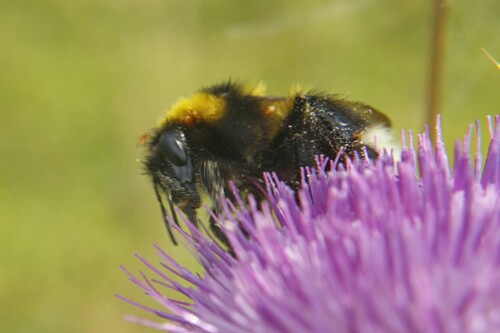
Ashy Mining Bee
Daily sighting probability ~10% · With luck
at Snowdonia National Park

In 3 days ~20% in a week ~50%

8 Verified sightings at Snowdonia National Park From 2019 to 2026
50 In all 4 parks
April Best month
☀️ Diurnal When it's spotted

About the Ashy Mining Bee

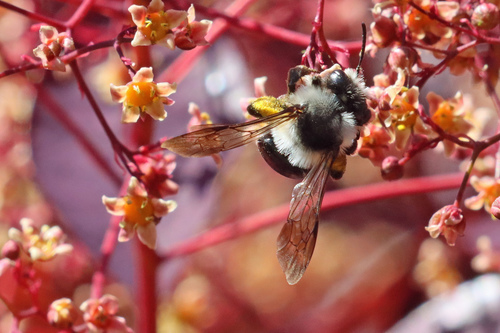
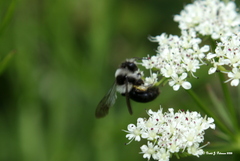
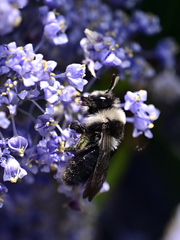
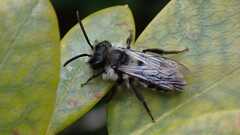
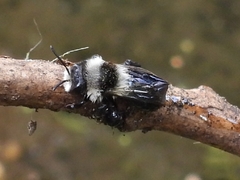
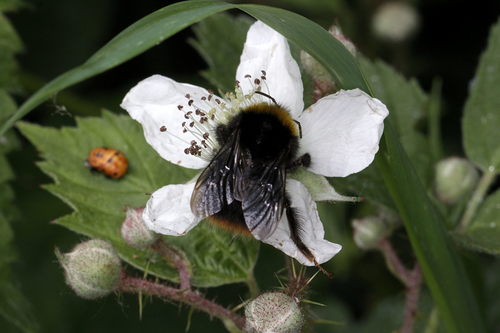
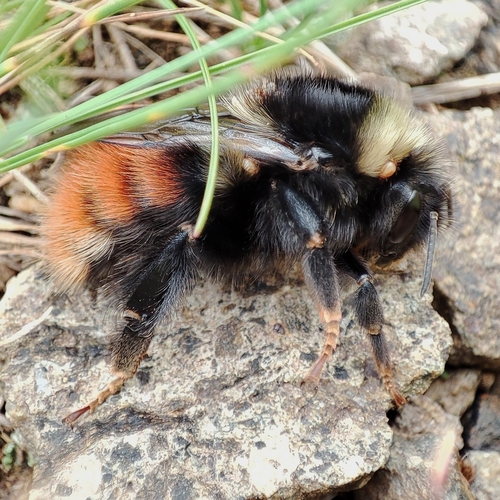
The ashy mining bee (Andrena cineraria), also known as the Danubian miner or grey mining bee, is a species of sand bee found in Europe. Its distinctive black, grey and white colouring makes it one of the most easily recognized of the genus. They are generally considered safe around children and pets because they are relatively docile, and their stingers are not long enough to penetrate human skin. They are generalists, they mostly pollinate fruit trees, daisies, buttercups, mustard plants and brambles.

The females are black, with two broad grey hair bands across the thorax. The male is also black although the thorax is entirely covered with grey hairs. The male has a tuft of white hairs on the lower face and white hairs on all femora while the female has white hairs only on the front femora. The females have twelve segments to their antennae and the males have thirteen.

The ashy mining bee is common and widespread throughout Europe, ranging from Ireland across central Europe and into Scandinavia. They are common throughout the United Kingdom although less frequent in northern Scotland. They prefer to nest in tended... Wikipedia →

Global Distribution

Parks Where Found

# Park Country Daily sighting probability
1 Bavarian Forest National Park 🇩🇪 Germany
~10%
2 Snowdonia National Park 🇬🇧 United Kingdom
~10%
3 Wadden Sea National Park 🇩🇪 Germany
<5%
4 Pyrénées National Park 🇫🇷 France
<5%

Cities Where Found

# City Country Daily sighting probability
1 Birmingham 🇬🇧 United Kingdom
~20%
2 Liverpool 🇬🇧 United Kingdom
~20%
3 Manchester 🇬🇧 United Kingdom
~10%
4 London 🇬🇧 United Kingdom
~10%
5 Hamburg 🇩🇪 Germany
~10%
6 Leeds 🇬🇧 United Kingdom
~10%
7 Vienna 🇦🇹 Austria
~10%
8 Essen 🇩🇪 Germany
~10%
9 Paris 🇫🇷 France
~10%
10 Prague 🇨🇿 Czechia
~10%

Before you go

What are the chances of seeing an Ashy Mining Bee in Snowdonia National Park?

With luck

About 10% of wildlife watchers report an Ashy Mining Bee sighting in Snowdonia National Park on a given day, based on 8 verified sightings from GBIF citizen-science data from 2019 to 2026. It is the 246th most-seen of the 387 insects we can rate there. Over three days the chance rises to about 20%, and over a week to about 50%, if each day is a fresh chance.

When is the best time to see an Ashy Mining Bee in Snowdonia National Park?

April

In that month about 20% of wildlife watchers report an Ashy Mining Bee in Snowdonia National Park on a given day, against under 5% in July–September and November–February, the lowest months. That is one of Snowdonia National Park's driest months, with about 95 mm of rain against 240 mm in December.

What time of day is best to see an Ashy Mining Bee?

Between 11 am and 2 pm

Across all the parks we cover, that three-hour window holds the most Ashy Mining Bee sightings with a recorded time, and nearly all of them come between 6 am and 6 pm: it is a daytime animal.

Is Snowdonia National Park the best place to see an Ashy Mining Bee?

Among the best

Of the 4 parks where we can rate Ashy Mining Bee sightings, Snowdonia National Park ranks 2nd at about 10%, level with the leaders once rounded. The best odds are in Bavarian Forest National Park (Germany, about 10%).

Which relatives of the Ashy Mining Bee live in Snowdonia National Park?

Same order: Hymenoptera

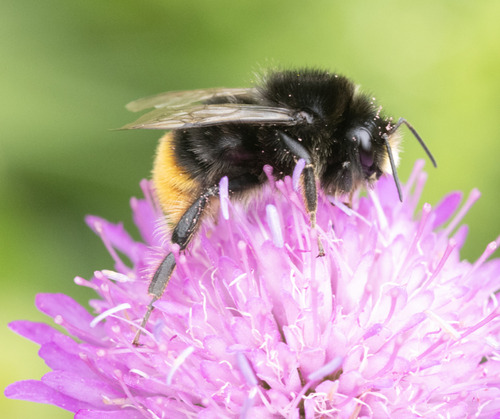
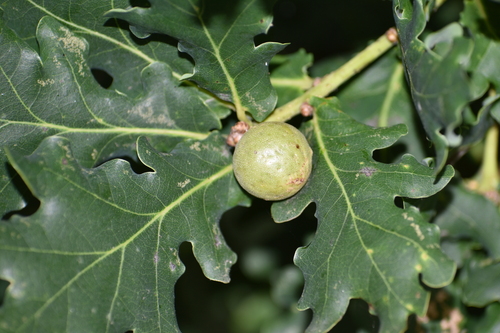
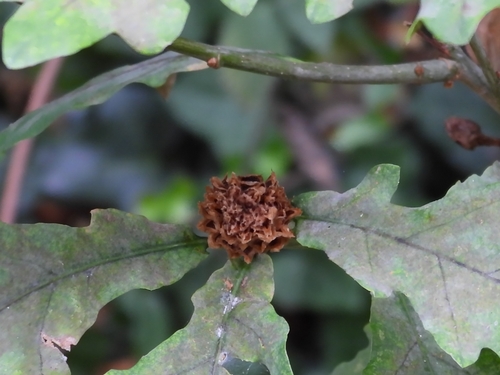
The closest relatives of the Ashy Mining Bee that you can see in Snowdonia National Park (order Hymenoptera, Ants, Bees, Wasps, and Sawflies) are Common Carder Bumble Bee (about 20%), Red-Tailed Bumble Bee (about 20%) and Oak Marble Gall Wasp (about 20%), with each one's daily chance of a sighting.

Where does the Ashy Mining Bee sighting chance come from?

GBIF citizen-science records

It is estimated from how often the Ashy Mining Bee is recorded against all the insects logged in Snowdonia National Park (8 verified sightings from 2019 to 2026), calibrated against known sighting rates. Figures are rounded to the nearest 10% because citizen-science data supports honest approximations, not decimals, and months with records from fewer than five people show "—". How it works.

← Back to Snowdonia National Park