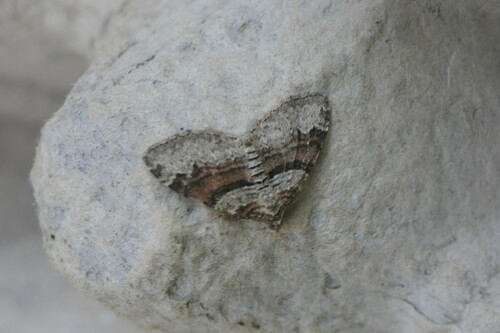
Brussels Lace

Brussels Lace

Cleorodes lichenaria

Daily sighting probability ~10% · With luck
at Snowdonia National Park

In 3 days ~30% in a week ~50%

13 Verified sightings at Snowdonia National Park From 2019 to 2026
32 In all 2 parks
June Best month
☀️🌙 Day & Night When it's spotted

About the Brussels Lace

Cleorodes is a monotypic genus of moth in the family Geometridae described by Warren in 1894. Its single species, Cleorodes lichenaria, the Brussels lace, was first described by Johann Siegfried Hufnagel in 1767. The species can be found in Europe, the Taurus and Transcaucasia.

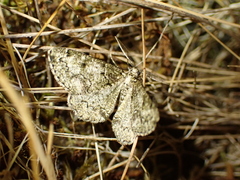
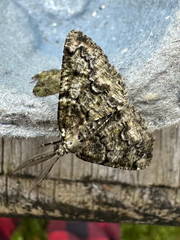
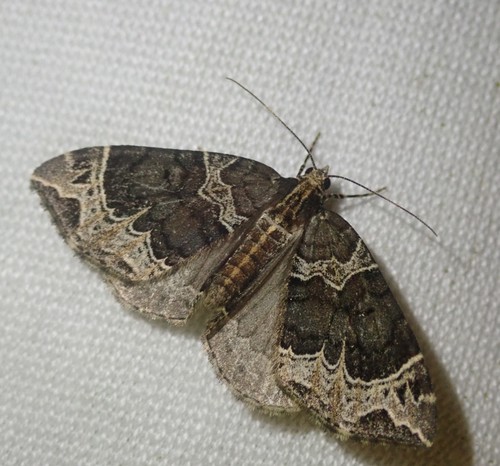
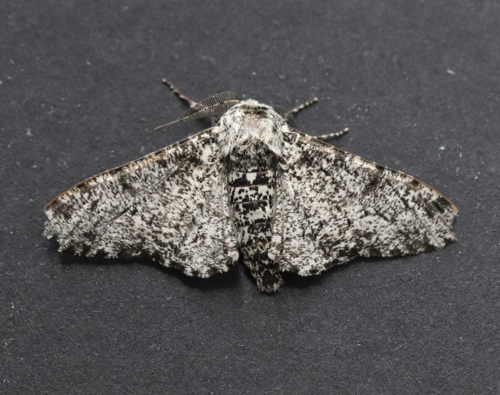
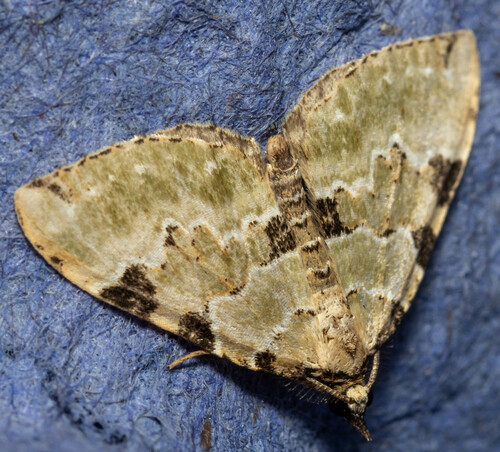
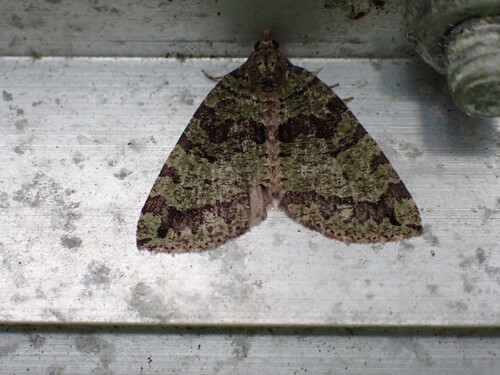
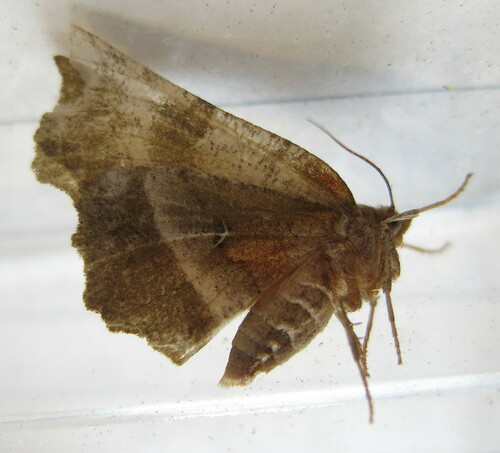
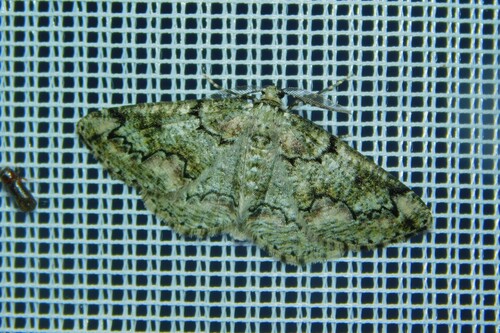
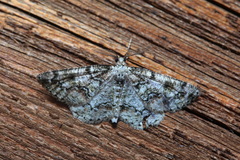
The wingspan is 31–38 mm. The length of the forewings is 14–18 mm. The grey forewings only show a greenish tint when the moth is newly hatched – this very quickly fades into a pale brown tint (a medium shade is mostly missing). The forewings are dark dusted. The fringes are black and white patched. There are two black cross lines. The outer cross line is characteristically shaped. A strongly serrated black cross line is located on the rear wings. The hindwing margin contains a few black, crescent-shaped lines. The antennae of the males are heavily combed on both sides, those of the females are filiform. The larva has dorsal humps on the abdominal segments. It is greenish grey with blackish markings, beautifully assimilated to the tree-lichens on which it feeds. The pupa is slender, deep red brown, in a slight network cocoon among the lichen.

The moths fly in one generation from June to August.[1]. The larvae feed on lichens. The larva hibernates. Wikipedia →
Global Distribution

Parks Where Found

# Park Country Daily sighting probability
1 Snowdonia National Park 🇬🇧 United Kingdom
~10%
2 Wadden Sea National Park 🇩🇪 Germany
~10%

Before you go

What are the chances of seeing a Brussels Lace in Snowdonia National Park?

With luck

About 10% of wildlife watchers report a Brussels Lace sighting in Snowdonia National Park on a given day, based on 13 verified sightings from GBIF citizen-science data from 2019 to 2026. It is the 185th most-seen of the 387 insects we can rate there. Over three days the chance rises to about 30%, and over a week to about 50%, if each day is a fresh chance.

When is the best time to see a Brussels Lace in Snowdonia National Park?

June

In that month about 20% of wildlife watchers report a Brussels Lace in Snowdonia National Park on a given day, against under 5% in August to May, the lowest months.

What time of day is best to see a Brussels Lace?

Between 10 pm and 1 am

Across all the parks we cover, that three-hour window holds the most Brussels Lace sightings with a recorded time, and about 6 in 10 of them come between 6 pm and 6 am: it is seen both by day and at night.

Is Snowdonia National Park the best place to see a Brussels Lace?

Yes

Of the 2 parks where we can rate Brussels Lace sightings, Snowdonia National Park has the highest daily chance: about 10%. Next come Wadden Sea National Park (Germany, about 10%).

Which relatives of the Brussels Lace live in Snowdonia National Park?

Same family: Geometridae

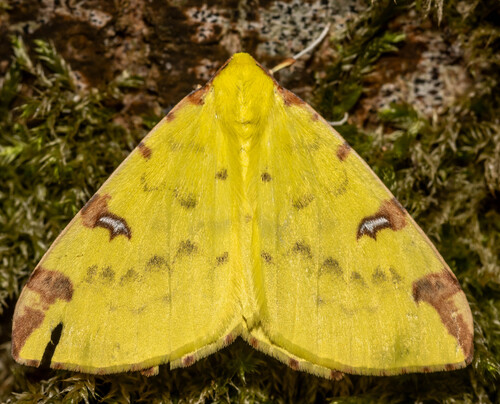
The closest relatives of the Brussels Lace that you can see in Snowdonia National Park (family Geometridae, Geometer Moths) are Brimstone Moth (about 30%), Small Phoenix (about 20%) and Peppered Moth (about 20%), with each one's daily chance of a sighting.

Where does the Brussels Lace sighting chance come from?

GBIF citizen-science records

It is estimated from how often the Brussels Lace is recorded against all the insects logged in Snowdonia National Park (13 verified sightings from 2019 to 2026), calibrated against known sighting rates. Figures are rounded to the nearest 10% because citizen-science data supports honest approximations, not decimals, and months with records from fewer than five people show "—". How it works.

← Back to Snowdonia National Park