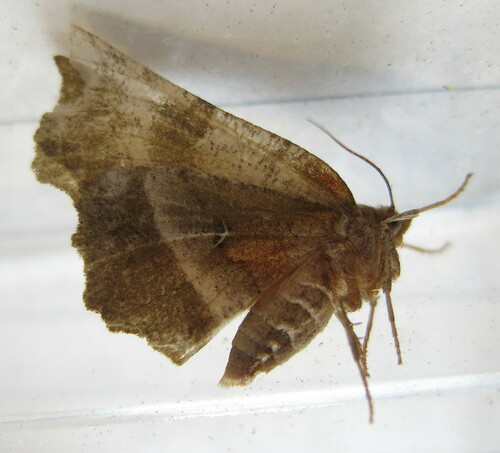
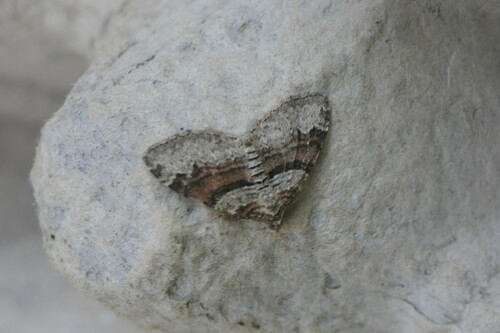
Grey Birch Moth

Grey Birch Moth

Aethalura punctulata

Daily sighting probability ~10% · With luck
at Snowdonia National Park

In 3 days ~20% in a week ~40%

5 Verified sightings at Snowdonia National Park From 2019 to 2026
15 In all 3 parks
April Best month
☀️🌙 Day & Night When it's spotted

About the Grey Birch Moth

Aethalura punctulata, the grey birch, is a moth of the family Geometridae. The species is found in Europe and then east, as far as western Siberia and the Caucasus.This species prefers sparse alder-ash-floodplain forests on moist to wet locations. Although it is only locally distributed in Central Europe, it is usually common in these biotopes. It occurs from the plains to the middle mountain regions. In the Alps it rises up to 1600 m.

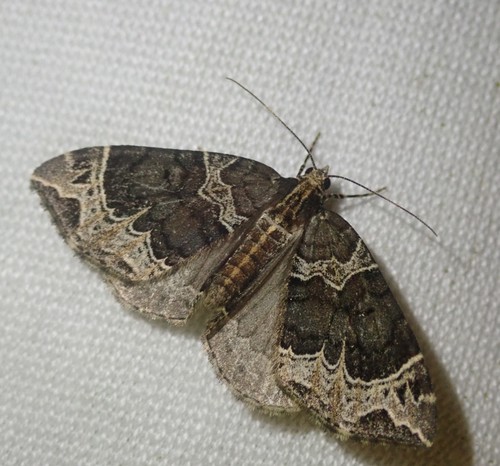
The wingspan is 30–35 mm. The upperside forewings wings are ash to light brownish gray. Darkened and light forms occur. The banding is also variable. Three black crossbars are strong and usually reach the front edge. According to the variability of colour and bars several formæ have been described.

The larva is brownish, greenish, greenish-grey or violet-brown. The longitudinal lines and the incisions of the segments are usually yellowish or whitish, often with enlarged stains. The longitudinal lines are often interrupted or dissolved to elongated points.

The pupa is reddish-brown to dark reddish-brown. The cremaster is blunt-conical. The moths flies from March to July depending on the location. The caterpillars feed on birch. Wikipedia →
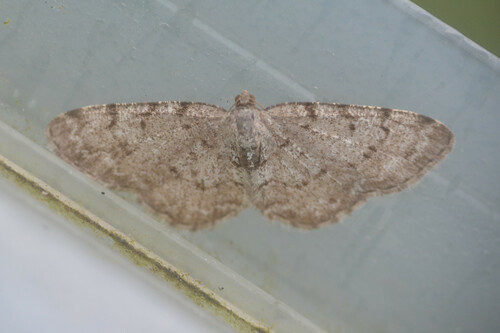
Global Distribution

Parks Where Found

# Park Country Daily sighting probability
1 Snowdonia National Park 🇬🇧 United Kingdom
~10%
2 Bavarian Forest National Park 🇩🇪 Germany
<5%
3 Wadden Sea National Park 🇩🇪 Germany
<5%

Cities Where Found

# City Country Daily sighting probability
1 Helsinki 🇫🇮 Finland
<5%
2 Moscow 🇷🇺 Russia
<5%

Before you go

What are the chances of seeing a Grey Birch Moth in Snowdonia National Park?

With luck

About 10% of wildlife watchers report a Grey Birch Moth sighting in Snowdonia National Park on a given day, based on 5 verified sightings from GBIF citizen-science data from 2019 to 2026. It is the 336th most-seen of the 387 insects we can rate there. Over three days the chance rises to about 20%, and over a week to about 40%, if each day is a fresh chance.

When is the best time to see a Grey Birch Moth in Snowdonia National Park?

April and May

In those months about 10% of wildlife watchers report a Grey Birch Moth in Snowdonia National Park on a given day, against under 5% in June to March, the lowest months.

What time of day is best to see a Grey Birch Moth?

Between 10 pm and 1 am

Across all the parks we cover, that three-hour window holds the most Grey Birch Moth sightings with a recorded time, and about half of them come between 6 pm and 6 am: it is seen both by day and at night.

Is Snowdonia National Park the best place to see a Grey Birch Moth?

Yes

Of the 3 parks where we can rate Grey Birch Moth sightings, Snowdonia National Park has the highest daily chance: about 10%. Next come Bavarian Forest National Park (Germany, under 5%) and Wadden Sea National Park (Germany, under 5%).

Which relatives of the Grey Birch Moth live in Snowdonia National Park?

Same family: Geometridae

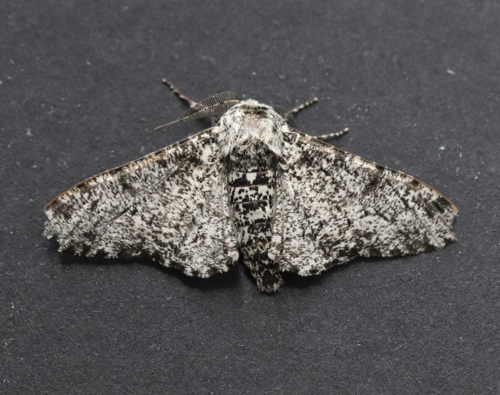
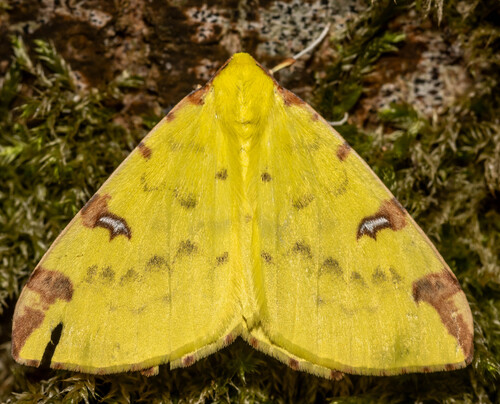
The closest relatives of the Grey Birch Moth that you can see in Snowdonia National Park (family Geometridae, Geometer Moths) are Brimstone Moth (about 30%), Small Phoenix (about 20%) and Peppered Moth (about 20%), with each one's daily chance of a sighting.

Where does the Grey Birch Moth sighting chance come from?

GBIF citizen-science records

It is estimated from how often the Grey Birch Moth is recorded against all the insects logged in Snowdonia National Park (5 verified sightings from 2019 to 2026), calibrated against known sighting rates. Figures are rounded to the nearest 10% because citizen-science data supports honest approximations, not decimals, and months with records from fewer than five people show "—". How it works.

← Back to Snowdonia National Park