
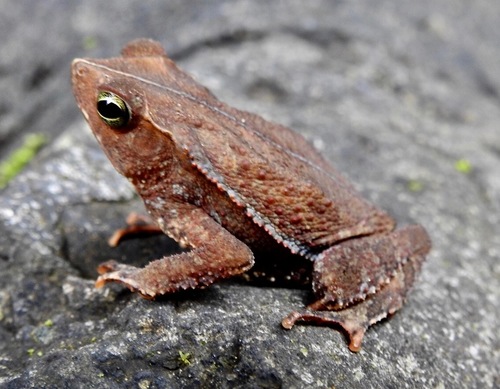
San Carlos Treefrog

San Carlos Treefrog

Dendropsophus phlebodes

Silhouette: Dmitry Bogdanov (vectorized by T. Michael Keesey) · PhyloPic

LCLeast ConcernNTVUENCR
Daily sighting probability ~10% · With luck
at Soberanía National Park

In 3 days ~20% in a week ~40%

10 Verified sightings at Soberanía National Park From 2019 to 2026
22 In all 2 parks
July Best month
🌙 Nocturnal When it's spotted

About the San Carlos Treefrog

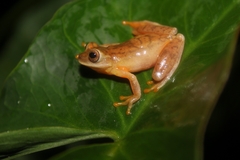
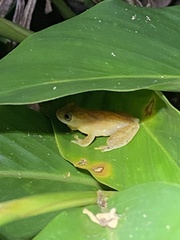
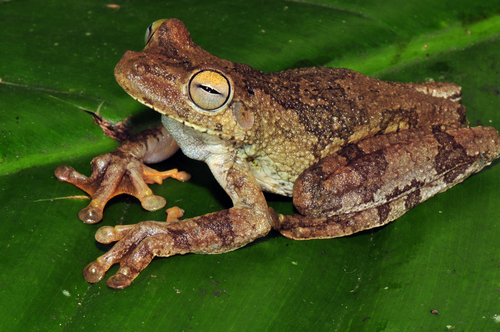
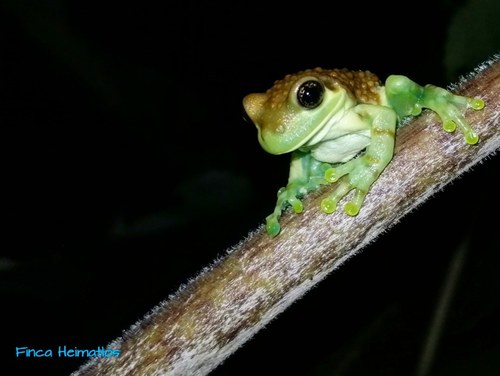
Dendropsophus phlebodes, the San Carlos treefrog or San Carlos dwarf treefrog, is a species of frog in the family Hylidae. It is found in western Colombia, Costa Rica, Nicaragua and Panama. Its natural habitats are tropical moist lowland forests, but it may also occur in disturbed habitats. It is threatened by habitat loss.

The San Carlos treefrog is a small, sturdy species with the female growing to a snout–vent length of 28 millimetres (1.1 in) while the males are slightly smaller. This frog has a blunt snout and a wide head and the tympanum is partially concealed by a fold of skin. There is a single vocal sac in the throat and a pair of vocal slits. The fore-legs are short and the long, slender fingers have large flattened pads at the tips. The hind legs are short but powerful and the long toes are partially webbed and have expanded tips. The skin on the dorsal surface is smooth and has a pale brown colour with slight darker patterning. The ventral surface is granular and white, blending to cream and yellow on the inside of the thighs. The iris is yellowish-bronze and during the breeding season, the male's vocal sac is yellow. The confused D. phlebodes is sometimes... Wikipedia →

Sounds

Advertisement call0:11

Costa Rica · 2025

© Chris Harrison · XC1029815 · CC BY-NC-SA 4.0

Recording0:13

Costa Rica · 2024

© David Rankin · iNaturalist · CC BY-NC 4.0

Global Distribution

Parks Where Found

# Park Country Daily sighting probability
1 Braulio Carrillo National Park 🇨🇷 Costa Rica
~10%
2 Soberanía National Park 🇵🇦 Panama
~10%

Before you go

What are the chances of seeing a San Carlos Treefrog in Soberanía National Park?

With luck

About 10% of wildlife watchers report a San Carlos Treefrog sighting in Soberanía National Park on a given day, based on 10 verified sightings from GBIF citizen-science data from 2019 to 2026. It is the 29th most-seen of the 34 amphibians we can rate there. Over three days the chance rises to about 20%, and over a week to about 40%, if each day is a fresh chance.

When is the best time to see a San Carlos Treefrog in Soberanía National Park?

July

In that month about 20% of wildlife watchers report a San Carlos Treefrog in Soberanía National Park on a given day, against under 5% in September to January, the lowest months. That is one of Soberanía National Park's wettest months, with about 350 mm of rain against 25 mm in February.

What time of day is best to see a San Carlos Treefrog?

Between 6 and 9 pm

Across all the parks we cover, that three-hour window holds the most San Carlos Treefrog sightings with a recorded time, and about 8 in 10 of them come between 6 pm and 6 am: it is mostly seen at night.

Is Soberanía National Park the best place to see a San Carlos Treefrog?

Among the best

Of the 2 parks where we can rate San Carlos Treefrog sightings, Soberanía National Park ranks 2nd at about 10%, level with the leaders once rounded. The best odds are in Braulio Carrillo National Park (Costa Rica, about 10%).

Which relatives of the San Carlos Treefrog live in Soberanía National Park?

Same genus: Dendropsophus

The closest relatives of the San Carlos Treefrog that you can see in Soberanía National Park (genus Dendropsophus, Yellow Tree Frogs) are Harlequin Treefrog (about 30%) and Yellow Treefrog (about 20%), with each one's daily chance of a sighting.

Where does the San Carlos Treefrog sighting chance come from?

GBIF citizen-science records

It is estimated from how often the San Carlos Treefrog is recorded against all the amphibians logged in Soberanía National Park (10 verified sightings from 2019 to 2026), calibrated against known sighting rates. Figures are rounded to the nearest 10% because citizen-science data supports honest approximations, not decimals, and months with records from fewer than five people show "—". How it works.

← Back to Soberanía National Park