
Masked Tree Frog

Masked Tree Frog

Smilisca phaeota

Silhouette: Dmitry Bogdanov (vectorized by T. Michael Keesey) · PhyloPic

LCLeast ConcernNTVUENCR
Daily sighting probability ~10% · With luck
at Soberanía National Park

In 3 days ~40% in a week ~70%

31 Verified sightings at Soberanía National Park From 2019 to 2026
1,007 In all 17 parks
June Best month
🌙 Nocturnal When it's spotted

About the Masked Tree Frog

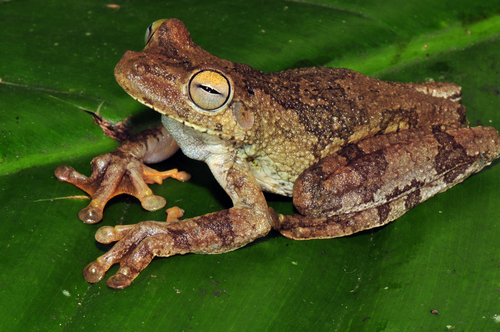
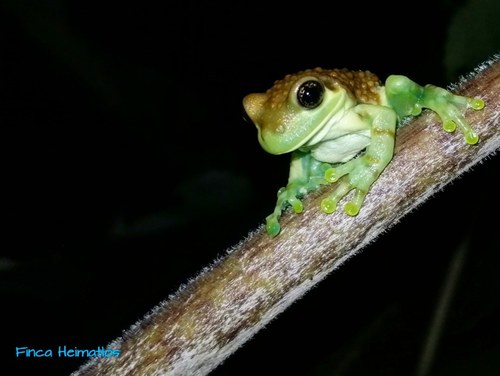
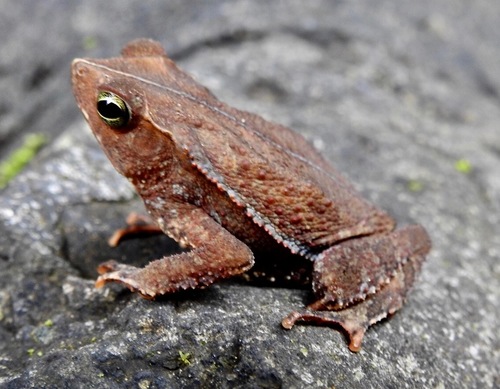
The New Granada cross-banded tree frog (Smilisca phaeota), also known as the masked tree frog, is a species of frog in the family Hylidae found in Colombia, Costa Rica, Ecuador, Honduras, Nicaragua, and Panama. Its natural habitats are subtropical or tropical dry forest, subtropical or tropical moist lowland forest, rivers, freshwater marshes, intermittent freshwater marshes, plantations, rural gardens, urban areas, heavily degraded former forests, ponds, and canals and ditches.

Their nickname of masked tree frog comes from the black or dark colored markings that start at their nose and go back along the face toward their ear, covering their eye. Because it goes across their eye, it can help with camouflage, as many predators find prey by their open eyes.

Media related to Smilisca phaeota at Wikimedia Commons Wikipedia →

Sounds

Advertisement call0:14

Costa Rica · 2014

© Chris Harrison · XC893991 · CC BY-NC-SA 4.0

Recording0:15

Costa Rica · 2024

© mkkennedy · iNaturalist · CC BY-NC 4.0

Recording0:09

Costa Rica · 2025

© elmypelaar · iNaturalist · CC BY-NC 4.0

Global Distribution

Parks Where Found

# Park Country Daily sighting probability
1 Arenal Volcano National Park 🇨🇷 Costa Rica
~50%
2 Tenorio Volcano National Park 🇨🇷 Costa Rica
~40%
3 Piedras Blancas National Park 🇨🇷 Costa Rica
~40%
4 Gandoca-Manzanillo Wildlife Refuge 🇨🇷 Costa Rica
~40%
5 Manuel Antonio National Park 🇨🇷 Costa Rica
~30%
6 Marino Ballena National Park 🇨🇷 Costa Rica
~30%
7 Corcovado National Park 🇨🇷 Costa Rica
~30%
8 Carara National Park 🇨🇷 Costa Rica
~30%
9 Cahuita National Park 🇨🇷 Costa Rica
~30%
10 Braulio Carrillo National Park 🇨🇷 Costa Rica
~20%
11 Chagres National Park 🇵🇦 Panama
~20%
12 Chirripó National Park 🇨🇷 Costa Rica
~20%
13 Bastimentos Island National Marine Park 🇵🇦 Panama
~20%
14 Soberanía National Park 🇵🇦 Panama
~10%
15 Tapantí-Macizo de la Muerte National Park 🇨🇷 Costa Rica
~10%
16 La Amistad International Park (Panama) 🇵🇦 Panama
~10%
17 Monteverde Cloud Forest Reserve 🇨🇷 Costa Rica
~10%

Zoos & Centres Where Found

# Zoo / Centre Country
1 La Paz Waterfall Gardens 🇨🇷 Costa Rica In captivity
2 El Nispero Zoo 🇵🇦 Panama In captivity
3 Sea Life Sydney Aquarium 🇦🇺 Australia In captivity
4 Wild Life Sydney 🇦🇺 Australia In captivity
5 Arenal Eco Zoo 🇨🇷 Costa Rica In captivity
6 Monteverde Theme Park 🇨🇷 Costa Rica In captivity

Before you go

What are the chances of seeing a Masked Tree Frog in Soberanía National Park?

With luck

About 10% of wildlife watchers report a Masked Tree Frog sighting in Soberanía National Park on a given day, based on 31 verified sightings from GBIF citizen-science data from 2019 to 2026. It is the 16th most-seen of the 34 amphibians we can rate there. Over three days the chance rises to about 40%, and over a week to about 70%, if each day is a fresh chance.

When is the best time to see a Masked Tree Frog in Soberanía National Park?

June

In that month about 30% of wildlife watchers report a Masked Tree Frog in Soberanía National Park on a given day, against under 5% in February and December, the lowest months.

What time of day is best to see a Masked Tree Frog?

Between 7 and 10 pm

Across all the parks we cover, that three-hour window holds the most Masked Tree Frog sightings with a recorded time, and about 8 in 10 of them come between 6 pm and 6 am: it is mostly seen at night.

Where does the Masked Tree Frog sighting chance come from?

GBIF citizen-science records

It is estimated from how often the Masked Tree Frog is recorded against all the amphibians logged in Soberanía National Park (31 verified sightings from 2019 to 2026), calibrated against known sighting rates. Figures are rounded to the nearest 10% because citizen-science data supports honest approximations, not decimals, and months with records from fewer than five people show "—". How it works.

← Back to Soberanía National Park