Land Mullet

Land Mullet

Bellatorias major

Silhouette: David Orr · PhyloPic

LCLeast ConcernNTVUENCR Endemic
Daily sighting probability ~50% · Likely
at Springbrook National Park

In 3 days ~80% in a week >90%

192 Verified sightings at Springbrook National Park From 2019 to 2026
518 In all 2 parks
January Best month
☀️ Diurnal When it's spotted

About the Land Mullet

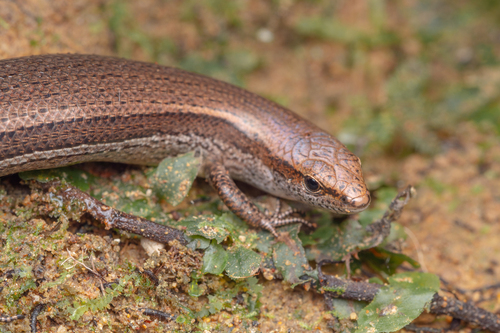
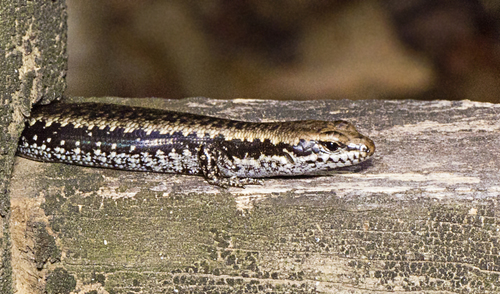
The land mullet (Bellatorias major) is one of the largest members of the skink family (Scincidae). The species may reach total lengths of up to 60 cm (23.6 inches). They are uniform glossy black to brown, with a paler ring around the eye. Their colour, along with their large size, allow them to maintain a body temperature of 30 degrees Celsius; they spend much of the day basking in the sun. Adult males have slightly shorter bodies but slightly longer forelimbs and heads than adult females. The ventral side (belly) ranges in colouration from auburn (orange-brown) to white Juveniles have prominent cream lateral spots.

It is long-lived - with one captive female lizard known to have lived for at least 23 years. The common name "land mullet" is said to date back to Longman (1918), who reported it to be in common usage for the species around Tamborine Mountain. The name probably alludes to the superficial resemblance to the homonymous fish, which has a similarly blunt head, large scales and is of similar size and coloration.

Native to Australia, they are generally restricted to the rainforest of south-eastern Queensland, Australia. The... Wikipedia →

Global Distribution

Parks Where Found

# Park Country Daily sighting probability
1 Lamington National Park 🇦🇺 Australia
~70%
2 Springbrook National Park 🇦🇺 Australia
~50%

Zoos & Centres Where Found

# Zoo / Centre Country
1 Healesville Sanctuary 🇦🇺 Australia In captivity

Before you go

What are the chances of seeing a Land Mullet in Springbrook National Park?

Likely

About 50% of wildlife watchers report a Land Mullet sighting in Springbrook National Park on a given day, based on 192 verified sightings from GBIF citizen-science data from 2019 to 2026. It is the most-seen of the 27 reptiles we can rate there. Over three days the chance rises to about 80%, and over a week to over 90%, if each day is a fresh chance.

When is the best time to see a Land Mullet in Springbrook National Park?

December and January

In those months about 70% of wildlife watchers report a Land Mullet in Springbrook National Park on a given day, against under 5% in June to August, the lowest months.

What time of day is best to see a Land Mullet?

Between 11 am and 2 pm

Across all the parks we cover, that three-hour window holds the most Land Mullet sightings with a recorded time, and about 9 in 10 of them come between 6 am and 6 pm: it is a daytime animal.

Is Springbrook National Park the best place to see a Land Mullet?

2nd of 2

Of the 2 parks where we can rate Land Mullet sightings, Springbrook National Park ranks 2nd at about 50%. The best odds are in Lamington National Park (Australia, about 70%).

Where does the Land Mullet sighting chance come from?

GBIF citizen-science records

It is estimated from how often the Land Mullet is recorded against all the reptiles logged in Springbrook National Park (192 verified sightings from 2019 to 2026), calibrated against known sighting rates. Figures are rounded to the nearest 10% because citizen-science data supports honest approximations, not decimals, and months with records from fewer than five people show "—". How it works.

← Back to Springbrook National Park