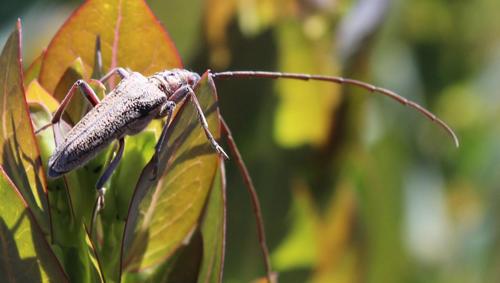
Common Eucalyptus Longhorn

Common Eucalyptus Longhorn

Phoracantha semipunctata

Daily sighting probability <5% · Rare
at Table Mountain National Park

In 3 days ~10% in a week ~20%

14 Verified sightings at Table Mountain National Park From 2019 to 2026
25 In all 3 parks
January Best month
☀️ Diurnal When it's spotted

About the Common Eucalyptus Longhorn

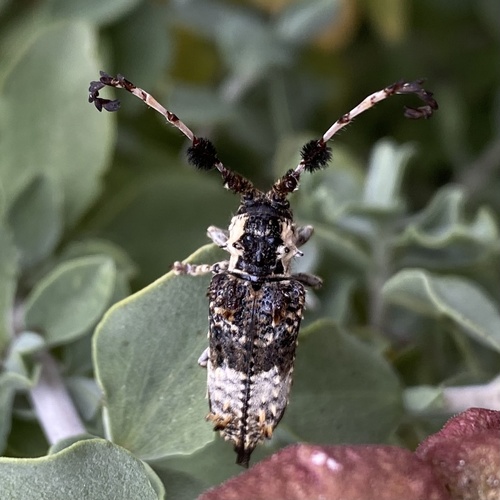
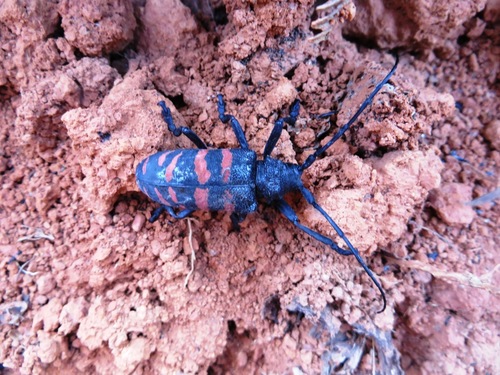
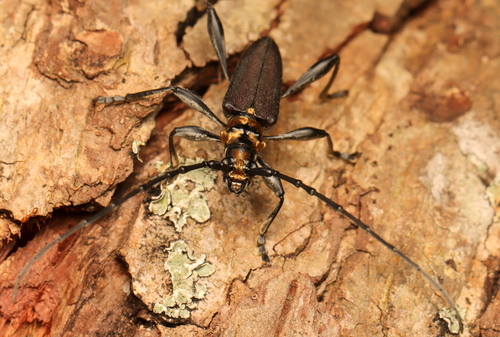
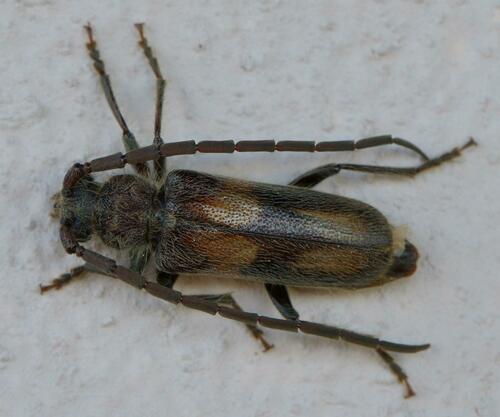
Phoracantha semipunctata, the Australian Eucalyptus longhorn, is a species of beetle in the family Cerambycidae. Native to Australia, it has now spread to many parts of the world, including practically all countries where tree species of Eucalyptus have been introduced. It has been classified as an invasive pest species of Eucalyptus outside Australia.

Within Australia, Phoracantha semipunctata primarily seeks for decaying trees and branches which have been critically impaired due to natural disasters. In other regions of the world, it inflicts critical damage upon introduced Eucalyptus trees. However, the damage inflicted by Phoracantha semipunctata may be seen as a positive factor in some regions, as Eucalyptus trees that are introduced are seen as invasive plant species imposing harm on the natural environment.

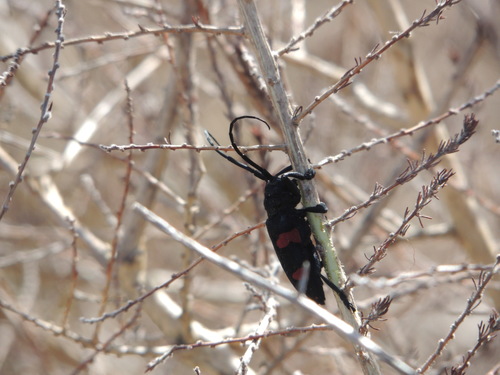
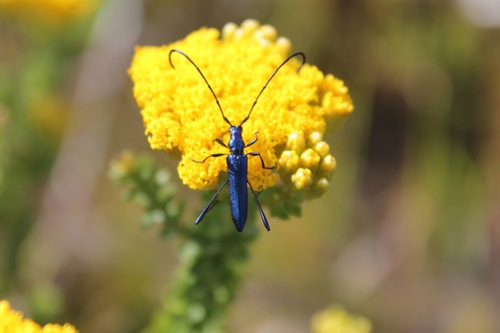
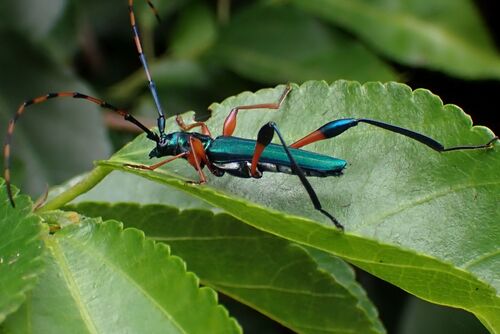
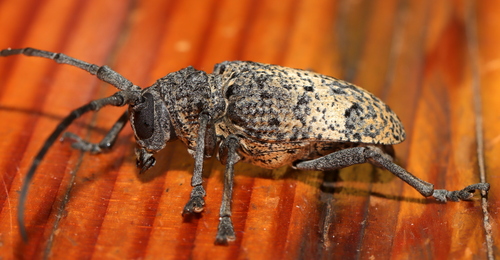
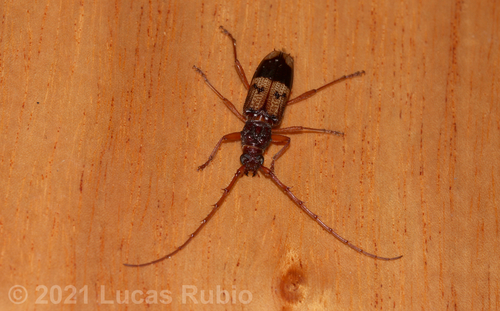
Phoracantha semipunctata are typically dark brown & beige in colour and are approximately similar in size measuring at around 2.3cm long. They are primarily active during the more temperate initial dusk hours, and are found in populations within host trees, which are predominantly male-oriented. These host trees are determined according to the suitability of adult mating and oviposition, and the viability of larvae development. Wikipedia →

Global Distribution

Parks Where Found

# Park Country Daily sighting probability
1 Blue Mountains National Park 🇦🇺 Australia
<5%
2 Garden Route National Park 🇿🇦 South Africa
<5%
3 Table Mountain National Park 🇿🇦 South Africa
<5%

Cities Where Found

# City Country Daily sighting probability
1 Perth 🇦🇺 Australia
~10%
2 Quito 🇪🇨 Ecuador
~10%
3 Melbourne 🇦🇺 Australia
<5%
4 Brisbane 🇦🇺 Australia
<5%
5 Santiago 🇨🇱 Chile
<5%
6 Sydney 🇦🇺 Australia
<5%
7 Cape Town 🇿🇦 South Africa
<5%
8 Auckland 🇳🇿 New Zealand
<5%

Before you go

What are the chances of seeing a Common Eucalyptus Longhorn in Table Mountain National Park?

Rare

Under 5% of wildlife watchers report a Common Eucalyptus Longhorn sighting in Table Mountain National Park on a given day, based on 14 verified sightings from GBIF citizen-science data from 2019 to 2026. It is the 180th most-seen of the 344 insects we can rate there. Over three days the chance rises to about 10%, and over a week to about 20%, if each day is a fresh chance.

When is the best time to see a Common Eucalyptus Longhorn in Table Mountain National Park?

December and January

In those months about 10% of wildlife watchers report a Common Eucalyptus Longhorn in Table Mountain National Park on a given day, against under 5% in February to November, the lowest months. Those are among Table Mountain National Park's driest months, with about 25 mm of rain a month against 110 mm in June.

What time of day is best to see a Common Eucalyptus Longhorn?

Between 7 and 10 am

Across all the parks we cover, that three-hour window holds the most Common Eucalyptus Longhorn sightings with a recorded time, and about 8 in 10 of them come between 6 am and 6 pm: it is a daytime animal.

Is Table Mountain National Park the best place to see a Common Eucalyptus Longhorn?

Among the best

Of the 3 parks where we can rate Common Eucalyptus Longhorn sightings, Table Mountain National Park ranks 3rd at under 5%, level with the leaders once rounded. The best odds are in Blue Mountains National Park (Australia, under 5%) and Garden Route National Park (South Africa, under 5%).

Where does the Common Eucalyptus Longhorn sighting chance come from?

GBIF citizen-science records

It is estimated from how often the Common Eucalyptus Longhorn is recorded against all the insects logged in Table Mountain National Park (14 verified sightings from 2019 to 2026), calibrated against known sighting rates. Figures are rounded to the nearest 10% because citizen-science data supports honest approximations, not decimals, and months with records from fewer than five people show "—". How it works.

← Back to Table Mountain National Park