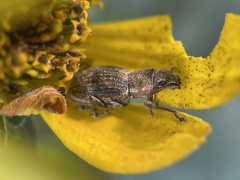
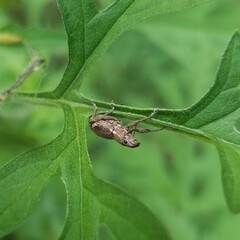
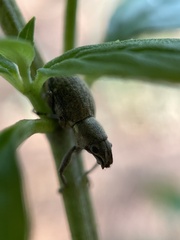
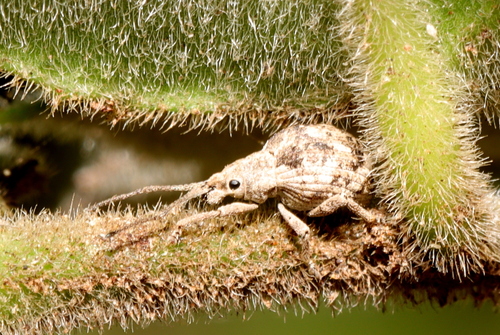
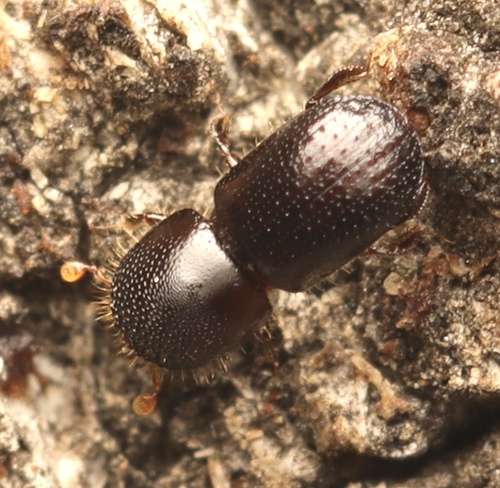
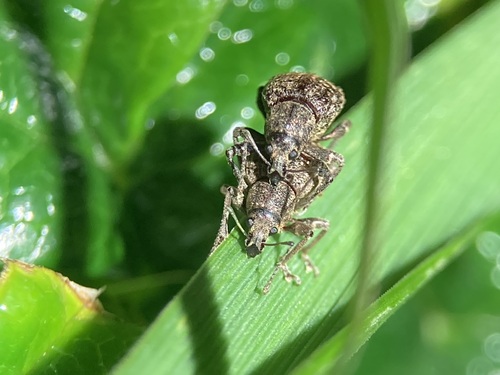
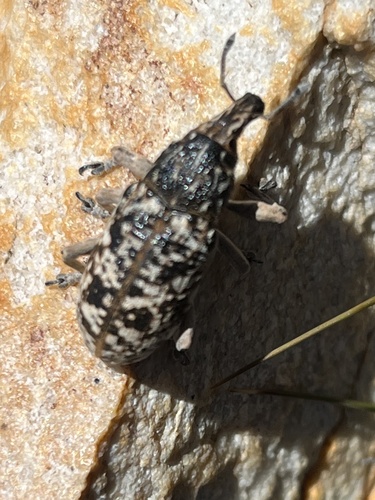
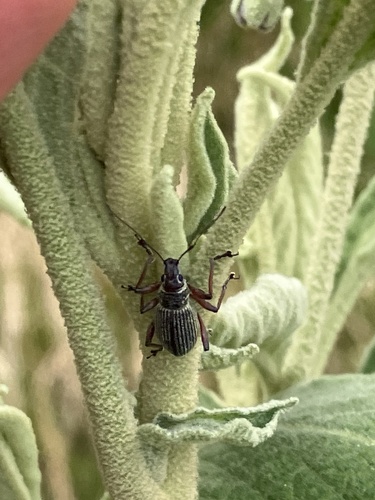
Fuller's Rose Weevil

Fuller's Rose Weevil

Naupactus cervinus

Daily sighting probability <5% · Rare
at Table Mountain National Park

In 3 days ~10% in a week ~20%

13 Verified sightings at Table Mountain National Park From 2019 to 2026
13 In 1 park
May Best month
☀️🌙 Day & Night When it's spotted

About the Fuller's Rose Weevil

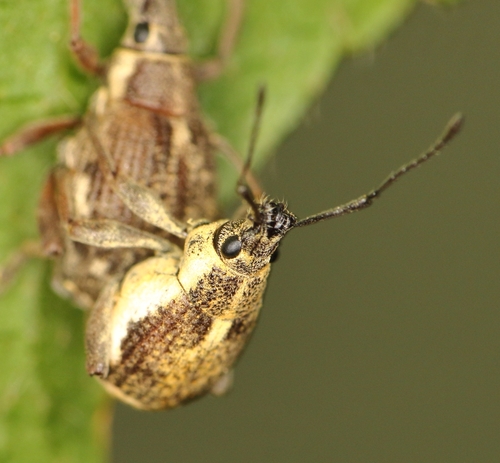
Naupactus cervinus, the Fuller rose beetle or Fuller's rose weevil, is a species of broad-nosed weevil in the family Curculionidae. Native to South America, it has been in North America since the 19th century, and has also been introduced to Europe, South Africa, and Australia. This species is believed to reproduce parthogenically, without fertilisation, as no male specimens have ever been found.

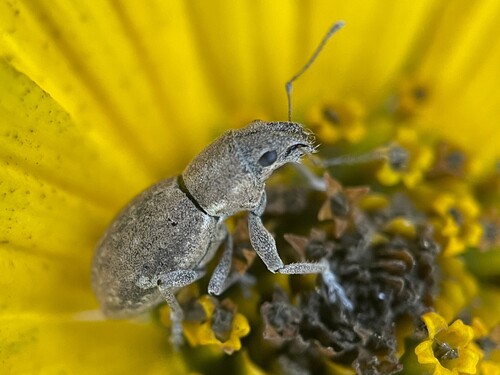
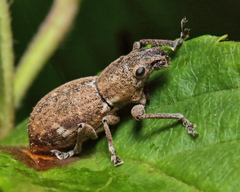
N. cervinus grows to 6.5-8 mm in length and is highly polyphagous, feeding on leaves, buds, roots, flowers and larvae. Adults are brown-grey in colour with laterally positioned eyes. The rostrum is slightly curved downward, and the elytra is fused, rendering the weevil flightless.

Eggs are small, cylindrical and yellow, measuring about 1 mm in length. They are laid in a mass and covered by a sticky, white excretion. Larvae are white with a yellow-ish head capsule and black mandibles, measuring 10-12 mm.

Females lay up to 1000 eggs in their lifetime. Eggs are usually laid under stones or in bark crevasses, on leaves, or in the calyx lobes of fruit. After two to six weeks the eggs hatch, the larvae dropping to the ground, burrowing, and feeds on roots for the next... Wikipedia →
Global Distribution

Parks Where Found

# Park Country Daily sighting probability
1 Table Mountain National Park 🇿🇦 South Africa
<5%

More parks will be added in future updates.

Cities Where Found

# City Country Daily sighting probability
1 Toluca 🇲🇽 México
~10%
2 Puebla 🇲🇽 México
~10%
3 Mexico City 🇲🇽 México
~10%
4 Curitiba 🇧🇷 Brazil
~10%
5 Santiago 🇨🇱 Chile
~10%
6 Auckland 🇳🇿 New Zealand
~10%
7 Montevideo 🇺🇾 Uruguay
~10%
8 Perth 🇦🇺 Australia
~10%
9 San Luis Potosí 🇲🇽 México
~10%
10 Pretoria 🇿🇦 South Africa
~10%

Before you go

What are the chances of seeing a Fuller's Rose Weevil in Table Mountain National Park?

Rare

Under 5% of wildlife watchers report a Fuller's Rose Weevil sighting in Table Mountain National Park on a given day, based on 13 verified sightings from GBIF citizen-science data from 2019 to 2026. It is the 180th most-seen of the 344 insects we can rate there. Over three days the chance rises to about 10%, and over a week to about 20%, if each day is a fresh chance.

When is the best time to see a Fuller's Rose Weevil in Table Mountain National Park?

May

In that month about 10% of wildlife watchers report a Fuller's Rose Weevil in Table Mountain National Park on a given day, against under 5% in June to April, the lowest months.

What time of day is best to see a Fuller's Rose Weevil?

Between 4 and 7 pm

Across all the parks we cover, that three-hour window holds the most Fuller's Rose Weevil sightings with a recorded time, and about half of them come between 6 am and 6 pm: it is seen both by day and at night.

Where else can you see a Fuller's Rose Weevil?

Only Table Mountain National Park, in our data

Table Mountain National Park is the only park on Wallace's Line with enough records to rate Fuller's Rose Weevil sightings: under 5% of wildlife watchers there report one on a given day.

Which relatives of the Fuller's Rose Weevil live in Table Mountain National Park?

Same family: Curculionidae

The closest relatives of the Fuller's Rose Weevil that you can see in Table Mountain National Park (family Curculionidae, True Weevils) are Gardenbane Weevil (about 10%) and Polyphagous Shot Hole Borer (about 10%), with each one's daily chance of a sighting.

Where does the Fuller's Rose Weevil sighting chance come from?

GBIF citizen-science records

It is estimated from how often the Fuller's Rose Weevil is recorded against all the insects logged in Table Mountain National Park (13 verified sightings from 2019 to 2026), calibrated against known sighting rates. Figures are rounded to the nearest 10% because citizen-science data supports honest approximations, not decimals, and months with records from fewer than five people show "—". How it works.

← Back to Table Mountain National Park