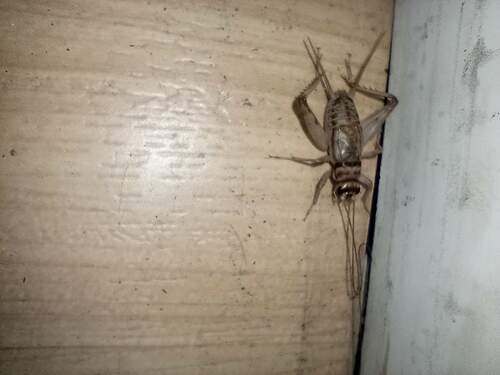
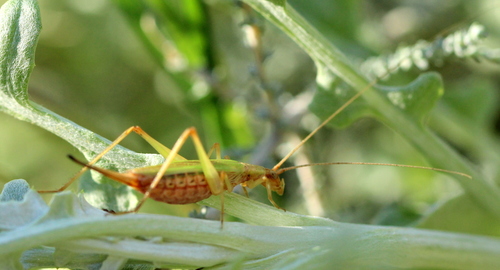
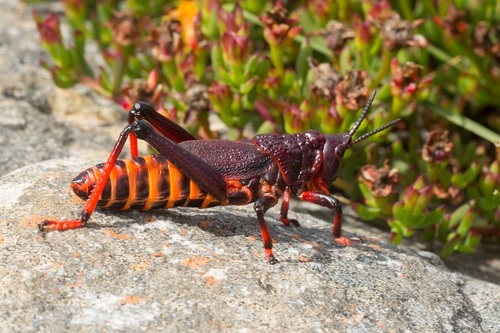
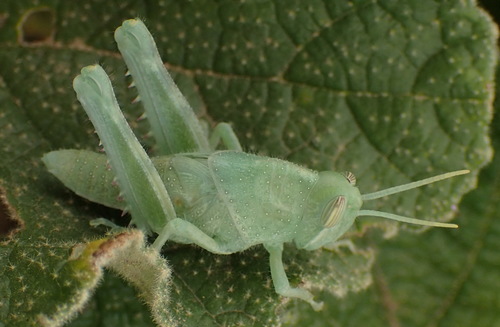
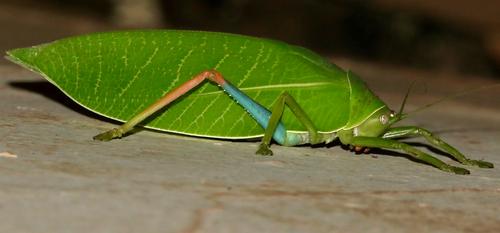
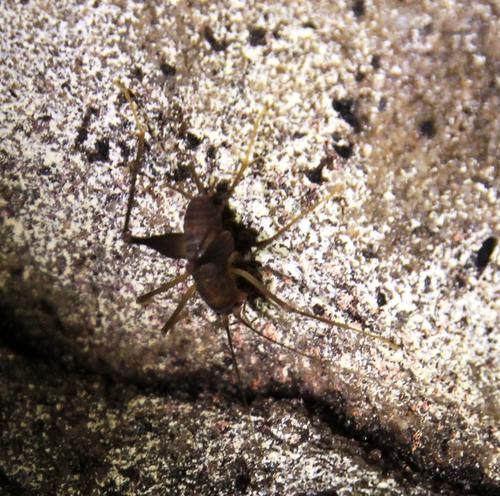
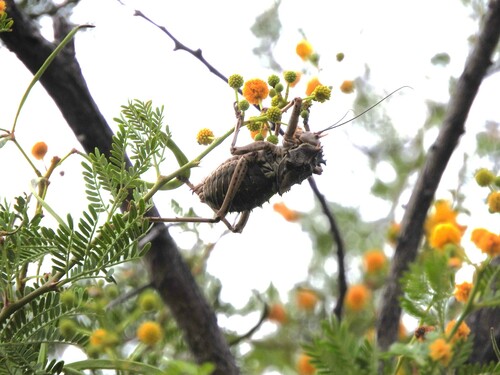
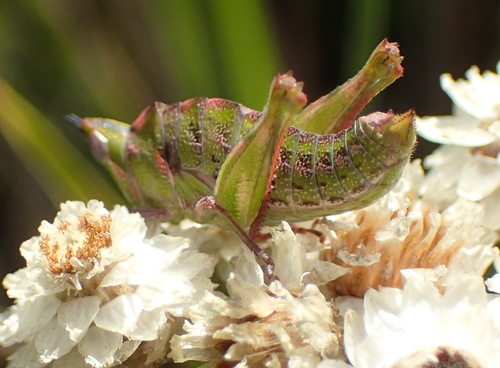
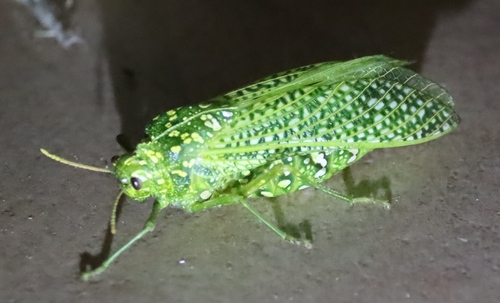
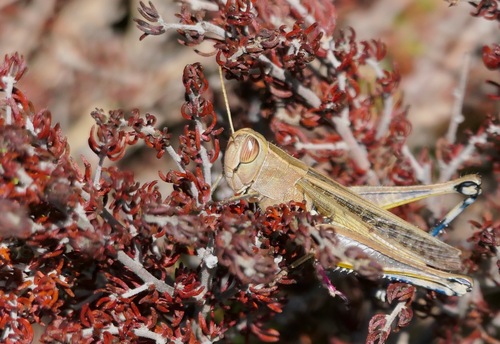
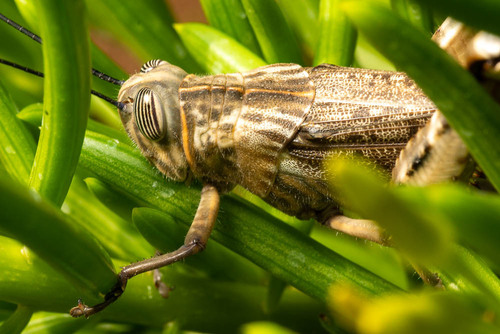
Southern Field Cricket

Southern Field Cricket

Gryllus bimaculatus

Daily sighting probability <5% · Rare
at Table Mountain National Park

In 3 days ~10% in a week ~30%

31 Verified sightings at Table Mountain National Park From 2019 to 2026
74 In all 6 parks
March Best month
☀️🌙 Day & Night When it's spotted

About the Southern Field Cricket

Gryllus bimaculatus is a species of cricket in the subfamily Gryllinae. Most commonly known as the two-spotted cricket, it has also been called the "African" or "Mediterranean field cricket", although its recorded distribution also includes much of Asia, including China and Indochina through to Borneo. It can be discriminated from other Gryllus species by the two dot-like marks on the base of its wings.

The species is popular for use as a food source for insectivorous animals like spiders and reptiles kept as pets or in zoos. They are easy to raise and do not require prolonged exposure to cold in order to complete their life cycle.

The first genome assembly of Gryllus bimaculatus was published in 2021, with a genome size of approximately 1.66 Gb and 17,871 annotated protein-coding genes. A chromosome-level genome assembly of Gryllus bimaculatus was published in 2026. The genome size is approximately 1.66 Gb, with most of the assembly anchored to 15 chromosomes. The assembly has a BUSCO completeness of 98.7%, and 14,457 protein-coding genes were predicted.

In the wild, male crickets do not tolerate one another and will fight until there is... Wikipedia →

Global Distribution

Parks Where Found

# Park Country Daily sighting probability
1 Sierra Nevada National Park 🇪🇸 Spain
~10%
2 Doñana National Park 🇪🇸 Spain
~10%
3 Garden Route National Park 🇿🇦 South Africa
~10%
4 Table Mountain National Park 🇿🇦 South Africa
<5%
5 Kruger National Park 🇿🇦 South Africa
<5%
6 Pyrénées National Park 🇫🇷 France
<5%

Cities Where Found

# City Country Daily sighting probability
1 Kuwait City 🇰🇼 Kuwait
~40%
2 Izmir 🇹🇷 Turkey
~20%
3 Tashkent 🇺🇿 Uzbekistan
~20%
4 Kunming 🇨🇳 China
~10%
5 Tainan 🇹🇼 Taiwan
~10%
6 Naples 🇮🇹 Italy
~10%
7 Rome 🇮🇹 Italy
~10%
8 Taichung 🇹🇼 Taiwan
~10%
9 Barcelona 🇪🇸 Spain
~10%
10 Valencia 🇪🇸 Spain
~10%

Before you go

What are the chances of seeing a Southern Field Cricket in Table Mountain National Park?

Rare

Under 5% of wildlife watchers report a Southern Field Cricket sighting in Table Mountain National Park on a given day, based on 31 verified sightings from GBIF citizen-science data from 2019 to 2026. It is the 119th most-seen of the 344 insects we can rate there. Over three days the chance rises to about 10%, and over a week to about 30%, if each day is a fresh chance.

When is the best time to see a Southern Field Cricket in Table Mountain National Park?

January to April

In those months about 10% of wildlife watchers report a Southern Field Cricket in Table Mountain National Park on a given day, against under 5% in May to December, the lowest months. Those are among Table Mountain National Park's driest months, with about 25 mm of rain a month against 110 mm in June.

What time of day is best to see a Southern Field Cricket?

Between 8 and 11 pm

Across all the parks we cover, that three-hour window holds the most Southern Field Cricket sightings with a recorded time, and about half of them come between 6 pm and 6 am: it is seen both by day and at night.

Is Table Mountain National Park the best place to see a Southern Field Cricket?

4th of 6

Of the 6 parks where we can rate Southern Field Cricket sightings, Table Mountain National Park ranks 4th at under 5%. The best odds are in Sierra Nevada National Park (Spain, about 10%), Doñana National Park (Spain, about 10%) and Garden Route National Park (South Africa, about 10%).

Where does the Southern Field Cricket sighting chance come from?

GBIF citizen-science records

It is estimated from how often the Southern Field Cricket is recorded against all the insects logged in Table Mountain National Park (31 verified sightings from 2019 to 2026), calibrated against known sighting rates. Figures are rounded to the nearest 10% because citizen-science data supports honest approximations, not decimals, and months with records from fewer than five people show "—". How it works.

← Back to Table Mountain National Park