
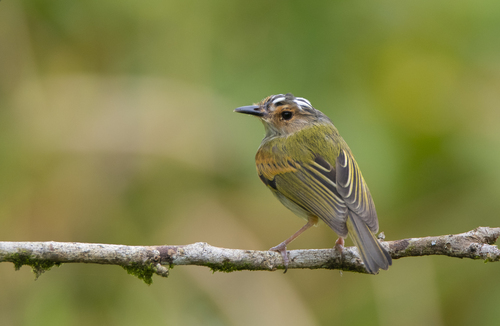
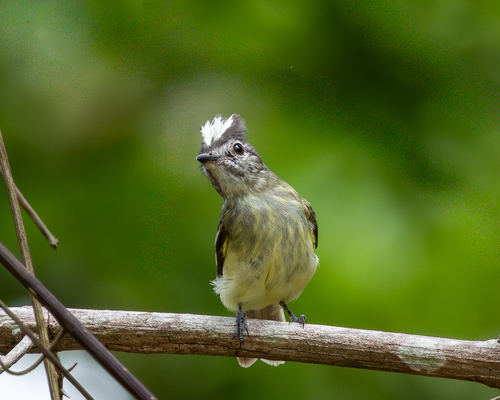
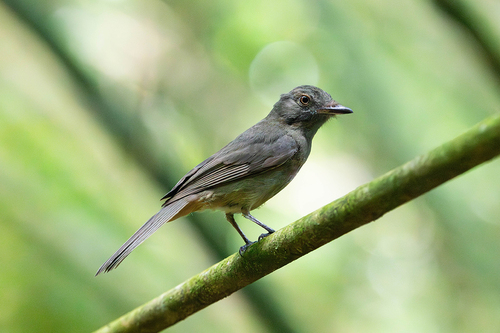
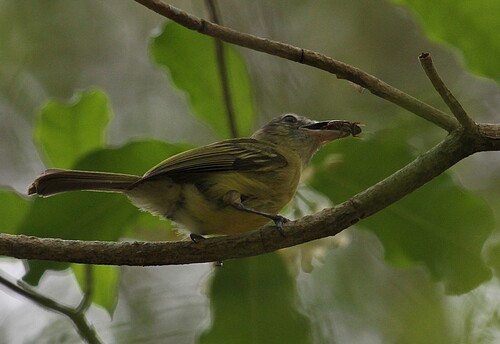
White-cheeked Tody-Flycatcher

White-cheeked Tody-Flycatcher

Poecilotriccus albifacies

Silhouette: Emily Willoughby · PhyloPic

LCLeast ConcernNTVUENCR Endemic
Daily sighting probability <5% · Rare
at Tambopata National Reserve

In 3 days ~10%

49 Verified sightings at Tambopata National Reserve From 2019 to 2026
206 In all 2 parks
May Best month
☀️ Diurnal When it's spotted

About the White-cheeked Tody-Flycatcher

The white-cheeked tody-flycatcher (Poecilotriccus albifacies) is a species of bird in the family Tyrannidae. It is found in Bolivia, Brazil, and Peru. The white-cheeked tody-flycatcher was originally described in 1959 as Todirostrum albifacies. The author considered it closely related to what is now the black-and-white tody-flycatcher (Poecilotriccus capitalis). For a period in the twentieth century the two were treated as conspecific. The species eventually received the English name "white-cheeked tody-tyrant". Following a 1988 publication, taxonomic systems moved albifacies and several other species from Todirostrum to genus Poecilotriccus. By the early twenty-first century genus Poecilotriccus had species called both "tody-tyrant" and "tody-flycatcher" so taxonomic systems began renaming the "tyrants" to "flycatcher".

The white-cheeked tody-flycatcher is monotypic. The white-cheeked tody-flycatcher is about 9.5 cm (3.7 in) long and weighs about 8 g (0.28 oz). Adult males have a rufous crown and black nape that thins as it extends under the cheeks. Their face is otherwise white. Their back, rump, and uppertail coverts are olive. Their... Wikipedia →

Sounds

Song0:23

Peru · 2009

© Peter Boesman · XC228440 · CC BY-NC-ND 4.0

Call?0:04

Peru · 2010

© David Geale · XC64123 · CC BY-NC-ND 2.5

Call1:15

Peru · 2018

© Rolf A. de By · XC467844 · CC BY-NC-SA 4.0

Global Distribution

Parks Where Found

# Park Country Daily sighting probability
1 Manu National Park 🇵🇪 Peru
<5%
2 Tambopata National Reserve 🇵🇪 Peru
<5%

Before you go

What are the chances of seeing a White-cheeked Tody-Flycatcher in Tambopata National Reserve?

Rare

Under 5% of wildlife watchers report a White-cheeked Tody-Flycatcher sighting in Tambopata National Reserve on a given day, based on 49 verified sightings from GBIF citizen-science data from 2019 to 2026. It is the 385th most-seen of the 550 birds we can rate there. Over three days the chance rises to about 10%, if each day is a fresh chance.

When is the best time to see a White-cheeked Tody-Flycatcher in Tambopata National Reserve?

May

In that month about 10% of wildlife watchers report a White-cheeked Tody-Flycatcher in Tambopata National Reserve on a given day, against under 5% in June to April, the lowest months.

What time of day is best to see a White-cheeked Tody-Flycatcher?

Between 8 and 11 am

Across all the parks we cover, that three-hour window holds the most White-cheeked Tody-Flycatcher sightings with a recorded time, and about 8 in 10 of them come between 6 am and 6 pm: it is a daytime animal.

Is Tambopata National Reserve the best place to see a White-cheeked Tody-Flycatcher?

Among the best

Of the 2 parks where we can rate White-cheeked Tody-Flycatcher sightings, Tambopata National Reserve ranks 2nd at under 5%, level with the leaders once rounded. The best odds are in Manu National Park (Peru, under 5%).

Where does the White-cheeked Tody-Flycatcher sighting chance come from?

GBIF citizen-science records

It is estimated from how often the White-cheeked Tody-Flycatcher is recorded against all the birds logged in Tambopata National Reserve (49 verified sightings from 2019 to 2026), calibrated against known sighting rates. Figures are rounded to the nearest 10% because citizen-science data supports honest approximations, not decimals, and months with records from fewer than five people show "—". How it works.

← Back to Tambopata National Reserve