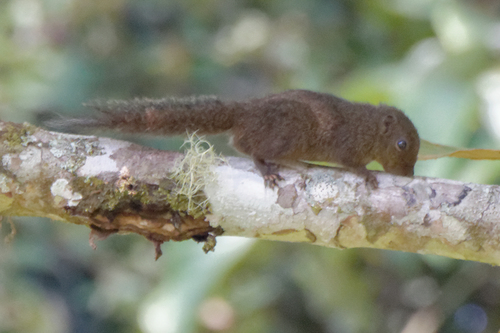
Sulawesi Bear Cuscus

Sulawesi Bear Cuscus

Ailurops ursinus

Silhouette: T. Michael Keesey · PhyloPic

LCNTVUVulnerableENCR Endemic
Daily sighting probability ~60% · Likely
at Tangkoko Nature Reserve

In 3 days ~90% in a week >90%

177 Verified sightings at Tangkoko Nature Reserve From 2019 to 2026
177 In 1 park
November Best month
☀️ Diurnal When it's spotted

About the Sulawesi Bear Cuscus

The Sulawesi bear cuscus, also known as the Sulawesi bear phalanger (Ailurops ursinus), is a species of arboreal marsupial in the family Phalangeridae that is endemic to Sulawesi and nearby islands in Indonesia. It lives in tropical moist lowland forest at elevations up to 600 m (2,000 ft) and is diurnal, folivorous and often found in pairs. A. ursinus is threatened by hunting, collection for the pet trade and deforestation.

One specimen was observed adopting a raised posture while making short, harsh chattering and clicking sounds. Bear cuscuses can feed on the young leaves of up to 31 different species of plants varying from trees, lianas, and mistletoes. Feeding only amounts to about 5% of their daily activity, compared to about 63% spent on resting.

The lack of legal protection for bear cuscuses, combined with habitat loss and poaching for consumption and illegal trade has caused the species to suffer a decline. Despite its status and declining population trend, the bear cuscus is not protected by Indonesian law or listed in the CITES appendices, even though it is commonly traded in Sulawesi and abroad. It was previously protected by Indonesian law... Wikipedia →

Global Distribution

Parks Where Found

# Park Country Daily sighting probability
1 Tangkoko Nature Reserve 🇮🇩 Indonesia
~60%

More parks will be added in future updates.

Zoos & Centres Where Found

# Zoo / Centre Country
1 Pairi Daiza 🇧🇪 Belgium In captivity
2 Memphis Zoo 🇺🇸 United States In captivity

Before you go

What are the chances of seeing a Sulawesi Bear Cuscus in Tangkoko Nature Reserve?

Likely

About 60% of wildlife watchers report a Sulawesi Bear Cuscus sighting in Tangkoko Nature Reserve on a given day, based on 177 verified sightings from GBIF citizen-science data from 2019 to 2026. It is the 2nd most-seen of the 7 mammals we can rate there. Over three days the chance rises to about 90%, and over a week to over 90%, if each day is a fresh chance.

When is the best time to see a Sulawesi Bear Cuscus in Tangkoko Nature Reserve?

August and November

In those months about 80% of wildlife watchers report a Sulawesi Bear Cuscus in Tangkoko Nature Reserve on a given day, against about 40% in December and January, the lowest months.

What time of day is best to see a Sulawesi Bear Cuscus?

Between 8 and 11 am

Across all the parks we cover, that three-hour window holds the most Sulawesi Bear Cuscus sightings with a recorded time, and about 8 in 10 of them come between 6 am and 6 pm: it is a daytime animal.

Where else can you see a Sulawesi Bear Cuscus?

Only Tangkoko Nature Reserve, in our data

Tangkoko Nature Reserve is the only park on Wallace's Line with enough records to rate Sulawesi Bear Cuscus sightings: about 60% of wildlife watchers there report one on a given day.

Where does the Sulawesi Bear Cuscus sighting chance come from?

GBIF citizen-science records

It is estimated from how often the Sulawesi Bear Cuscus is recorded against all the mammals logged in Tangkoko Nature Reserve (177 verified sightings from 2019 to 2026), calibrated against known sighting rates. Figures are rounded to the nearest 10% because citizen-science data supports honest approximations, not decimals, and months with records from fewer than five people show "—". How it works.

← Back to Tangkoko Nature Reserve