Broken-Belted Bumble Bee

Broken-Belted Bumble Bee

Bombus soroeensis

Daily sighting probability ~10% · With luck
at Tatra National Park

In 3 days ~30% in a week ~60%

9 Verified sightings at Tatra National Park From 2019 to 2026
44 In all 4 parks
September Best month
☀️ Diurnal When it's spotted

About the Broken-Belted Bumble Bee

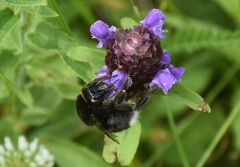
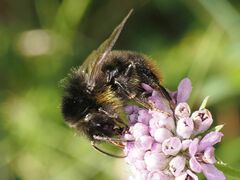
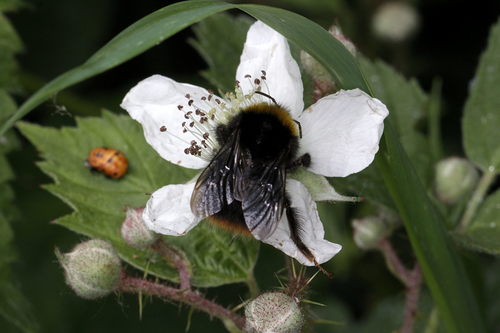
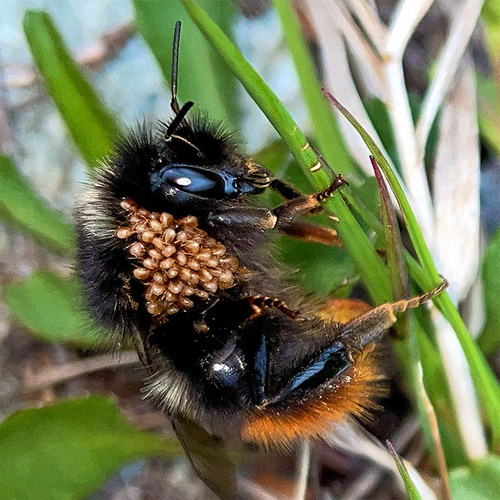
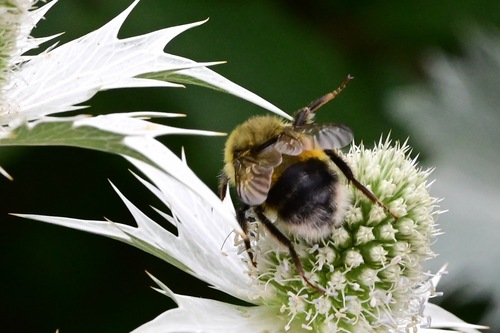
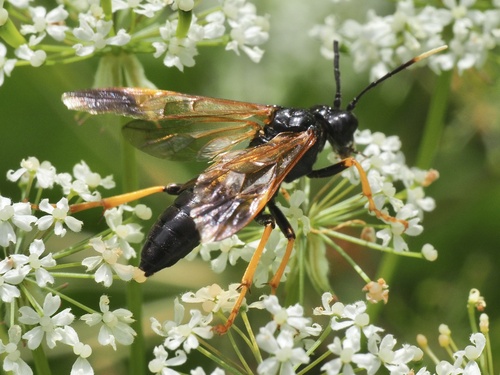
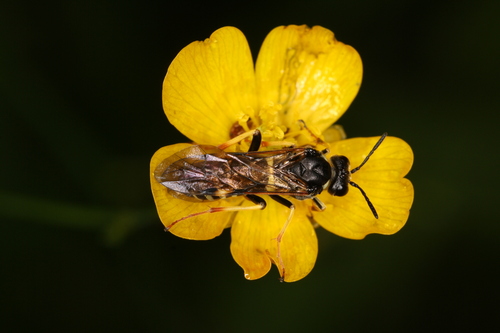
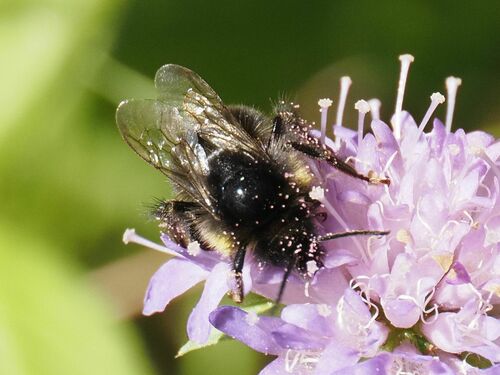
The broken-belted bumblebee or Ilfracombe bumblebee (Bombus soroeensis) is a species of bumblebee present in most of Europe and parts of Asia. This relatively small bumblebee has a rather oblong face and a proboscis of medium length. The body of the female is black with two yellow bands, one at the collar, one at the second tergite (abdominal segment). The latter often has black hair in the middle, thus dividing it into two. In males, the yellow abdominal band is broader, and usually covers most of the first tergite, as well as the second. On both sexes, the tail is white, often mixed with orange-yellow hairs. On the northern Scottish form, the female usually has an entirely white tail. Melanic forms can be found on the European continent. The bee reaches an average length of 16 mm (0.63 in) (queen, wingspan 30 mm (1.2 in)), 12 mm (0.47 in) (worker), and 13 mm (0.51 in) (male).

The nest, which at most has about 80 to 150 workers, is usually underground. At least in Britain, the bumblebee seems to favour uplands, heaths, and grasslands. Favourite flowers are clovers, ling, harebell and Scabiosa as bird's-foot trefoils.

In Eurasia, this... Wikipedia →
Global Distribution

Parks Where Found

# Park Country Daily sighting probability
1 Hohe Tauern National Park 🇦🇹 Austria
~20%
2 Tatra National Park 🇸🇰 Slovakia
~10%
3 Triglav National Park 🇸🇮 Slovenia
~10%
4 Pyrénées National Park 🇫🇷 France
<5%

Cities Where Found

# City Country Daily sighting probability
1 Moscow 🇷🇺 Russia
<5%

Before you go

What are the chances of seeing a Broken-Belted Bumble Bee in Tatra National Park?

With luck

About 10% of wildlife watchers report a Broken-Belted Bumble Bee sighting in Tatra National Park on a given day, based on 9 verified sightings from GBIF citizen-science data from 2019 to 2026. It is the 85th most-seen of the 142 insects we can rate there. Over three days the chance rises to about 30%, and over a week to about 60%, if each day is a fresh chance.

When is the best time to see a Broken-Belted Bumble Bee in Tatra National Park?

September

In that month about 30% of wildlife watchers report a Broken-Belted Bumble Bee in Tatra National Park on a given day, against under 5% in October to July, the lowest months.

What time of day is best to see a Broken-Belted Bumble Bee?

Between 10 am and 1 pm

Across all the parks we cover, that three-hour window holds the most Broken-Belted Bumble Bee sightings with a recorded time, and nearly all of them come between 6 am and 6 pm: it is a daytime animal.

Is Tatra National Park the best place to see a Broken-Belted Bumble Bee?

2nd of 4

Of the 4 parks where we can rate Broken-Belted Bumble Bee sightings, Tatra National Park ranks 2nd at about 10%. The best odds are in Hohe Tauern National Park (Austria, about 20%).

Which relatives of the Broken-Belted Bumble Bee live in Tatra National Park?

Same genus: Bombus

The closest relatives of the Broken-Belted Bumble Bee that you can see in Tatra National Park (genus Bombus, Bumble Bees) are Common Carder Bumble Bee (about 20%), Early Bumble Bee (about 20%) and Bombus wurflenii (about 20%), with each one's daily chance of a sighting.

Where does the Broken-Belted Bumble Bee sighting chance come from?

GBIF citizen-science records

It is estimated from how often the Broken-Belted Bumble Bee is recorded against all the insects logged in Tatra National Park (9 verified sightings from 2019 to 2026), calibrated against known sighting rates. Figures are rounded to the nearest 10% because citizen-science data supports honest approximations, not decimals, and months with records from fewer than five people show "—". How it works.

← Back to Tatra National Park