About the Hercules Carpenter Ant
Camponotus herculeanus (or Hercules ant) is a species of ant in the genus Camponotus, the carpenter ants, occurring in Northern Eurasia, from Norway to Eastern Siberia, and North America. First described as Formica herculeana by Linnaeus in 1758, the species was moved to Camponotus by Mayr in 1861.
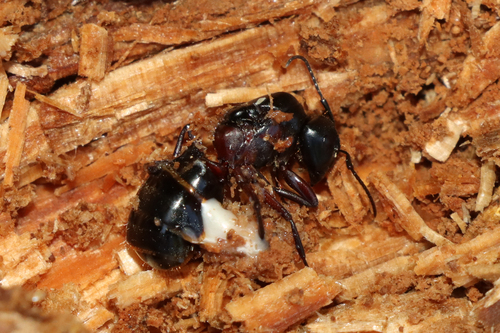
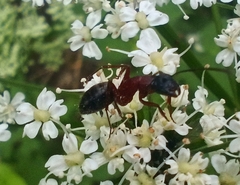
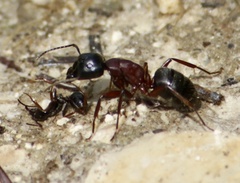
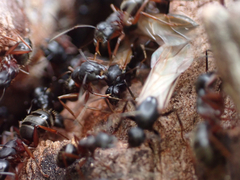
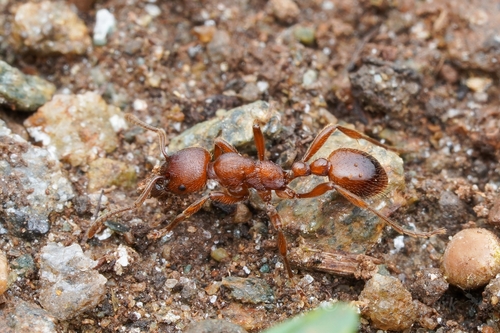
The colony of Camponotus herculeanus consists of one or several wingless females (queens), some fertile males, and three castes of sterile workers, known as majors, intermediates, and minors, in decreasing order of size. The queens are large, about 15 mm (0.6 in) in length, and are blackish in colour. The males are a similar colour but about half the size of the queens. The workers usually have blackish heads and gasters, and dark reddish-brown mesosomas, petioles and legs. In majors, the scapes (the long segments of the antenna, before the elbow) are shorter than the length of the head; in intermediates they are about the same length, and in minors, they extend well beyond the back of the head. The head and the dorsal surfaces of the mesosoma and gaster of the largest majors are bristly.
Camponotus herculeanus has a widespread distribution... Wikipedia →