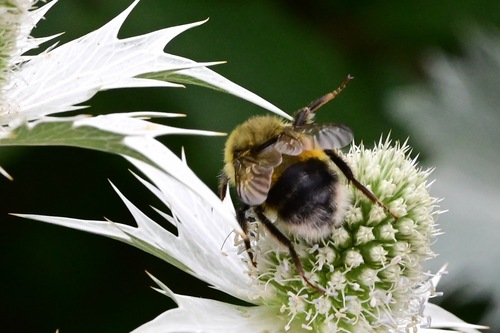
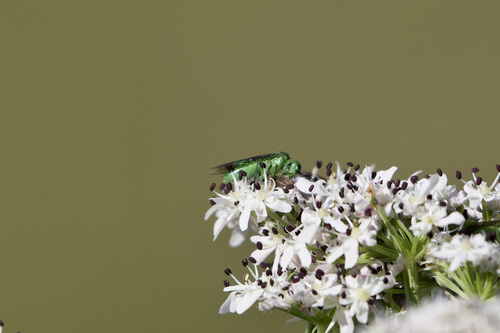
Red-Banded Yellowjacket
Daily sighting probability ~10% · With luck
at Tatra National Park

In 3 days ~30% in a week ~60%

7 Verified sightings at Tatra National Park From 2019 to 2026
26 In all 3 parks
June Best month
☀️ Diurnal When it's spotted

About the Red-Banded Yellowjacket

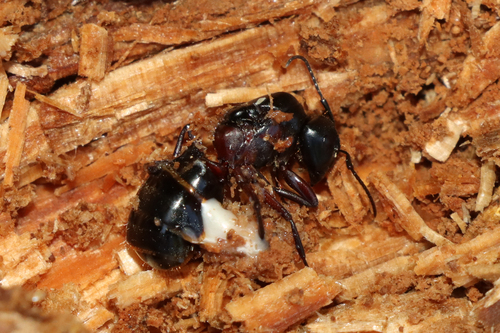
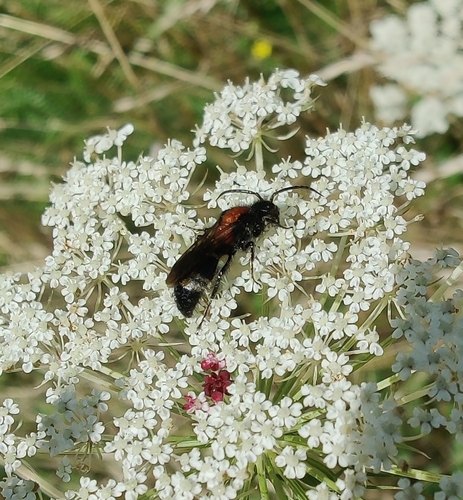
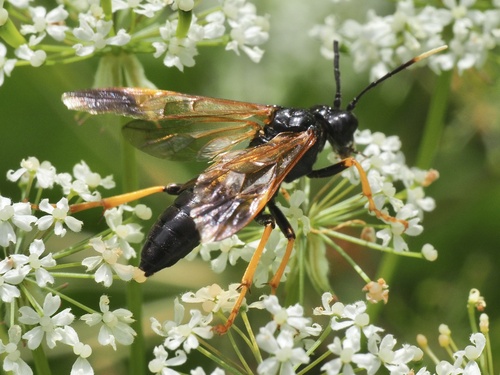
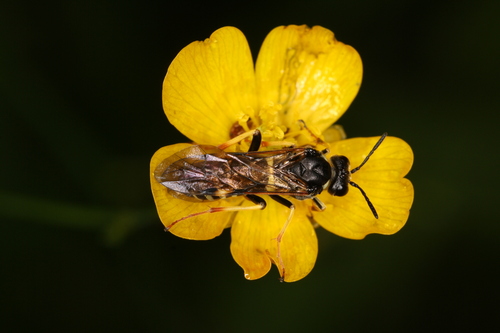
Vespula rufa, commonly known as the red wasp, is a social wasp species belonging to the genus Vespula. It is found in northern and central Europe and parts of Asia. Vespula rufa is characterised by red-brown markings and body segmentation, with the appearance varying amongst the different roles of individuals in the species. These wasps build small nests in dry banks underground that are not far below the surface. The colony cycle begins in the fall. Vespula rufa feed on live insects. One interesting fact about Vespula rufa is that the queen policing occurs in the species, and that worker policing occurs at much lower rates than other species in the genus Vespula. There are predators and parasites of the species. The species goes through a series of events before leaving the nest.

Vespula rufa is a member of the genus Vespula. Within the genus, this species is most closely related to Vespula squamosa. Other species in Vespula include V. germanica, V. maculifrons, and V. vulgaris. Outside of the genus, Dolichovespula is the next most closely related genus.

Typical red wasps, V. r. rufa, of the western Palearctic, have yellow markings. Eastern Palaearctic... Wikipedia →
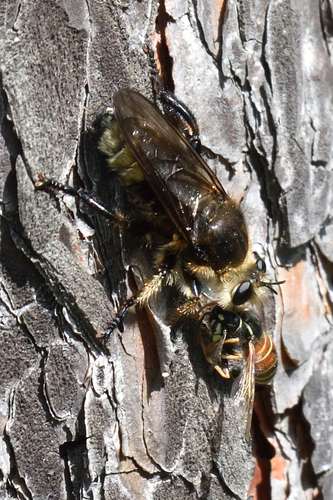

Global Distribution

Parks Where Found

# Park Country Daily sighting probability
1 Tatra National Park 🇸🇰 Slovakia
~10%
2 Bavarian Forest National Park 🇩🇪 Germany
~10%
3 Pyrénées National Park 🇫🇷 France
<5%

Cities Where Found

# City Country Daily sighting probability
1 Helsinki 🇫🇮 Finland
~10%
2 Saint Petersburg 🇷🇺 Russia
<5%
3 Moscow 🇷🇺 Russia
<5%

Before you go

What are the chances of seeing a Red-Banded Yellowjacket in Tatra National Park?

With luck

About 10% of wildlife watchers report a Red-Banded Yellowjacket sighting in Tatra National Park on a given day, based on 7 verified sightings from GBIF citizen-science data from 2019 to 2026. It is the 102nd most-seen of the 142 insects we can rate there. Over three days the chance rises to about 30%, and over a week to about 60%, if each day is a fresh chance.

When is the best time to see a Red-Banded Yellowjacket in Tatra National Park?

June

In that month about 20% of wildlife watchers report a Red-Banded Yellowjacket in Tatra National Park on a given day, against under 5% in October to May, the lowest months.

What time of day is best to see a Red-Banded Yellowjacket?

Between 9 am and noon

Across all the parks we cover, that three-hour window holds the most Red-Banded Yellowjacket sightings with a recorded time, and about 9 in 10 of them come between 6 am and 6 pm: it is a daytime animal.

Is Tatra National Park the best place to see a Red-Banded Yellowjacket?

Yes

Of the 3 parks where we can rate Red-Banded Yellowjacket sightings, Tatra National Park has the highest daily chance: about 10%. Next come Bavarian Forest National Park (Germany, about 10%) and Pyrénées National Park (France, under 5%).

Which relatives of the Red-Banded Yellowjacket live in Tatra National Park?

Same order: Hymenoptera

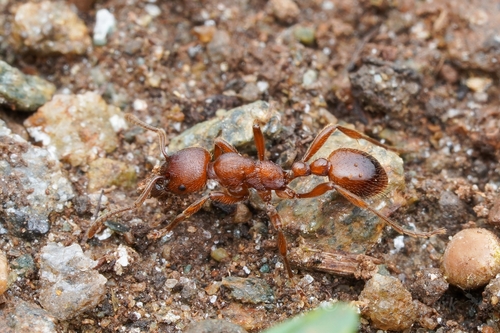
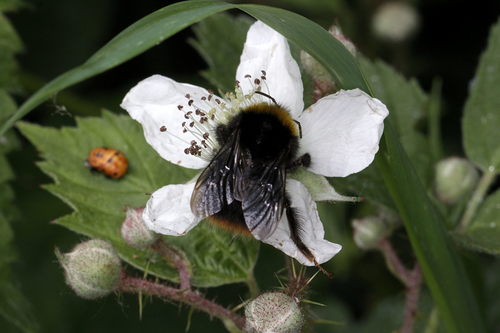
The closest relatives of the Red-Banded Yellowjacket that you can see in Tatra National Park (order Hymenoptera, Ants, Bees, Wasps, and Sawflies) are Common Carder Bumble Bee (about 20%), Hercules Carpenter Ant (about 20%) and Large Velvet Ant (about 20%), with each one's daily chance of a sighting.

Where does the Red-Banded Yellowjacket sighting chance come from?

GBIF citizen-science records

It is estimated from how often the Red-Banded Yellowjacket is recorded against all the insects logged in Tatra National Park (7 verified sightings from 2019 to 2026), calibrated against known sighting rates. Figures are rounded to the nearest 10% because citizen-science data supports honest approximations, not decimals, and months with records from fewer than five people show "—". How it works.

← Back to Tatra National Park