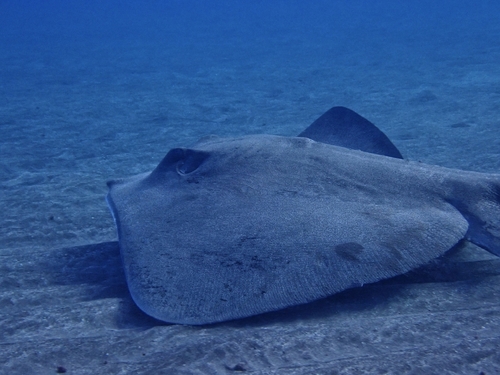
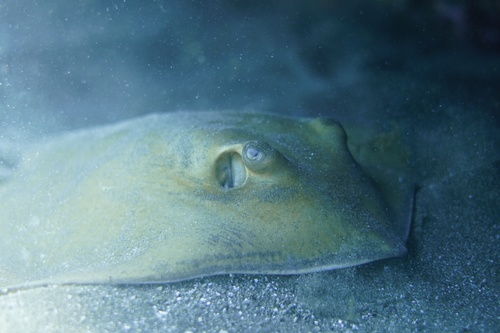
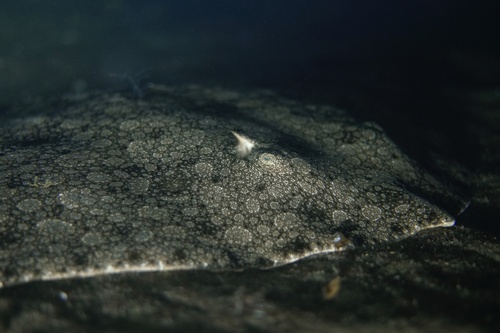
The broad stingray (Bathytoshia lata), also known as the brown stingray or Hawaiian stingray, is a species of stingray in the family Dasyatidae. They range across the Indo-Pacific from southern Africa to Hawaii, and are the predominant species of stingray in the inshore waters of the Hawaiian Islands. This benthic fish also inhabits sandy or muddy flats at depths greater than 15 m (49 ft) in the Eastern Atlantic, from southern France to Angola, including the Mediterranean Sea. Usually growing to 1 m (3 ft) across, the broad stingray has a wide, diamond-shaped pectoral fin disc with a protruding snout tip and a long tail with a ventral fin fold. At night, this species actively forages for bottom-dwelling invertebrates and bony fishes, often near the boundaries of reefs. Reproduction is aplacental viviparous. As substantial threats to its population exist in many areas of its wide distribution, IUCN has listed this species as Vulnerable.
American zoologist Samuel Garman described the broad stingray in an 1880 issue of the scientific journal Bulletin of the Museum of Comparative Zoology, giving it the name Trygon lata from the Latin word for "broad". Subsequent...