Duckbill Ray

Duckbill Ray

Aetomylaeus bovinus

Daily sighting probability ~10% · With luck
at Teno-Rasca Marine Strip (Tenerife)

In 3 days ~40% in a week ~70%

5 Verified sightings at Teno-Rasca Marine Strip (Tenerife) From 2019 to 2026
5 In 1 park
February Best month
☀️ Diurnal When it's spotted

About the Duckbill Ray

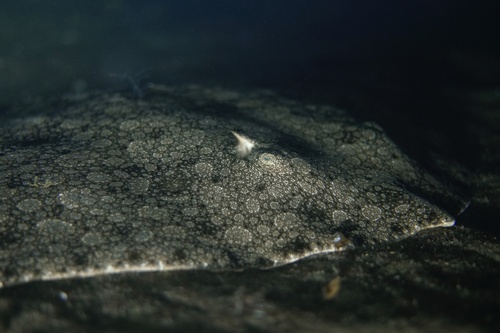
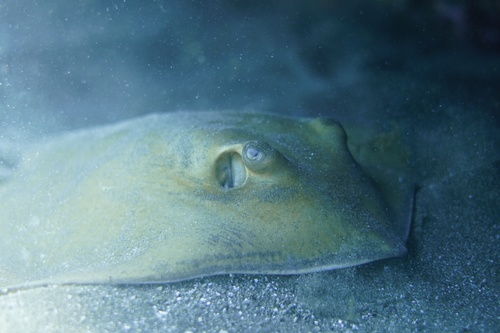
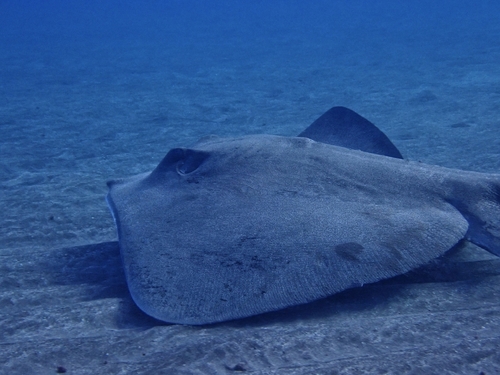
Aetomylaeus bovinus, also known as the bull ray, duckbill ray, or duckbill eagle ray, is a species of large stingray of the family Myliobatidae found around the coasts of Europe and Africa. The species is ovoviviparous and reach sexual maturity at four to six years old. With a low fecundity of three to four pups per litter and a long gestation of six to 12 months (depending on the geographical zone), this species has a very sensitive life history.

Very little is known concerning the ecology and behavior of A. bovinus. However, it is part of the coastal marine megafauna, and with a maximum discal width (tip to tip) of 2.22 m (7 ft 3 in), 1.5 m (4 ft 11 in) in length and weighing up to 116 kg (256 lb), bull rays can be considered as giants of the shallow waters. Like in many elasmobranch species, females are larger and heavier than males. The species does exhibit some schooling behaviours, that are currently not understood.

Their large maximum size and general preference for shallow depth ranges of 0–30 m (0–98 ft) exposes them to various threats. Bull rays appear to be extremely rare throughout the Mediterranean region, and its current population trend is decreasing...

Wikipedia →

Global Distribution

Parks Where Found

# Park Country Daily sighting probability
1 Teno-Rasca Marine Strip (Tenerife) 🇪🇸 Spain
~10%

More parks will be added in future updates.

Zoos & Centres Where Found

# Zoo / Centre Country
1 Lisbon Oceanarium 🇵🇹 Portugal In captivity
2 Lisbon Zoo 🇵🇹 Portugal In captivity
3 L'Oceanogràfic 🇪🇸 Spain In captivity
4 Georgia Aquarium 🇺🇸 United States In captivity
5 Aquarium of the Americas 🇺🇸 United States In captivity

Before you go

What are the chances of seeing a Duckbill Ray in Teno-Rasca Marine Strip (Tenerife)?

With luck

About 10% of wildlife watchers report a Duckbill Ray sighting in Teno-Rasca Marine Strip (Tenerife) on a given day, based on 5 verified sightings from GBIF citizen-science data from 2019 to 2026. It is the 8th most-seen of the 9 sharks and rays we can rate there. Over three days the chance rises to about 40%, and over a week to about 70%, if each day is a fresh chance.

When is the best time to see a Duckbill Ray in Teno-Rasca Marine Strip (Tenerife)?

January–February and July

In those months about 40% of wildlife watchers report a Duckbill Ray in Teno-Rasca Marine Strip (Tenerife) on a given day, against under 5% in August–September and November, the lowest months. March has too few records to rate.

What time of day is best to see a Duckbill Ray?

Between 9 am and noon

Across all the parks we cover, that three-hour window holds the most Duckbill Ray sightings with a recorded time, and about 8 in 10 of them come between 6 am and 6 pm: it is a daytime animal.

Where else can you see a Duckbill Ray?

Only Teno-Rasca Marine Strip (Tenerife), in our data

Teno-Rasca Marine Strip (Tenerife) is the only park on Wallace's Line with enough records to rate Duckbill Ray sightings: about 10% of wildlife watchers there report one on a given day.

Where does the Duckbill Ray sighting chance come from?

GBIF citizen-science records

It is estimated from how often the Duckbill Ray is recorded against all the sharks and rays logged in Teno-Rasca Marine Strip (Tenerife) (5 verified sightings from 2019 to 2026), calibrated against known sighting rates. Figures are rounded to the nearest 10% because citizen-science data supports honest approximations, not decimals, and months with records from fewer than five people show "—". How it works.

← Back to Teno-Rasca Marine Strip (Tenerife)