Culpeo

Culpeo

Lycalopex culpaeus

Silhouette: PhyloPic

LCLeast ConcernNTVUENCR
Daily sighting probability ~40% · Likely
at Torres del Paine National Park

In 3 days ~80% in a week >90%

48 Verified sightings at Torres del Paine National Park From 2019 to 2026
160 In all 5 parks
October Best month
☀️ Diurnal When it's spotted

About the Culpeo

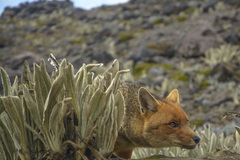
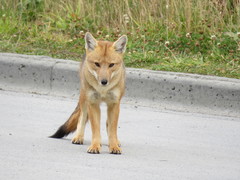
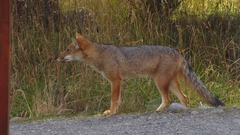
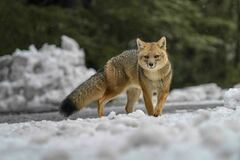
The culpeo (Lycalopex culpaeus), also known as Culpeo zorro, Andean zorro, Andean fox, Paramo wolf, Andean wolf, and colpeo fox, is a species of South American fox. Despite the name, it is not a true fox, but more closely related to wolves and jackals. Its appearance resembles that of foxes due to convergent evolution.

The culpeo's diet consists largely of rodents, rabbits, birds and lizards, and to a lesser extent, plant material and carrion. They may prey on Andean flamingos and baby vicuña. The culpeo sometimes attacks farm animals, among them sheep, goats and poultry; for this, it is hunted in rural Chile and Argentina. In some regions, it has become rare, but overall the species is not threatened with extinction.

The culpeo was domesticated by the Selkʼnam people of Tierra del Fuego, producing the Fuegian dog which became extinct in the late 19th or early 20th century. The culpeo is a canid intermediate in size between a red fox and a coyote. It is the second-largest native canid on the continent after the maned wolf. In appearance, it bears many similarities to the widely recognized red fox. It has grey and reddish fur, a white chin, reddish legs and a stripe... Wikipedia →

Sounds

Recording0:08

Chile · 2025

© nitsuga74 · iNaturalist · CC BY-NC 4.0

Global Distribution

Parks Where Found

# Park Country Daily sighting probability
1 Tierra del Fuego National Park 🇦🇷 Argentina
~50%
2 Torres del Paine National Park 🇨🇱 Chile
~40%
3 Nahuel Huapi National Park 🇦🇷 Argentina
~40%
4 Lauca National Park 🇨🇱 Chile
~40%
5 Vicente Pérez Rosales National Park 🇨🇱 Chile
~30%

Cities Where Found

# City Country Daily sighting probability
1 Santiago 🇨🇱 Chile
~10%

Zoos & Centres Where Found

# Zoo / Centre Country
1 Bioparque Municipal Vesty Pakos 🇧🇴 Bolivia In captivity
2 Amaru 🇪🇨 Ecuador In captivity
3 Parque de las Leyendas 🇵🇪 Peru In captivity
4 Chilean National Zoo 🇨🇱 Chile In captivity
5 Zoológico de Concepción 🇨🇱 Chile In captivity
6 Zoológico de Oruro 🇧🇴 Bolivia In captivity
7 Agroflori Parque de las Aves 🇧🇴 Bolivia In captivity
8 Ralph Perkins II Wildlife Center and Woods Garden 🇺🇸 United States In captivity
9 Cóndor 🇧🇴 Bolivia In captivity

Before you go

What are the chances of seeing a Culpeo in Torres del Paine National Park?

Likely

About 40% of wildlife watchers report a Culpeo sighting in Torres del Paine National Park on a given day, based on 48 verified sightings from GBIF citizen-science data from 2019 to 2026. It is the 3rd most-seen of the 8 mammals we can rate there. Over three days the chance rises to about 80%, and over a week to over 90%, if each day is a fresh chance.

When is the best time to see a Culpeo in Torres del Paine National Park?

January, May and October

In those months about 50% of wildlife watchers report a Culpeo in Torres del Paine National Park on a given day, against under 5% in September, the lowest month.

What time of day is best to see a Culpeo?

Between 10 am and 1 pm

Across all the parks we cover, that three-hour window holds the most Culpeo sightings with a recorded time, and about 8 in 10 of them come between 6 am and 6 pm: it is a daytime animal.

Is Torres del Paine National Park the best place to see a Culpeo?

2nd of 5

Of the 5 parks where we can rate Culpeo sightings, Torres del Paine National Park ranks 2nd at about 40%. The best odds are in Tierra del Fuego National Park (Argentina, about 50%). All parks ranked.

Where does the Culpeo sighting chance come from?

GBIF citizen-science records

It is estimated from how often the Culpeo is recorded against all the mammals logged in Torres del Paine National Park (48 verified sightings from 2019 to 2026), calibrated against known sighting rates. Figures are rounded to the nearest 10% because citizen-science data supports honest approximations, not decimals, and months with records from fewer than five people show "—". How it works.

← Back to Torres del Paine National Park