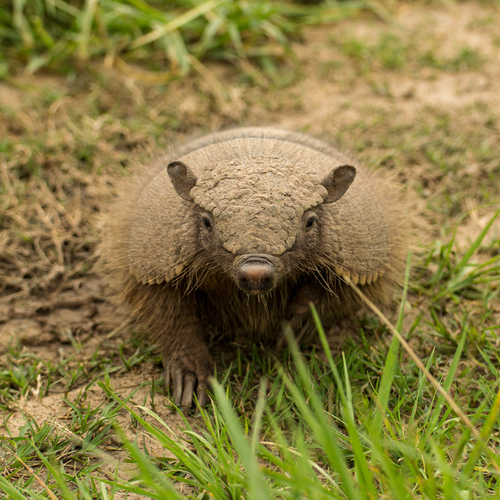
Olive Grass Mouse

Olive Grass Mouse

Abrothrix olivaceus

Silhouette: Nina Skinner · PhyloPic

LCLeast ConcernNTVUENCR
Daily sighting probability ~20% · Possible
at Torres del Paine National Park

In 3 days ~40% in a week ~70%

11 Verified sightings at Torres del Paine National Park From 2019 to 2026
11 In 1 park
January Best month
☀️ Diurnal When it's spotted

About the Olive Grass Mouse

Abrothrix olivacea, also known as the olive grass mouse or olive akodont, is a species of rodent in the genus Abrothrix of family Cricetidae. It is found from northern Chile into southern Chile and Argentina, including the islands of Tierra del Fuego. It is prone to large swings in population size.

The olive grass mouse is a small rodent with a total length of about 17 cm (6.7 in). The upper parts are greyish-brown, sometimes slightly yellowish around the snout, and the underparts are pale to mid-grey. A scaffold-level genome assembly of Abrothrix olivacea was published in 2026. The genome size is approximately 2.25 Gb, with a BUSCO completeness of 98.6%. A total of 21,476 protein-coding genes were identified. This was reported as the first genome assembly for a member of the sigmodontine tribe Abrotrichini.

Abrothrix olivacea has had a complex history in both of the genera Akodon and Abrothrix, and includes at least 27 synonyms. A few, including markhami, mansoensis, and xanthorhinus have been viewed as valid species until recent years, and several subspecies are still recognized, including Abrothrix olivacea markhami. Wikipedia →

Global Distribution

Parks Where Found

# Park Country Daily sighting probability
1 Torres del Paine National Park 🇨🇱 Chile
~20%

More parks will be added in future updates.

Before you go

What are the chances of seeing an Olive Grass Mouse in Torres del Paine National Park?

Possible

About 20% of wildlife watchers report an Olive Grass Mouse sighting in Torres del Paine National Park on a given day, based on 11 verified sightings from GBIF citizen-science data from 2019 to 2026. It is the 8th most-seen of the 8 mammals we can rate there. Over three days the chance rises to about 40%, and over a week to about 70%, if each day is a fresh chance.

When is the best time to see an Olive Grass Mouse in Torres del Paine National Park?

January and February

In those months about 30% of wildlife watchers report an Olive Grass Mouse in Torres del Paine National Park on a given day, against under 5% in April–July, September–October and December, the lowest months.

What time of day is best to see an Olive Grass Mouse?

Between 9 am and noon

Across all the parks we cover, that three-hour window holds the most Olive Grass Mouse sightings with a recorded time, and about 8 in 10 of them come between 6 am and 6 pm: it is a daytime animal.

Where else can you see an Olive Grass Mouse?

Only Torres del Paine National Park, in our data

Torres del Paine National Park is the only park on Wallace's Line with enough records to rate Olive Grass Mouse sightings: about 20% of wildlife watchers there report one on a given day.

Where does the Olive Grass Mouse sighting chance come from?

GBIF citizen-science records

It is estimated from how often the Olive Grass Mouse is recorded against all the mammals logged in Torres del Paine National Park (11 verified sightings from 2019 to 2026), calibrated against known sighting rates. Figures are rounded to the nearest 10% because citizen-science data supports honest approximations, not decimals, and months with records from fewer than five people show "—". How it works.

← Back to Torres del Paine National Park