European Mole Cricket

European Mole Cricket

Gryllotalpa gryllotalpa

Daily sighting probability ~10% · With luck
at Triglav National Park

In 3 days ~30% in a week ~60%

10 Verified sightings at Triglav National Park From 2019 to 2026
37 In all 5 parks
June Best month
☀️ Diurnal When it's spotted

About the European Mole Cricket

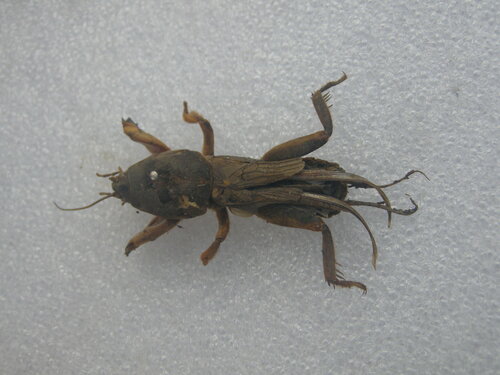
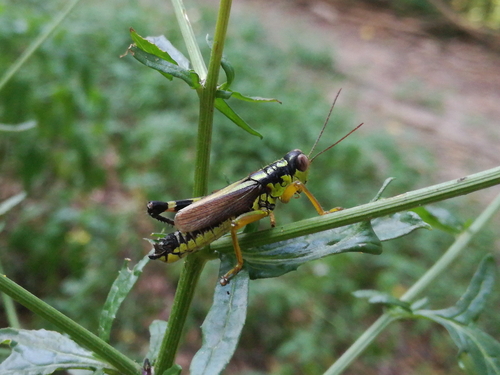
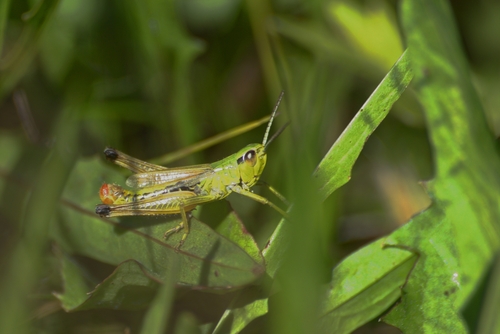
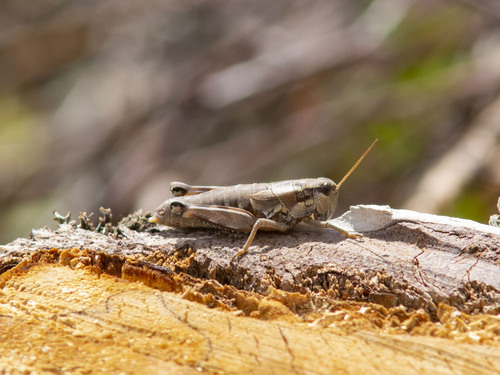
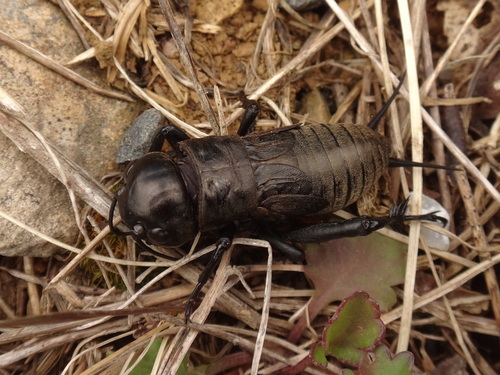
Gryllotalpa gryllotalpa, commonly known as the European mole cricket, is widespread in Europe and has been introduced to the eastern United States. Its scientific name is derived from the Latin 'gryllus' (cricket); and 'talpa' (mole), because of the fine dense fur which covers it and its subterranean habits, and because of the mole-like forelegs adapted for digging, it's a good example of convergent evolution.

The body length is about 50 millimetres (2.0 in) in males and 70 millimetres (2.8 in) in females. The cricket is dark brown with a silky shimmer and yellowish underside and is covered with fine velvety hairs. The forelegs are powerful and modified for digging. The elytra are half the length of the abdomen and the wings are transparent and netted with veins. They are folded into pleats and seldom used as the cricket normally remains below the ground. The males can be distinguished from the females by the open vein area in the forewing known as the 'harp' while the females lack the external ovipositor that is possessed by other crickets.

This mole cricket occurs throughout much of the Western Palaearctic, but is replaced by similar species... Wikipedia →

Global Distribution

Parks Where Found

# Park Country Daily sighting probability
1 Biebrza National Park 🇵🇱 Poland
~20%
2 Triglav National Park 🇸🇮 Slovenia
~10%
3 Białowieża National Park 🇵🇱 Poland
~10%
4 Fertő-Hanság National Park 🇭🇺 Hungary
~10%
5 Pyrénées National Park 🇫🇷 France
<5%

Cities Where Found

# City Country Daily sighting probability
1 Amsterdam 🇳🇱 Netherlands
~10%
2 Rotterdam [The Hague] 🇳🇱 Netherlands
<5%
3 Kazan 🇷🇺 Russia
<5%
4 Warsaw 🇵🇱 Poland
<5%

Before you go

What are the chances of seeing a European Mole Cricket in Triglav National Park?

With luck

About 10% of wildlife watchers report a European Mole Cricket sighting in Triglav National Park on a given day, based on 10 verified sightings from GBIF citizen-science data from 2019 to 2026. It is the 141st most-seen of the 260 insects we can rate there. Over three days the chance rises to about 30%, and over a week to about 60%, if each day is a fresh chance.

When is the best time to see a European Mole Cricket in Triglav National Park?

June

In that month about 30% of wildlife watchers report a European Mole Cricket in Triglav National Park on a given day, against under 5% in September to April, the lowest months.

What time of day is best to see a European Mole Cricket?

Between 9 am and noon

Across all the parks we cover, that three-hour window holds the most European Mole Cricket sightings with a recorded time, and about 7 in 10 of them come between 6 am and 6 pm: it is a daytime animal.

Is Triglav National Park the best place to see a European Mole Cricket?

2nd of 5

Of the 5 parks where we can rate European Mole Cricket sightings, Triglav National Park ranks 2nd at about 10%. The best odds are in Biebrza National Park (Poland, about 20%).

Which relatives of the European Mole Cricket live in Triglav National Park?

Same order: Orthoptera

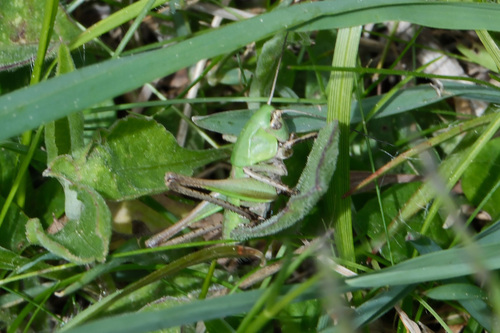
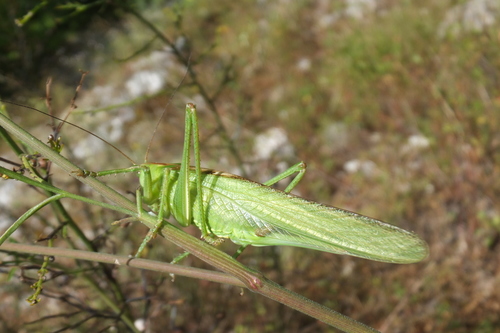
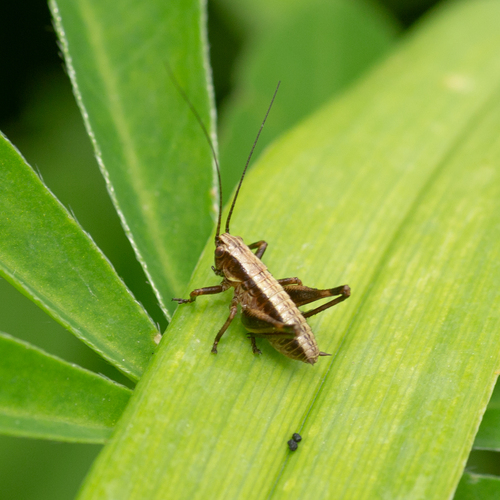
The closest relatives of the European Mole Cricket that you can see in Triglav National Park (order Orthoptera, Grasshoppers, Crickets, and Katydids) are Alpine Dark Bush-Cricket (about 40%), Wart-Biter (about 30%) and Great Green Bush-Cricket (about 30%), with each one's daily chance of a sighting.

Where does the European Mole Cricket sighting chance come from?

GBIF citizen-science records

It is estimated from how often the European Mole Cricket is recorded against all the insects logged in Triglav National Park (10 verified sightings from 2019 to 2026), calibrated against known sighting rates. Figures are rounded to the nearest 10% because citizen-science data supports honest approximations, not decimals, and months with records from fewer than five people show "—". How it works.

← Back to Triglav National Park