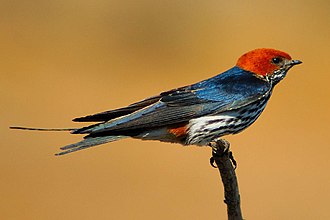
Magpie Shrike

Magpie Shrike

Urolestes melanoleucus

Silhouette: PhyloPic

Daily sighting probability <5% · Rare
at uMkhuze Game Reserve

In 3 days <5% in a week ~10%

5 Verified sightings at uMkhuze Game Reserve From 2019 to 2026
9,369 In all 14 parks
September Best month
☀️ Diurnal When it's spotted

About the Magpie Shrike

The magpie shrike (Urolestes melanoleucus), also known as the African long-tailed shrike, is a species of bird in the family Laniidae. It is the only species placed in the genus Urolestes. It is native to the grasslands of eastern and southeastern Africa, where its natural habitats are dry savannah, moist savannah, and subtropical or tropical dry shrubland. It has a very wide range and is common in places, and the International Union for Conservation of Nature has assessed its conservation status as being of "least concern".

The magpie shrike was formally described in 1831 as Lanius melanoleucus by the English naturalist William Jardine based on three specimens collected by Andrew Smith near the Orange River in South Africa. The specific epithet combines the Ancient Greek μελανος/melanos meaning "black" with λευκος/leukos meaning "white". The genus Urolestes was introduced in 1851 by the German ornithologist Jean Cabanis to accommodate a single species, the magpie shrike. The genus name combines the Ancient Greek ουρα/oura meaning "tail" with λῃστης/lēistēs meaning "robber" (i.e. shrike). Based on the results of molecular genetic studies, this species has sometimes been... Wikipedia →

Sounds

Call0:25

South Africa · 2026

© Marna Buys · XC1155524 · CC BY-NC-SA 4.0

Song0:14

South Africa · 2023

© Marc Anderson · XC877029 · CC BY-NC-ND 4.0

Call0:10

Zambia · 2022

© Dries Van de Loock · XC758583 · CC BY-NC-ND 4.0

Global Distribution

Parks Where Found

# Park Country Daily sighting probability
1 Tarangire National Park 🇹🇿 Tanzania
~70%
2 Hwange National Park 🇿🇼 Zimbabwe
~60%
3 Kruger National Park 🇿🇦 South Africa
~50%
4 Moremi Game Reserve 🇧🇼 Botswana
~50%
5 Ruaha National Park 🇹🇿 Tanzania
~40%
6 Chobe National Park 🇧🇼 Botswana
~30%
7 Serengeti National Park 🇹🇿 Tanzania
~30%
8 Pilanesberg National Park 🇿🇦 South Africa
~30%
9 Gonarezhou National Park 🇿🇼 Zimbabwe
~10%
10 Masai Mara National Reserve 🇰🇪 Kenya
~10%
11 Lake Manyara National Park 🇹🇿 Tanzania
<5%
12 Ngorongoro Conservation Area 🇹🇿 Tanzania
<5%
13 Kafue National Park 🇿🇲 Zambia
<5%
14 uMkhuze Game Reserve 🇿🇦 South Africa
<5%

Zoos & Centres Where Found

# Zoo / Centre Country
1 San Diego Zoo 🇺🇸 United States In captivity
2 Zoo Pilsen 🇨🇿 Czechia In captivity
3 Omaha’s Henry Doorly Zoo and Aquarium 🇺🇸 United States In captivity
4 Audubon Zoo 🇺🇸 United States In captivity
5 Oregon Zoo 🇺🇸 United States In captivity
6 Memphis Zoo 🇺🇸 United States In captivity
7 Wilhelma 🇩🇪 Germany In captivity
8 Houston Zoo 🇺🇸 United States In captivity
9 San Antonio Zoo 🇺🇸 United States In captivity
10 Cologne Zoological Garden 🇩🇪 Germany In captivity
11 Philadelphia Zoo 🇺🇸 United States In captivity
12 Vogelpark Heiligenkirchen 🇩🇪 Germany In captivity
13 Cologne Zoo Aquarium 🇩🇪 Germany In captivity

Before you go

What are the chances of seeing a Magpie Shrike in uMkhuze Game Reserve?

Rare

Under 5% of wildlife watchers report a Magpie Shrike sighting in uMkhuze Game Reserve on a given day, based on 5 verified sightings from GBIF citizen-science data from 2019 to 2026. It is the 273rd most-seen of the 283 birds we can rate there. Over three days the chance rises to under 5%, and over a week to about 10%, if each day is a fresh chance.

When is the best time to see a Magpie Shrike in uMkhuze Game Reserve?

September

In that month about 10% of wildlife watchers report a Magpie Shrike in uMkhuze Game Reserve on a given day, against under 5% in October to August, the lowest months. That is one of uMkhuze Game Reserve's driest months, with about 30 mm of rain against 120 mm in February.

What time of day is best to see a Magpie Shrike?

Between 8 and 11 am

Across all the parks we cover, that three-hour window holds the most Magpie Shrike sightings with a recorded time, and about 9 in 10 of them come between 6 am and 6 pm: it is a daytime animal.

Which relatives of the Magpie Shrike live in uMkhuze Game Reserve?

Same family: Laniidae

The closest relatives of the Magpie Shrike that you can see in uMkhuze Game Reserve (family Laniidae, Shrikes) are Red-backed Shrike (about 30%) and Southern Fiscal (about 30%), with each one's daily chance of a sighting.

Where does the Magpie Shrike sighting chance come from?

GBIF citizen-science records

It is estimated from how often the Magpie Shrike is recorded against all the birds logged in uMkhuze Game Reserve (5 verified sightings from 2019 to 2026), calibrated against known sighting rates. Figures are rounded to the nearest 10% because citizen-science data supports honest approximations, not decimals, and months with records from fewer than five people show "—". How it works.

← Back to uMkhuze Game Reserve