Black-Veined Moth

Black-Veined Moth

Siona lineata

Daily sighting probability ~10% · With luck
at Vanoise National Park

In 3 days ~30% in a week ~60%

8 Verified sightings at Vanoise National Park From 2019 to 2026
108 In all 8 parks
June Best month
☀️ Diurnal When it's spotted

About the Black-Veined Moth

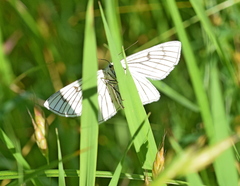
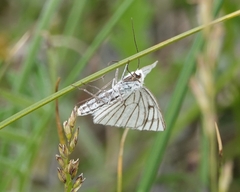
Siona lineata, the black-veined moth, is a moth of the family Geometridae. The species was first described by Giovanni Antonio Scopoli in his 1763 Entomologia Carniolica. Siona lineata oenotriensis (Staudinger, 1915). This rather common species can be found throughout Europe. It is quite rare in the United Kingdom, only being found in east Kent. It is also present in the Amur and Ussuri Regions, southern Siberia, central Asia, Kazakhstan, Caucasus, Asia Minor and Russia.

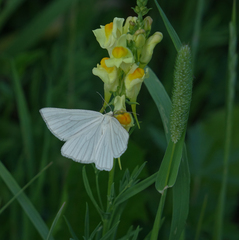
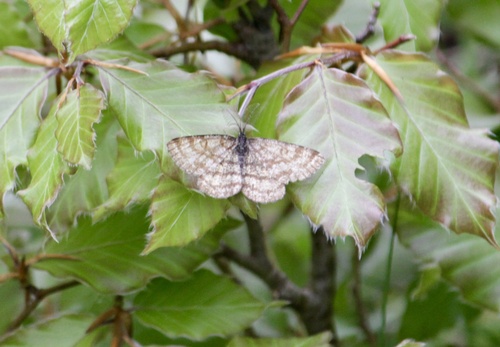
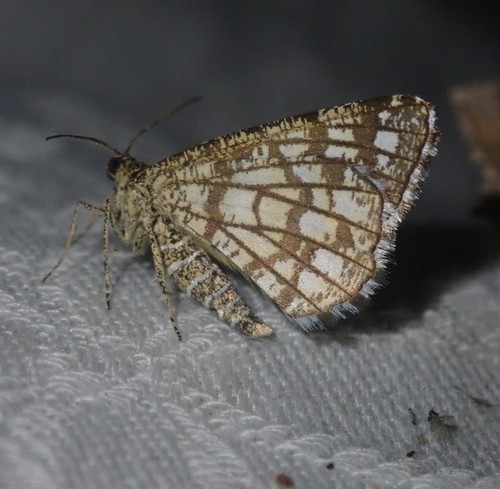
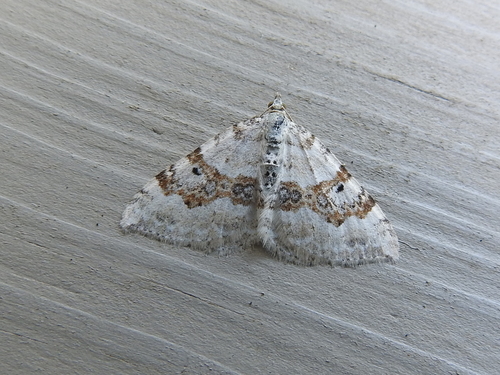
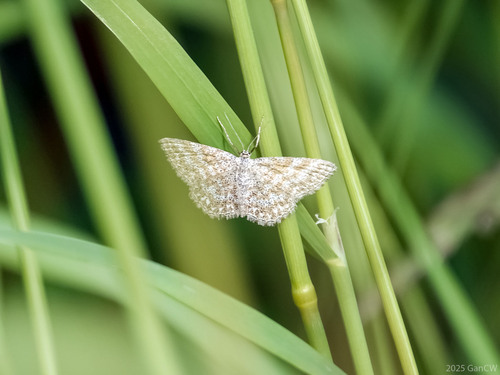
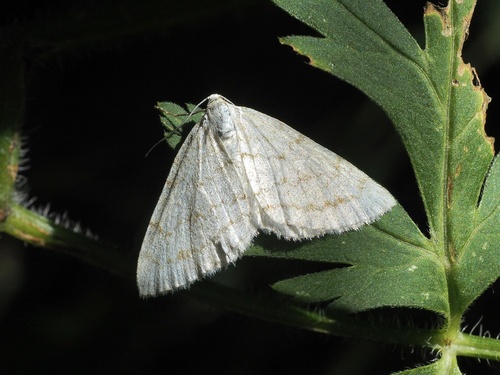
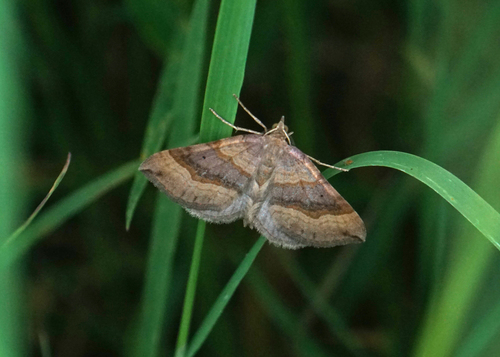
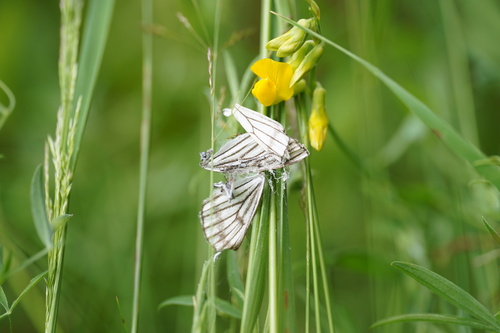
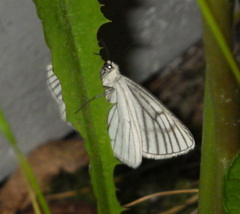
These moths inhabit limestone and chalk grassland, rough downland, open woodlands, pastures and grassy areas. The wingspan is 35–40 mm. Wings are white or cream coloured with dusky veins in the upperside and black or dark brown veins on the underside. The underside of the wings usually shows also a blackish transverse stripe beyond the middle, very faint in the hindwings. Fresh moths are usually cream coloured, but as they get older, the wings are becoming whiter. With the disappearance of the scales the black veins on the undersides become increasingly visible on the uppersides through the... Wikipedia →
Global Distribution

Parks Where Found

# Park Country Daily sighting probability
1 Biebrza National Park 🇵🇱 Poland
~20%
2 Mercantour National Park 🇫🇷 France
~10%
3 Vanoise National Park 🇫🇷 France
~10%
4 Aigüestortes National Park 🇪🇸 Spain
~10%
5 Ecrins National Park 🇫🇷 France
~10%
6 Pyrénées National Park 🇫🇷 France
~10%
7 Fertő-Hanság National Park 🇭🇺 Hungary
~10%
8 Bavarian Forest National Park 🇩🇪 Germany
~10%

Cities Where Found

# City Country Daily sighting probability
1 Kharkiv 🇺🇦 Ukraine
~10%
2 Prague 🇨🇿 Czechia
~10%
3 Novosibirsk 🇷🇺 Russia
~10%
4 Minsk 🇧🇾 Belarus
~10%
5 Kyiv 🇺🇦 Ukraine
~10%
6 Warsaw 🇵🇱 Poland
~10%
7 Nizhny Novgorod 🇷🇺 Russia
<5%
8 Vienna 🇦🇹 Austria
<5%
9 Berlin 🇩🇪 Germany
<5%
10 Saint Petersburg 🇷🇺 Russia
<5%

Before you go

What are the chances of seeing a Black-Veined Moth in Vanoise National Park?

With luck

About 10% of wildlife watchers report a Black-Veined Moth sighting in Vanoise National Park on a given day, based on 8 verified sightings from GBIF citizen-science data from 2019 to 2026. It is the 168th most-seen of the 308 insects we can rate there. Over three days the chance rises to about 30%, and over a week to about 60%, if each day is a fresh chance.

When is the best time to see a Black-Veined Moth in Vanoise National Park?

June

In that month about 30% of wildlife watchers report a Black-Veined Moth in Vanoise National Park on a given day, against under 5% in August to May, the lowest months.

What time of day is best to see a Black-Veined Moth?

Between 3 and 6 pm

Across all the parks we cover, that three-hour window holds the most Black-Veined Moth sightings with a recorded time, and about 8 in 10 of them come between 6 am and 6 pm: it is a daytime animal.

Is Vanoise National Park the best place to see a Black-Veined Moth?

3rd of 8

Of the 8 parks where we can rate Black-Veined Moth sightings, Vanoise National Park ranks 3rd at about 10%. The best odds are in Biebrza National Park (Poland, about 20%) and Mercantour National Park (France, about 10%).

Which relatives of the Black-Veined Moth live in Vanoise National Park?

Same family: Geometridae

The closest relatives of the Black-Veined Moth that you can see in Vanoise National Park (family Geometridae, Geometer Moths) are Common Heath (about 20%), Psodos quadrifaria (about 20%) and Latticed Heath (about 20%), with each one's daily chance of a sighting.

Where does the Black-Veined Moth sighting chance come from?

GBIF citizen-science records

It is estimated from how often the Black-Veined Moth is recorded against all the insects logged in Vanoise National Park (8 verified sightings from 2019 to 2026), calibrated against known sighting rates. Figures are rounded to the nearest 10% because citizen-science data supports honest approximations, not decimals, and months with records from fewer than five people show "—". How it works.

← Back to Vanoise National Park