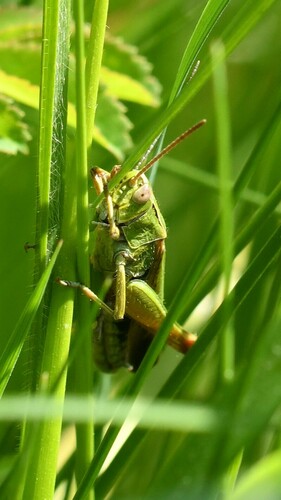
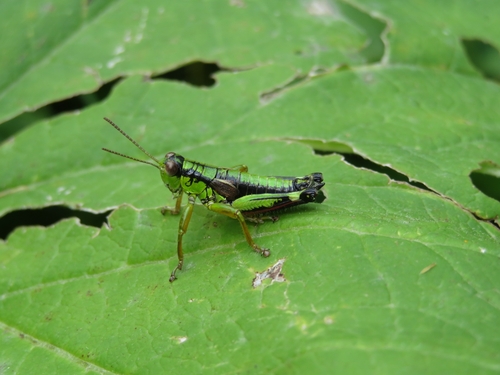
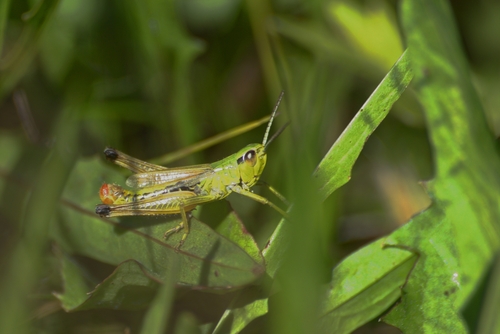
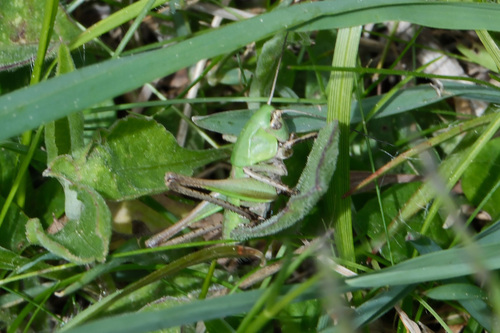
Common Mountain Grasshopper

Common Mountain Grasshopper

Podisma pedestris

Daily sighting probability ~20% · Possible
at Vanoise National Park

In 3 days ~50% in a week ~80%

22 Verified sightings at Vanoise National Park From 2019 to 2026
242 In all 7 parks
August Best month
☀️ Diurnal When it's spotted

About the Common Mountain Grasshopper

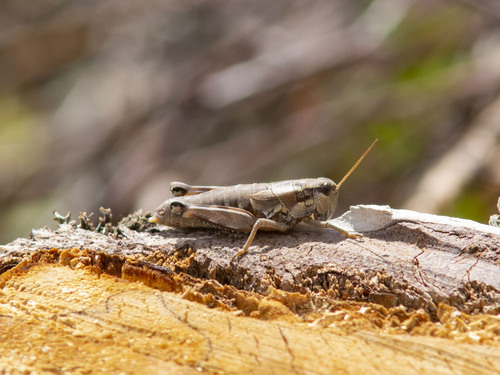
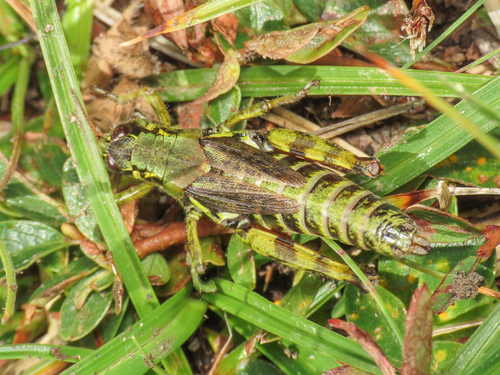
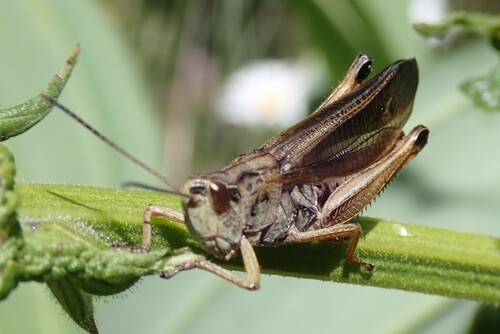
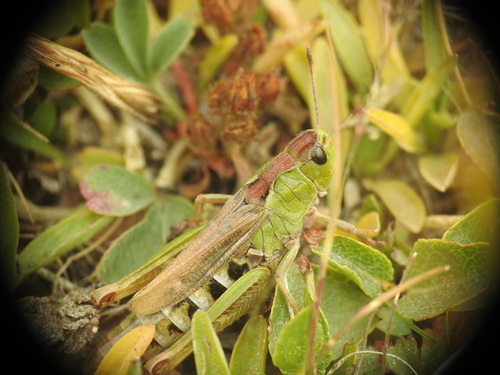
Podisma pedestris is a species of 'short-horned grasshoppers' belonging to the family Acrididae subfamily Melanoplinae. This small wingless grasshopper is found throughout most of Europe and the eastern Palearctic realm, extending to temperate mainland east Asia.

The adult males grow up to 17–25 millimetres (0.67–0.98 in) long, while the females reach 24–30 millimetres (0.94–1.18 in) of length. They can be encountered from mid June through October in dry meadows, in rocky slopes of mountains, alpine pastures and forest clearings. They feed on grasses and herbaceous plants. The females lay their eggs on the ground.

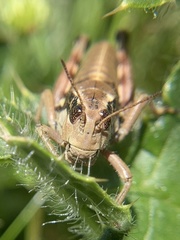
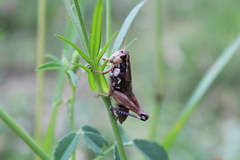
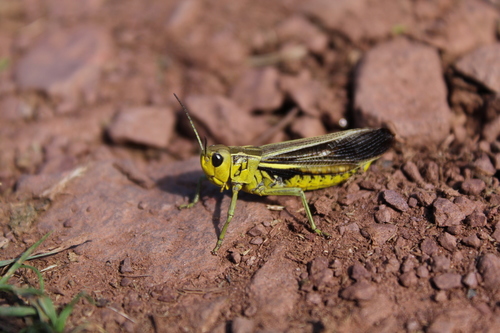
The basic coloration of the body varies from dark-brownish to yellowish, with black and yellow trasversal stripes on the sides of the abdomen. The males have brighter and more intense colours and more extensive black markings than the females. A dark longitudinal stripe runs from the eye to pronotum. The femora of the hind legs are reddish, while tibiae are bluish with white spines.

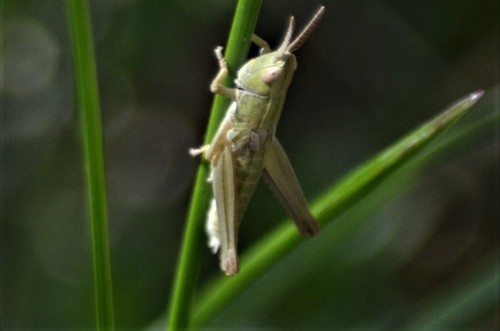
In both sexes the vestigial wings are oval, very short and unfit to flight (brachyptery), resembling those of a nymph. This species sometimes has well-developed... Wikipedia →

Global Distribution

Parks Where Found

# Park Country Daily sighting probability
1 Hohe Tauern National Park 🇦🇹 Austria
~40%
2 Aigüestortes National Park 🇪🇸 Spain
~20%
3 Triglav National Park 🇸🇮 Slovenia
~20%
4 Vanoise National Park 🇫🇷 France
~20%
5 Ecrins National Park 🇫🇷 France
~10%
6 Mercantour National Park 🇫🇷 France
~10%
7 Pyrénées National Park 🇫🇷 France
~10%

Before you go

What are the chances of seeing a Common Mountain Grasshopper in Vanoise National Park?

Possible

About 20% of wildlife watchers report a Common Mountain Grasshopper sighting in Vanoise National Park on a given day, based on 22 verified sightings from GBIF citizen-science data from 2019 to 2026. It is the 61st most-seen of the 308 insects we can rate there. Over three days the chance rises to about 50%, and over a week to about 80%, if each day is a fresh chance.

When is the best time to see a Common Mountain Grasshopper in Vanoise National Park?

August

In that month about 30% of wildlife watchers report a Common Mountain Grasshopper in Vanoise National Park on a given day, against under 5% in September to June, the lowest months.

What time of day is best to see a Common Mountain Grasshopper?

Between noon and 3 pm

Across all the parks we cover, that three-hour window holds the most Common Mountain Grasshopper sightings with a recorded time, and nearly all of them come between 6 am and 6 pm: it is a daytime animal.

Is Vanoise National Park the best place to see a Common Mountain Grasshopper?

4th of 7

Of the 7 parks where we can rate Common Mountain Grasshopper sightings, Vanoise National Park ranks 4th at about 20%. The best odds are in Hohe Tauern National Park (Austria, about 40%), Aigüestortes National Park (Spain, about 20%) and Triglav National Park (Slovenia, about 20%).

Which relatives of the Common Mountain Grasshopper live in Vanoise National Park?

Same family: Acrididae

The closest relatives of the Common Mountain Grasshopper that you can see in Vanoise National Park (family Acrididae, Short-horned Grasshoppers) are Large Banded Grasshopper (about 40%), High Mountain Grasshopper (about 30%) and Ladder Grasshopper (about 30%), with each one's daily chance of a sighting.

Where does the Common Mountain Grasshopper sighting chance come from?

GBIF citizen-science records

It is estimated from how often the Common Mountain Grasshopper is recorded against all the insects logged in Vanoise National Park (22 verified sightings from 2019 to 2026), calibrated against known sighting rates. Figures are rounded to the nearest 10% because citizen-science data supports honest approximations, not decimals, and months with records from fewer than five people show "—". How it works.

← Back to Vanoise National Park