Dark Brocade

Dark Brocade

Mniotype adusta

Daily sighting probability ~10% · With luck
at Vanoise National Park

In 3 days ~30% in a week ~50%

5 Verified sightings at Vanoise National Park From 2019 to 2026
24 In all 3 parks
May Best month
🌙 Nocturnal When it's spotted

About the Dark Brocade

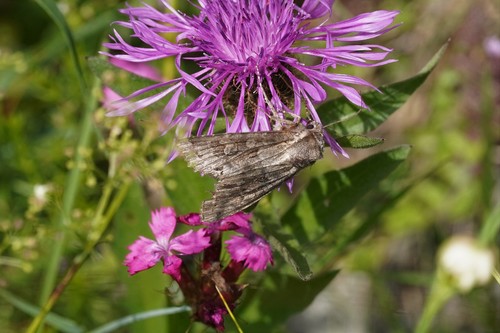
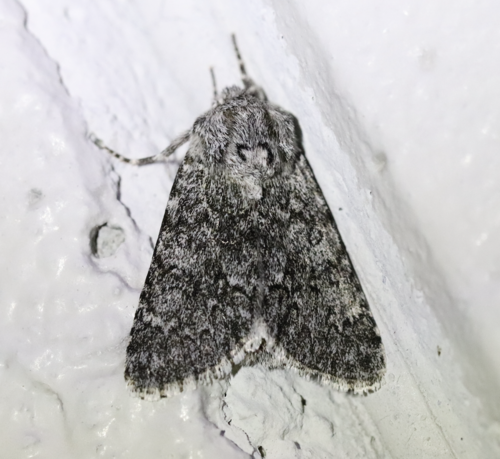
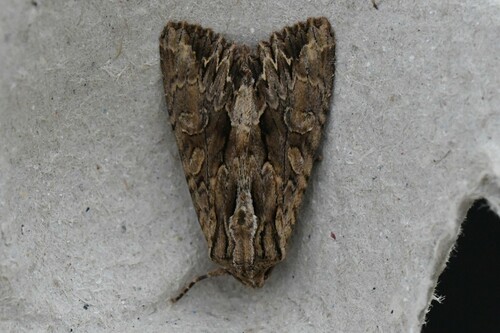
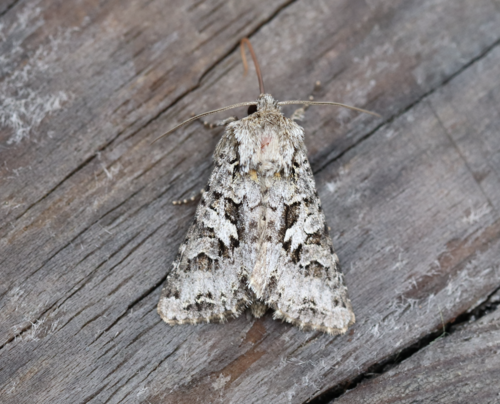
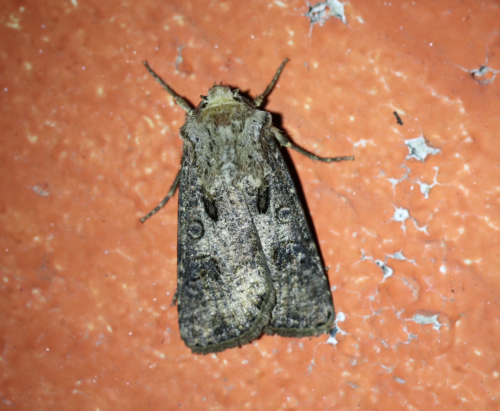
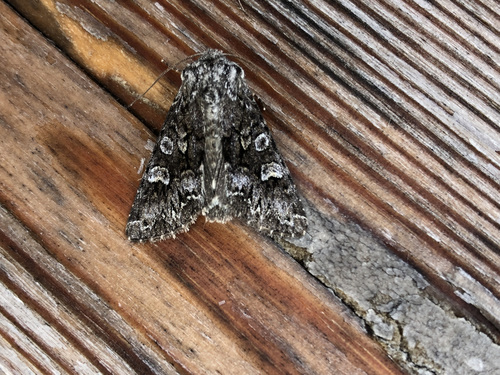
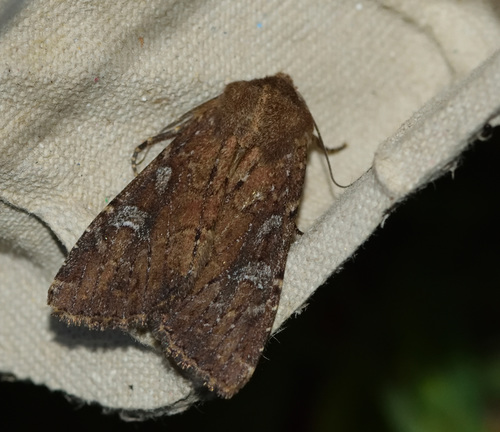
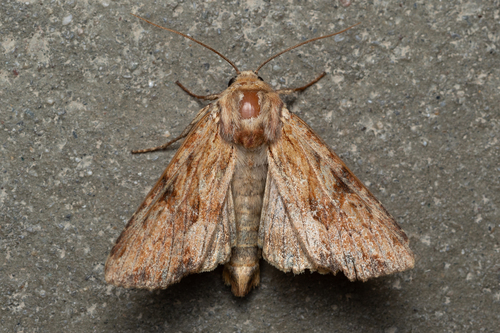
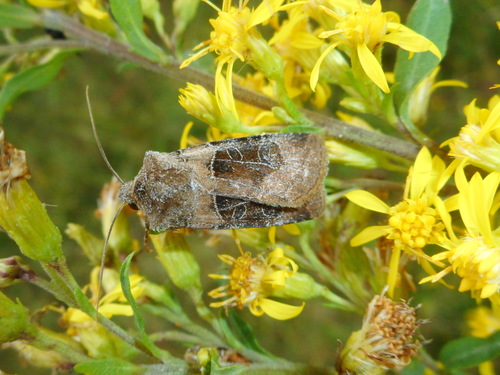
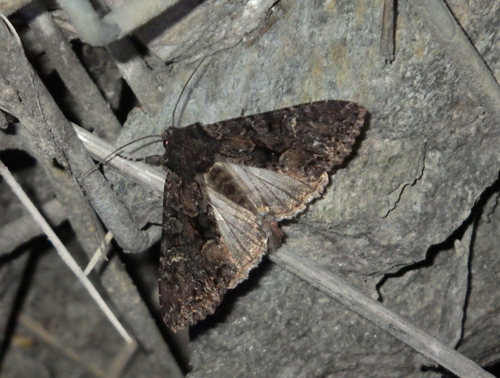
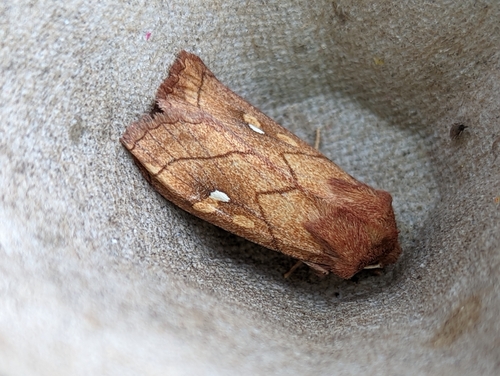
Mniotype adusta, the dark brocade, is a moth of the family Noctuidae. It was described by Eugenius Johann Christoph Esper in 1790. It is found throughout much of the Palearctic from Europe to Japan, China and Mongolia. It is also found in North America. The habitat consists of heathland, chalky downland, fenland, moorland and upland areas.

The wingspan is 42–48 mm. Forewing rufous-brown clouded with darker; the veins black dotted with white; a slight black mark below base of cell, and a short black streak from inner margin near base; inner and outer lines blackish, double, forming black white-tipped teeth on the veins; claviform stigma blackish, acute, lying on a black streak joining the two lines; orbicular and reniform reddish grey edged with black, the reniform with some whitish in outer half; submarginal line white preceded by black wedge-shaped marks; hindwing of male whitish with the termen grey; the cellspot and veins dark; much greyer in female. Of general occurrence throughout Europe and in Asia found in Armenia, Asia Minor, W. and E. Siberia, W. and E. Turkestan and Tibet; - the form vulturina Frr., from S. Russia, has the forewing... Wikipedia →
Global Distribution

Parks Where Found

# Park Country Daily sighting probability
1 Mercantour National Park 🇫🇷 France
~10%
2 Vanoise National Park 🇫🇷 France
~10%
3 Pyrénées National Park 🇫🇷 France
<5%

Before you go

What are the chances of seeing a Dark Brocade in Vanoise National Park?

With luck

About 10% of wildlife watchers report a Dark Brocade sighting in Vanoise National Park on a given day, based on 5 verified sightings from GBIF citizen-science data from 2019 to 2026. It is the 252nd most-seen of the 308 insects we can rate there. Over three days the chance rises to about 30%, and over a week to about 50%, if each day is a fresh chance.

When is the best time to see a Dark Brocade in Vanoise National Park?

May and July

In those months about 20% of wildlife watchers report a Dark Brocade in Vanoise National Park on a given day, against under 5% in June and August–April, the lowest months.

What time of day is best to see a Dark Brocade?

Between 10 pm and 1 am

Across all the parks we cover, that three-hour window holds the most Dark Brocade sightings with a recorded time, and about 9 in 10 of them come between 6 pm and 6 am: it is mostly seen at night.

Is Vanoise National Park the best place to see a Dark Brocade?

Among the best

Of the 3 parks where we can rate Dark Brocade sightings, Vanoise National Park ranks 2nd at about 10%, level with the leaders once rounded. The best odds are in Mercantour National Park (France, about 10%).

Which relatives of the Dark Brocade live in Vanoise National Park?

Same family: Noctuidae

The closest relatives of the Dark Brocade that you can see in Vanoise National Park (family Noctuidae, Cutworm Moths and Allies) are Brown-Line Bright-Eye (about 10%), Pale Shining Brown (about 10%) and Sweet Gale Moth (about 10%), with each one's daily chance of a sighting.

Where does the Dark Brocade sighting chance come from?

GBIF citizen-science records

It is estimated from how often the Dark Brocade is recorded against all the insects logged in Vanoise National Park (5 verified sightings from 2019 to 2026), calibrated against known sighting rates. Figures are rounded to the nearest 10% because citizen-science data supports honest approximations, not decimals, and months with records from fewer than five people show "—". How it works.

← Back to Vanoise National Park