Eyed Hawkmoth

Eyed Hawkmoth

Smerinthus ocellata

Daily sighting probability ~10% · With luck
at Wadden Sea National Park

In 3 days ~30% in a week ~50%

86 Verified sightings at Wadden Sea National Park From 2019 to 2026
104 In all 4 parks
July Best month
☀️🌙 Day & Night When it's spotted

About the Eyed Hawkmoth

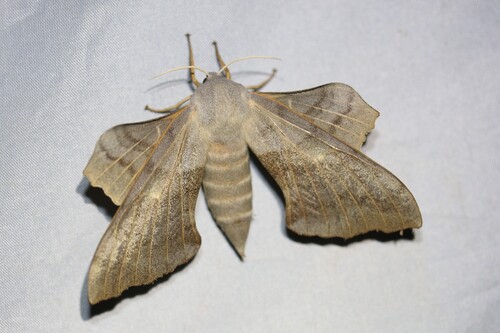
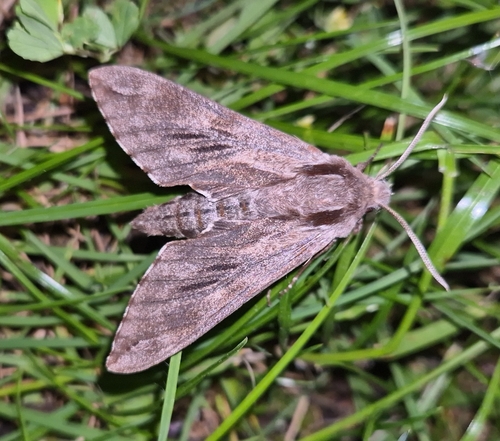
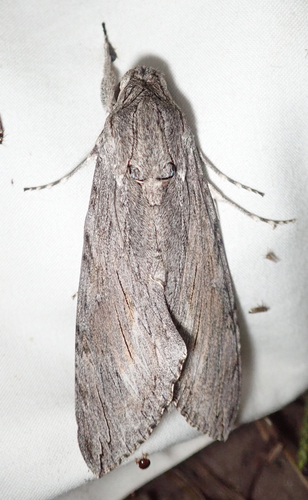
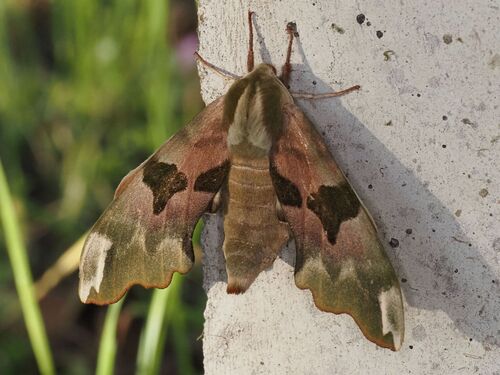
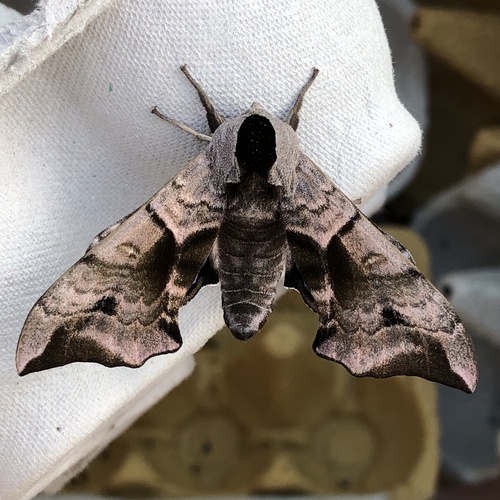
Smerinthus ocellatus, the eyed hawk-moth, is a European moth of the family Sphingidae. The species was first described by Carl Linnaeus in his 1758 10th edition of Systema Naturae. The eyespots are not visible in resting position, where the forewings cover them. They are displayed when the moth feels threatened, and may startle a potential predator, giving the moth a chance to escape.

The adult (imago) is very similar in appearance to the other two western Palaearctic Smerinthus species, Smerinthus caecus and Smerinthus kindermannii but differentiated by an apical thorn on the foretibia, and the large, circular hindwing ocellus. The upperside forewings are marked in light and dark shades of brown and resemble the colouring of bark. The hindwings are pink coloured basally and then a yellow ochre. The hindwings are dominated by a large, blue, dark-centred and black-rimmed eyespot. The thorax has light brown sides and dark brown hairs in the middle. In addition to variations in the density of the forewing pattern intensity, differences in colour are also found on the hindwing. In f. flavescens Neumann hindwing pink is replaced by yellow in f. pallida Tutt by grey and in f... Wikipedia →
Global Distribution

Parks Where Found

# Park Country Daily sighting probability
1 Biebrza National Park 🇵🇱 Poland
~20%
2 Wadden Sea National Park 🇩🇪 Germany
~10%
3 Snowdonia National Park 🇬🇧 United Kingdom
~10%
4 Bavarian Forest National Park 🇩🇪 Germany
<5%

Cities Where Found

# City Country Daily sighting probability
1 Copenhagen 🇩🇰 Denmark
~10%
2 Liverpool 🇬🇧 United Kingdom
~10%
3 Manchester 🇬🇧 United Kingdom
~10%
4 Helsinki 🇫🇮 Finland
~10%
5 Berlin 🇩🇪 Germany
<5%
6 Warsaw 🇵🇱 Poland
<5%
7 Essen 🇩🇪 Germany
<5%
8 Nizhny Novgorod 🇷🇺 Russia
<5%
9 Prague 🇨🇿 Czechia
<5%
10 Moscow 🇷🇺 Russia
<5%

Before you go

What are the chances of seeing an Eyed Hawkmoth in Wadden Sea National Park?

With luck

About 10% of wildlife watchers report an Eyed Hawkmoth sighting in Wadden Sea National Park on a given day, based on 86 verified sightings from GBIF citizen-science data from 2019 to 2026. It is the 65th most-seen of the 818 insects we can rate there. Over three days the chance rises to about 30%, and over a week to about 50%, if each day is a fresh chance.

When is the best time to see an Eyed Hawkmoth in Wadden Sea National Park?

July

In that month about 30% of wildlife watchers report an Eyed Hawkmoth in Wadden Sea National Park on a given day, against under 5% in September to April, the lowest months.

What time of day is best to see an Eyed Hawkmoth?

Between 11 pm and 2 am

Across all the parks we cover, that three-hour window holds the most Eyed Hawkmoth sightings with a recorded time, and about 6 in 10 of them come between 6 pm and 6 am: it is seen both by day and at night.

Is Wadden Sea National Park the best place to see an Eyed Hawkmoth?

2nd of 4

Of the 4 parks where we can rate Eyed Hawkmoth sightings, Wadden Sea National Park ranks 2nd at about 10%. The best odds are in Biebrza National Park (Poland, about 20%).

Which relatives of the Eyed Hawkmoth live in Wadden Sea National Park?

Same family: Sphingidae

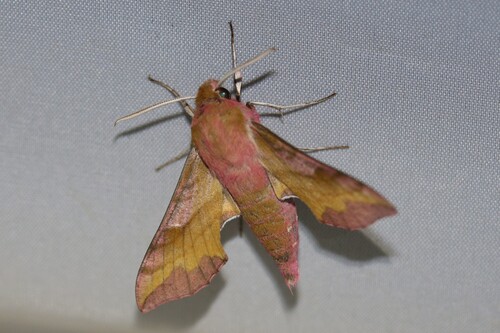
The closest relatives of the Eyed Hawkmoth that you can see in Wadden Sea National Park (family Sphingidae, Sphinx Moths) are Elephant Hawkmoth (about 10%), Eurasian Hummingbird Hawkmoth (about 10%) and Poplar Hawkmoth (about 10%), with each one's daily chance of a sighting.

Where does the Eyed Hawkmoth sighting chance come from?

GBIF citizen-science records

It is estimated from how often the Eyed Hawkmoth is recorded against all the insects logged in Wadden Sea National Park (86 verified sightings from 2019 to 2026), calibrated against known sighting rates. Figures are rounded to the nearest 10% because citizen-science data supports honest approximations, not decimals, and months with records from fewer than five people show "—". How it works.

← Back to Wadden Sea National Park