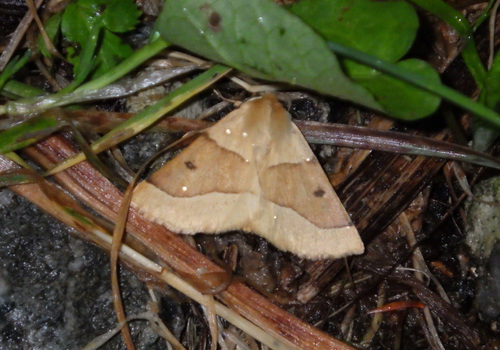
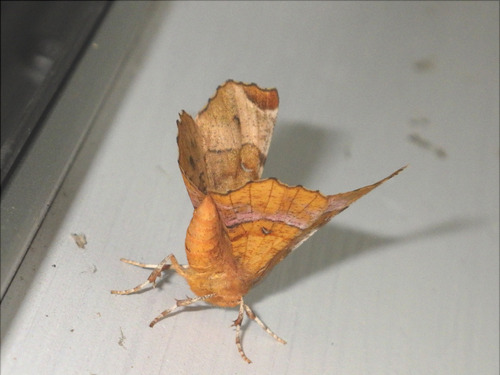
Purple Thorn

Purple Thorn

Selenia tetralunaria

Daily sighting probability <5% · Rare
at Wadden Sea National Park

In 3 days ~10% in a week ~20%

8 Verified sightings at Wadden Sea National Park From 2019 to 2026
52 In all 4 parks
July Best month
☀️🌙 Day & Night When it's spotted

About the Purple Thorn

The purple thorn (Selenia tetralunaria) is a moth of the family Geometridae. The species was first described by Johann Siegfried Hufnagel in 1767. It is a species of both Northern Europe and Central Europe. It has a scattered distribution in Britain but is absent from Ireland.

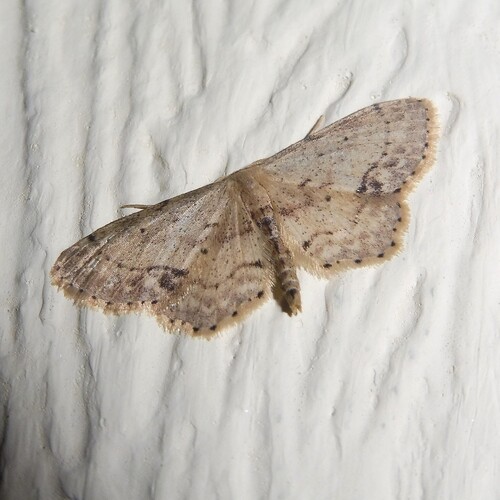
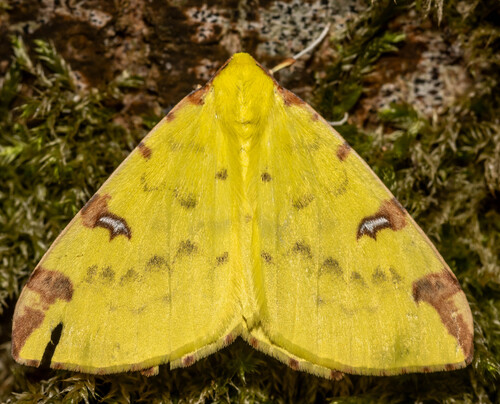
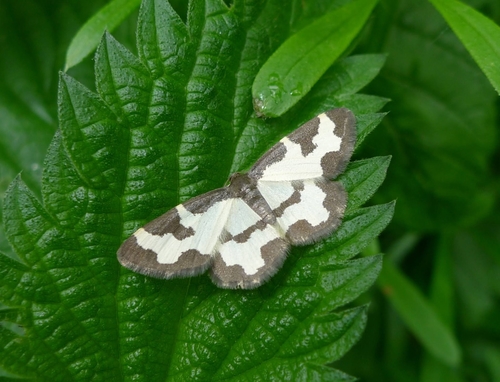
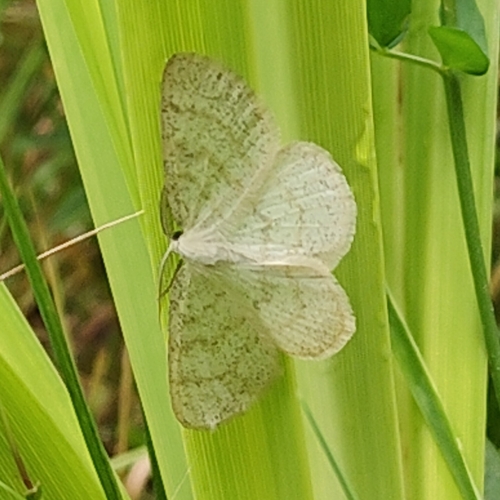
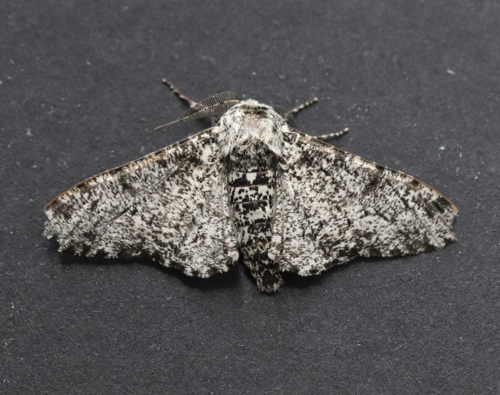
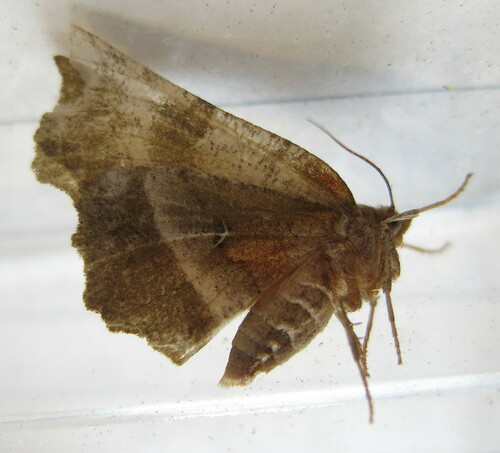
This species is dark purplish brown, paler towards the termen, with a dark spot at the apex of the forewing. Both wings are marked with a comma-shaped white mark. The margins of the wings are angular, giving the species a distinctive shape. Two broods are produced each year and they differ considerably in size and colour. Adults of the spring brood, which fly in April and May, have a wingspan of 46–52 mm. Moths of the summer brood, flying in July and August,[1] are smaller (wingspan 44–46 mm) and darker. The caterpillar is reddish brown, mottled with darker brown, and with pale greyish.

The species flies at night and is attracted to light. The caterpillar feeds on a variety of trees and shrubs (see list below). The species overwinters as a pupa. Wikipedia →
Global Distribution

Parks Where Found

# Park Country Daily sighting probability
1 Snowdonia National Park 🇬🇧 United Kingdom
~10%
2 Bavarian Forest National Park 🇩🇪 Germany
~10%
3 Pyrénées National Park 🇫🇷 France
<5%
4 Wadden Sea National Park 🇩🇪 Germany
<5%

Cities Where Found

# City Country Daily sighting probability
1 London 🇬🇧 United Kingdom
<5%
2 Moscow 🇷🇺 Russia
<5%

Before you go

What are the chances of seeing a Purple Thorn in Wadden Sea National Park?

Rare

Under 5% of wildlife watchers report a Purple Thorn sighting in Wadden Sea National Park on a given day, based on 8 verified sightings from GBIF citizen-science data from 2019 to 2026. It is the 536th most-seen of the 818 insects we can rate there. Over three days the chance rises to about 10%, and over a week to about 20%, if each day is a fresh chance.

When is the best time to see a Purple Thorn in Wadden Sea National Park?

July and August

In those months about 10% of wildlife watchers report a Purple Thorn in Wadden Sea National Park on a given day, against under 5% in September to June, the lowest months.

What time of day is best to see a Purple Thorn?

Between 7 and 10 am

Across all the parks we cover, that three-hour window holds the most Purple Thorn sightings with a recorded time, and about 6 in 10 of them come between 6 am and 6 pm: it is seen both by day and at night.

Where does the Purple Thorn sighting chance come from?

GBIF citizen-science records

It is estimated from how often the Purple Thorn is recorded against all the insects logged in Wadden Sea National Park (8 verified sightings from 2019 to 2026), calibrated against known sighting rates. Figures are rounded to the nearest 10% because citizen-science data supports honest approximations, not decimals, and months with records from fewer than five people show "—". How it works.

← Back to Wadden Sea National Park