



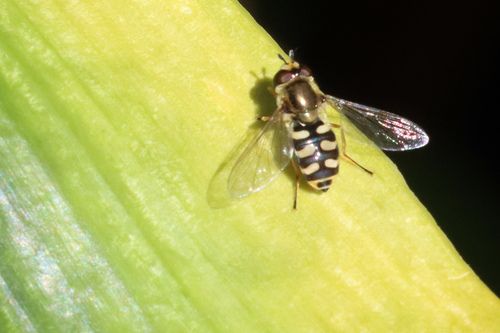
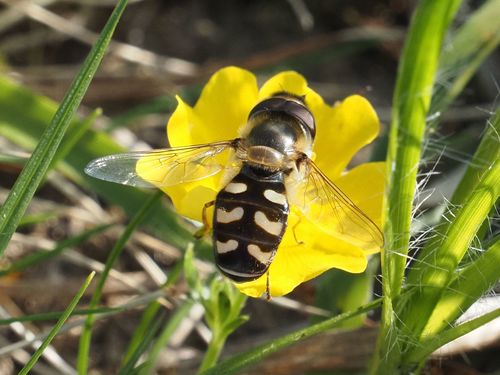
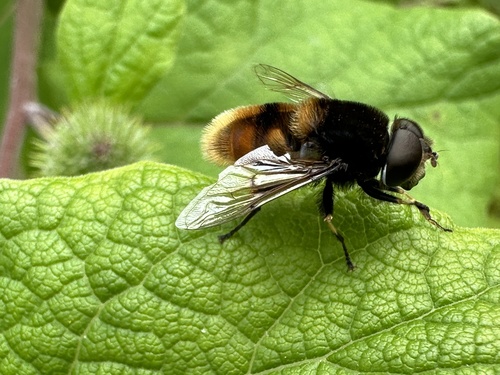
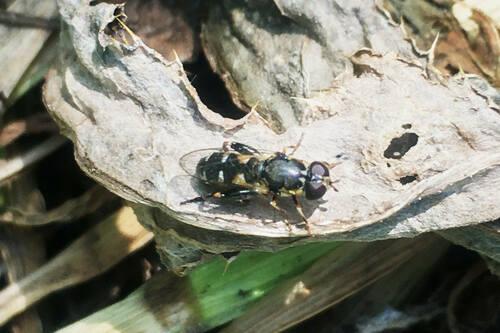

Spring Epistrophe

Spring Epistrophe

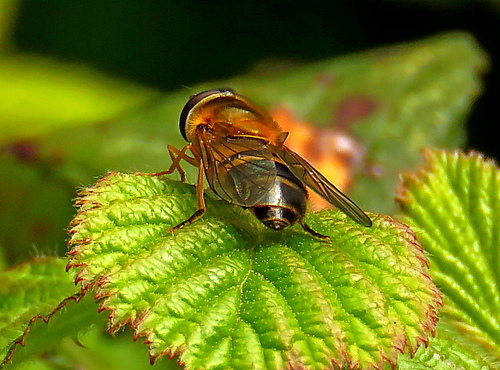
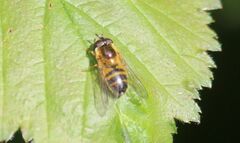
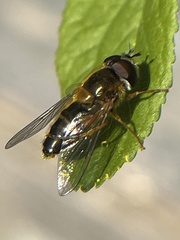
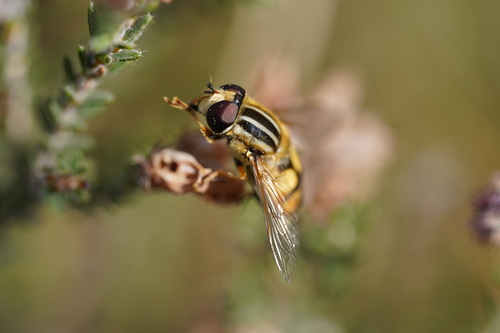
Epistrophe eligans

Daily sighting probability <5% · Rare
at Wadden Sea National Park

In 3 days ~10% in a week ~20%

7 Verified sightings at Wadden Sea National Park From 2019 to 2026
7 In 1 park
May Best month
☀️ Diurnal When it's spotted

About the Spring Epistrophe

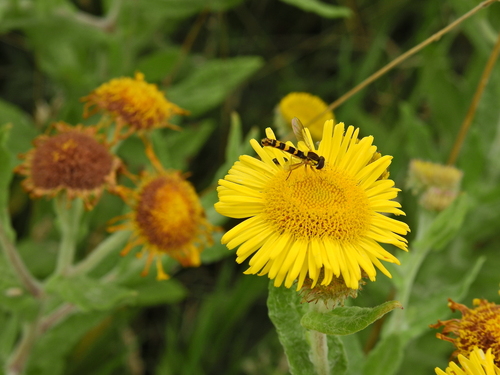
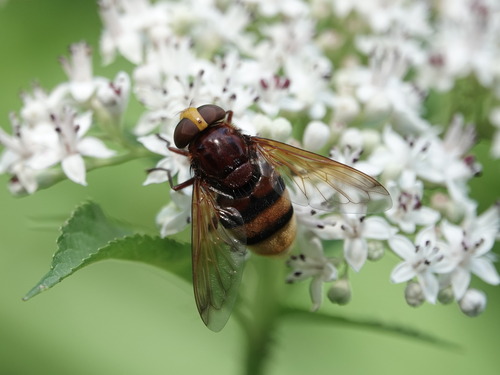
Epistrophe eligans is a European species of hoverfly. External images For terms see Morphology of Diptera Wing length 6·25-9·5 mm. Eyes bare. Stigma pale yellow. Tergite 4 with smaller yellow markings than tergite 3 or tergite 4 black.

Palaearctic. South Sweden to Iberia. Ireland East through Central and South Europe into Turkey and European Russia as far as the Caucasus. The habitat is deciduous woodland and scrub, suburban gardens, parks. Found by tracksides, clearings. Flowers visited include white umbellifers, Acer pseudoplatanus, Cistus, Crataegus, Endymion, Euonymus, Euphorbia, Ilex, Prunus spinosa, Stellaria, Viburnum opulus.

The flight period is April to June (earlier in southern areas, later at higher altitudes and northerly latitudes). The larva is aphid feeding on shrubs and trees. Wikipedia →

Global Distribution

Parks Where Found

# Park Country Daily sighting probability
1 Wadden Sea National Park 🇩🇪 Germany
<5%

More parks will be added in future updates.

Cities Where Found

# City Country Daily sighting probability
1 London 🇬🇧 United Kingdom
~20%
2 Birmingham 🇬🇧 United Kingdom
~20%
3 Liverpool 🇬🇧 United Kingdom
~10%
4 Brussels 🇧🇪 Belgium
~10%
5 Manchester 🇬🇧 United Kingdom
~10%
6 Copenhagen 🇩🇰 Denmark
~10%
7 Berlin 🇩🇪 Germany
~10%
8 Paris 🇫🇷 France
~10%
9 Vienna 🇦🇹 Austria
~10%
10 Dublin 🇮🇪 Ireland
~10%

Before you go

What are the chances of seeing a Spring Epistrophe in Wadden Sea National Park?

Rare

Under 5% of wildlife watchers report a Spring Epistrophe sighting in Wadden Sea National Park on a given day, based on 7 verified sightings from GBIF citizen-science data from 2019 to 2026. It is the 536th most-seen of the 818 insects we can rate there. Over three days the chance rises to about 10%, and over a week to about 20%, if each day is a fresh chance.

When is the best time to see a Spring Epistrophe in Wadden Sea National Park?

April and May

In those months about 10% of wildlife watchers report a Spring Epistrophe in Wadden Sea National Park on a given day, against under 5% in June to March, the lowest months. Those are among Wadden Sea National Park's driest months, with about 45 mm of rain a month against 140 mm in November.

What time of day is best to see a Spring Epistrophe?

Between 4 and 7 pm

Across all the parks we cover, that three-hour window holds the most Spring Epistrophe sightings with a recorded time, and about 7 in 10 of them come between 6 am and 6 pm: it is a daytime animal.

Where else can you see a Spring Epistrophe?

Only Wadden Sea National Park, in our data

Wadden Sea National Park is the only park on Wallace's Line with enough records to rate Spring Epistrophe sightings: under 5% of wildlife watchers there report one on a given day.

Which relatives of the Spring Epistrophe live in Wadden Sea National Park?

Same family: Syrphidae

The closest relatives of the Spring Epistrophe that you can see in Wadden Sea National Park (family Syrphidae, Hover Flies) are Common Drone Fly (about 20%), Marmalade Hover Fly (about 20%) and Sun Fly (about 10%), with each one's daily chance of a sighting.

Where does the Spring Epistrophe sighting chance come from?

GBIF citizen-science records

It is estimated from how often the Spring Epistrophe is recorded against all the insects logged in Wadden Sea National Park (7 verified sightings from 2019 to 2026), calibrated against known sighting rates. Figures are rounded to the nearest 10% because citizen-science data supports honest approximations, not decimals, and months with records from fewer than five people show "—". How it works.

← Back to Wadden Sea National Park