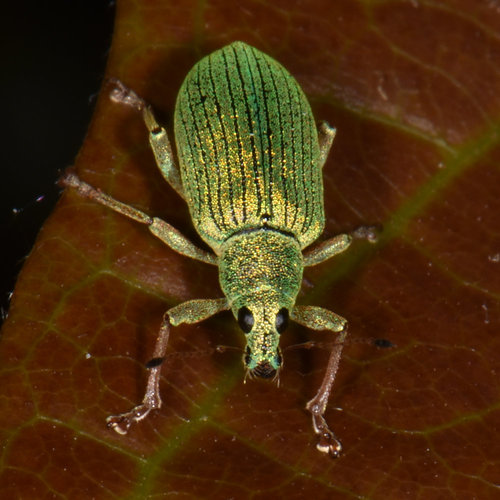
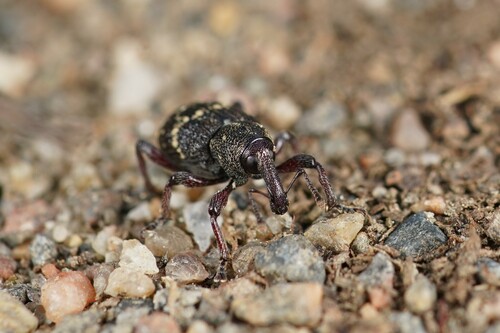
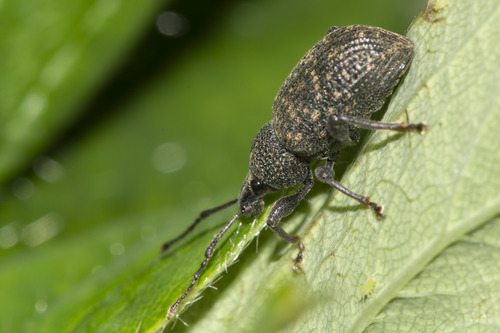
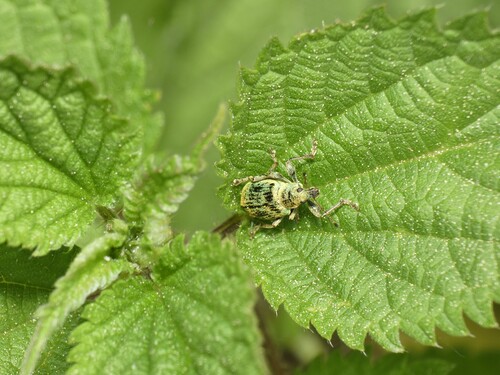
Strawberry Blossom Weevil

Strawberry Blossom Weevil

Anthonomus rubi

Daily sighting probability <5% · Rare
at Wadden Sea National Park

In 3 days ~10% in a week ~20%

5 Verified sightings at Wadden Sea National Park From 2019 to 2026
23 In all 3 parks
June Best month
🌅 Crepuscular When it's spotted

About the Strawberry Blossom Weevil

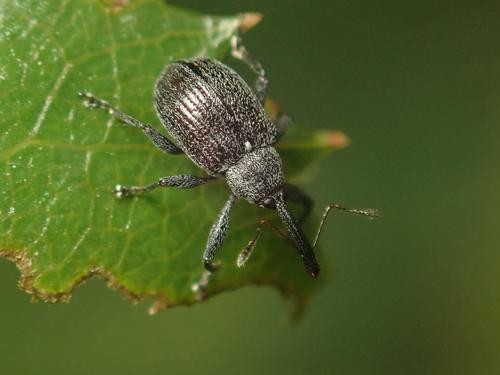
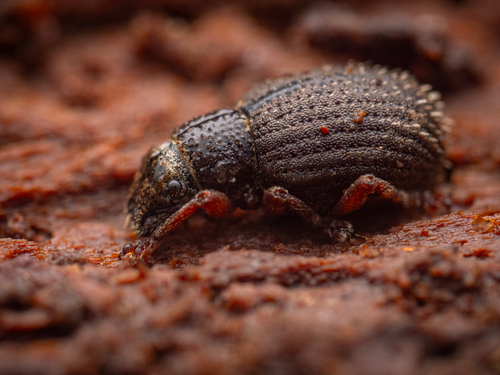
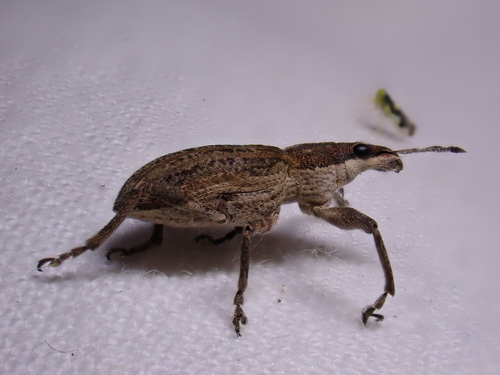
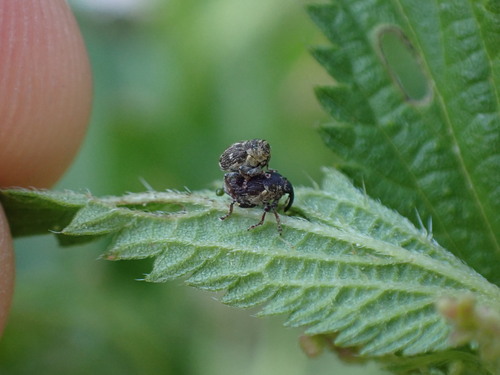
Anthonomus rubi, the strawberry-blossom weevil or strawberry blossom weevil, is a species of weevil found in Europe and western Asia. It feeds on plants of the family Rosaceae and is an important pest of strawberry (Fragaria × ananassa Duchesne) and raspberry (Rubus idaeus L.). This insect is a particularly problematic pest of strawberry in Europe, in some cases responsible for up to 80% loss of the berry crop.

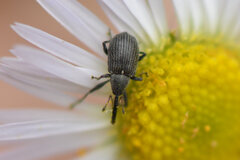
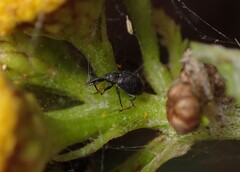
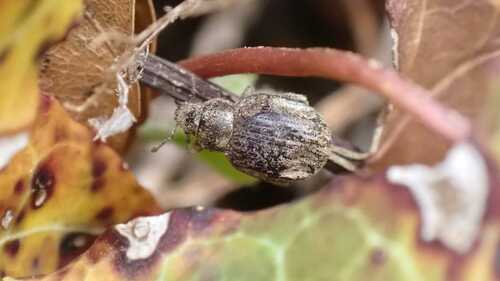
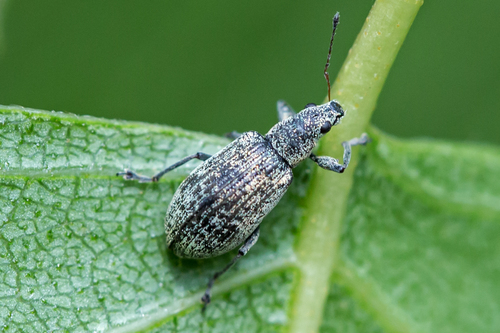
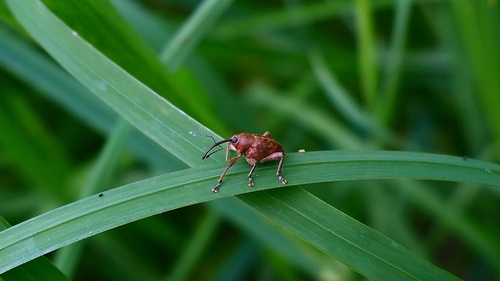
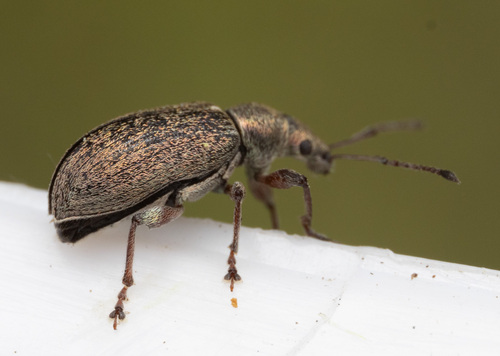
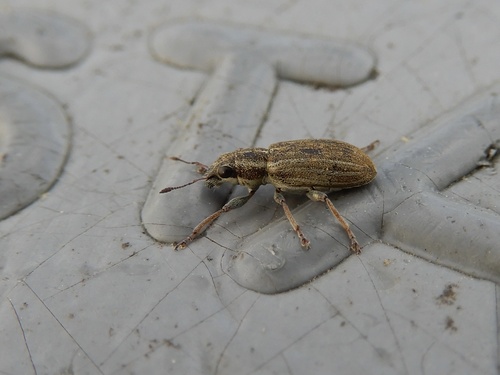
Adults are 2–4 mm (0.079–0.157 in) long and dull black, covered with a fine grey pubescence. The larvae are 3–3.5 mm (0.12–0.14 in) long, curved, and white with brown head. Adults feed on strawberry foliage, and females lay eggs inside unopened flower buds (one egg per bud) before partially or totally severing the stalk; larvae develop inside the severed buds, feeding on the wilting tissue.

Adults are thought to be attracted to strawberries by chemicals released by the plants. Monoterpenes, sesquiterpenes, and aromatic compounds acted as odorants (attractors) on weevils' receptor neurons. Male A. rubi then release their own blend of aggregation pheromone, three components of which have been shown to attract weevils to baited... Wikipedia →

Global Distribution

Parks Where Found

# Park Country Daily sighting probability
1 Bavarian Forest National Park 🇩🇪 Germany
~10%
2 Pyrénées National Park 🇫🇷 France
<5%
3 Wadden Sea National Park 🇩🇪 Germany
<5%

Cities Where Found

# City Country Daily sighting probability
1 Birmingham 🇬🇧 United Kingdom
~10%
2 Stockholm 🇸🇪 Sweden
~10%
3 London 🇬🇧 United Kingdom
~10%
4 Vancouver 🇨🇦 Canada
~10%
5 Essen 🇩🇪 Germany
~10%
6 Brussels 🇧🇪 Belgium
~10%
7 Rotterdam [The Hague] 🇳🇱 Netherlands
~10%
8 Munich 🇩🇪 Germany
~10%
9 Hamburg 🇩🇪 Germany
<5%
10 Berlin 🇩🇪 Germany
<5%

Before you go

What are the chances of seeing a Strawberry Blossom Weevil in Wadden Sea National Park?

Rare

Under 5% of wildlife watchers report a Strawberry Blossom Weevil sighting in Wadden Sea National Park on a given day, based on 5 verified sightings from GBIF citizen-science data from 2019 to 2026. It is the 699th most-seen of the 818 insects we can rate there. Over three days the chance rises to about 10%, and over a week to about 20%, if each day is a fresh chance.

When is the best time to see a Strawberry Blossom Weevil in Wadden Sea National Park?

June

In that month about 10% of wildlife watchers report a Strawberry Blossom Weevil in Wadden Sea National Park on a given day, against under 5% in July to May, the lowest months.

What time of day is best to see a Strawberry Blossom Weevil?

Between 4 and 7 pm

Across all the parks we cover, that three-hour window holds the most Strawberry Blossom Weevil sightings with a recorded time, and about 7 in 10 of them come between 6 am and 6 pm: it is most active around dawn and dusk.

Is Wadden Sea National Park the best place to see a Strawberry Blossom Weevil?

3rd of 3

Of the 3 parks where we can rate Strawberry Blossom Weevil sightings, Wadden Sea National Park ranks 3rd at under 5%. The best odds are in Bavarian Forest National Park (Germany, about 10%) and Pyrénées National Park (France, under 5%).

Which relatives of the Strawberry Blossom Weevil live in Wadden Sea National Park?

Same family: Curculionidae

The closest relatives of the Strawberry Blossom Weevil that you can see in Wadden Sea National Park (family Curculionidae, True Weevils) are Philopedon plagiatum (about 10%), Green Immigrant Leaf Weevil (about 10%) and Large Pine Weevil (about 10%), with each one's daily chance of a sighting.

Where does the Strawberry Blossom Weevil sighting chance come from?

GBIF citizen-science records

It is estimated from how often the Strawberry Blossom Weevil is recorded against all the insects logged in Wadden Sea National Park (5 verified sightings from 2019 to 2026), calibrated against known sighting rates. Figures are rounded to the nearest 10% because citizen-science data supports honest approximations, not decimals, and months with records from fewer than five people show "—". How it works.

← Back to Wadden Sea National Park