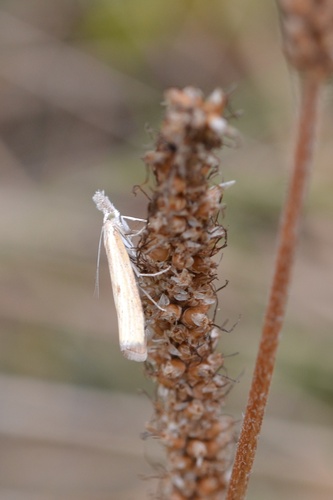
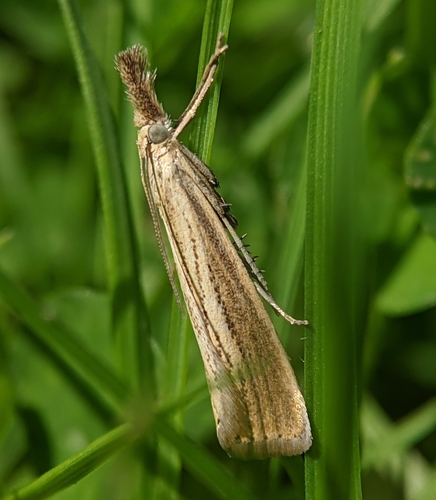
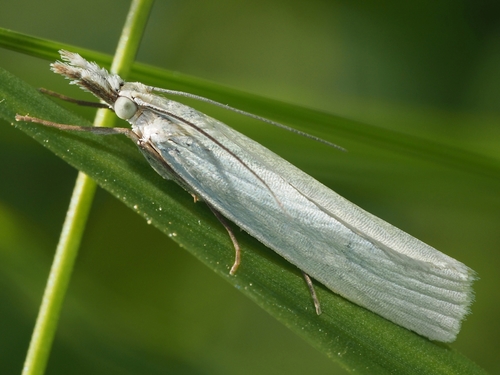
Wainscot Veneer

Wainscot Veneer

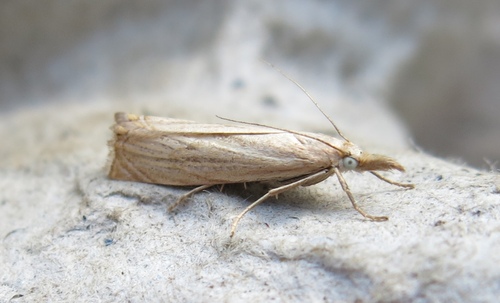
Chilo phragmitella

Daily sighting probability <5% · Rare
at Wadden Sea National Park

In 3 days ~10% in a week ~30%

11 Verified sightings at Wadden Sea National Park From 2019 to 2026
11 In 1 park
July Best month
🌅 Crepuscular When it's spotted

About the Wainscot Veneer

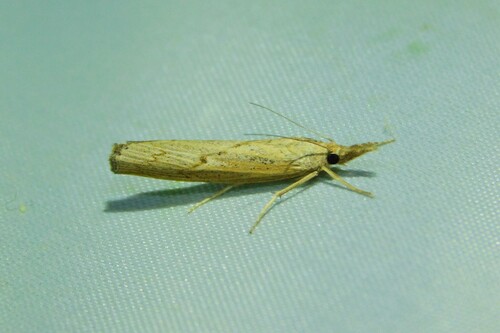
Chilo phragmitella is a species of moth of the family Crambidae, sometimes referred to by the vernacular names wainscot veneer or reed veneer. It was first described by Jacob Hübner between 1805 and 1810 as Tinea phragmitella, and is the type species of the genus Chilo.

Chilo phragmitella occurs in wetland habitats with reed beds and paddy fields, and can be found in much of Europe, including Great-Britain, and parts of Asia. The species was, as Tinea phragmitella, first described by Jacob Hübner in his work Sammlung europäischer Schmetterlinge, a multi-volume work with publication dates from 1793 to 1841. Francis Hemming, in his 1937 systematic treatment of the entomological works of Jacob Hübner, narrowed the range of years in which the description of Tinea phragmitella may have been published to 1805–1810.

The specific name phragmitella refers to the species' larval food source. Chilo phragmitella occurs in most of Europe, including the British Isles. It is also known from parts of Asia, including Iran, Iraq, Japan and China. It is found in wetlands with large reed beds and... Wikipedia →
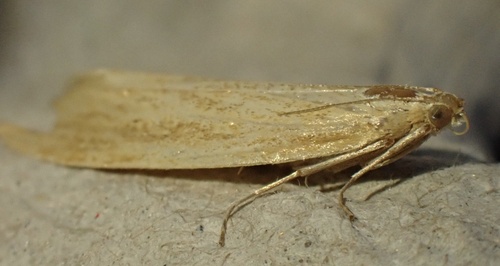
Global Distribution

Parks Where Found

# Park Country Daily sighting probability
1 Wadden Sea National Park 🇩🇪 Germany
<5%

More parks will be added in future updates.

Before you go

What are the chances of seeing a Wainscot Veneer in Wadden Sea National Park?

Rare

Under 5% of wildlife watchers report a Wainscot Veneer sighting in Wadden Sea National Park on a given day, based on 11 verified sightings from GBIF citizen-science data from 2019 to 2026. It is the 422nd most-seen of the 818 insects we can rate there. Over three days the chance rises to about 10%, and over a week to about 30%, if each day is a fresh chance.

When is the best time to see a Wainscot Veneer in Wadden Sea National Park?

July

In that month about 10% of wildlife watchers report a Wainscot Veneer in Wadden Sea National Park on a given day, against under 5% in August to June, the lowest months.

What time of day is best to see a Wainscot Veneer?

Between midnight and 3 am

Across all the parks we cover, that three-hour window holds the most Wainscot Veneer sightings with a recorded time, and about half of them come between 6 pm and 6 am: it is most active around dawn and dusk.

Where else can you see a Wainscot Veneer?

Only Wadden Sea National Park, in our data

Wadden Sea National Park is the only park on Wallace's Line with enough records to rate Wainscot Veneer sightings: under 5% of wildlife watchers there report one on a given day.

Which relatives of the Wainscot Veneer live in Wadden Sea National Park?

Same family: Crambidae

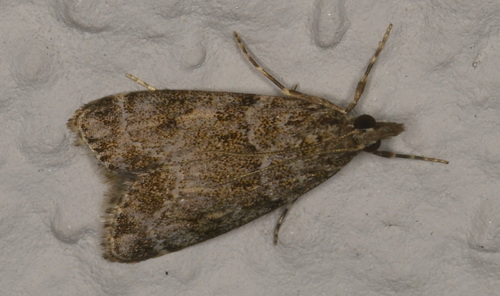
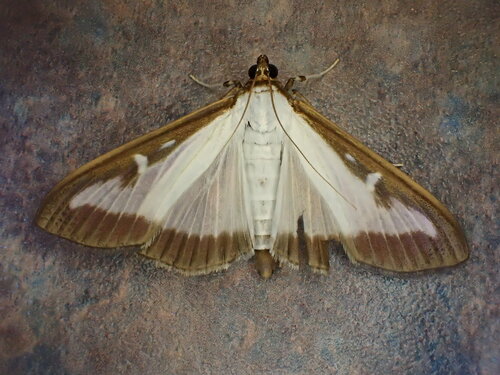
The closest relatives of the Wainscot Veneer that you can see in Wadden Sea National Park (family Crambidae, Crambid Snout Moths) are Garden Grass-Veneer (about 10%), Barred Grass-Veneer (about 10%) and Pearl Veneer (about 10%), with each one's daily chance of a sighting.

Where does the Wainscot Veneer sighting chance come from?

GBIF citizen-science records

It is estimated from how often the Wainscot Veneer is recorded against all the insects logged in Wadden Sea National Park (11 verified sightings from 2019 to 2026), calibrated against known sighting rates. Figures are rounded to the nearest 10% because citizen-science data supports honest approximations, not decimals, and months with records from fewer than five people show "—". How it works.

← Back to Wadden Sea National Park