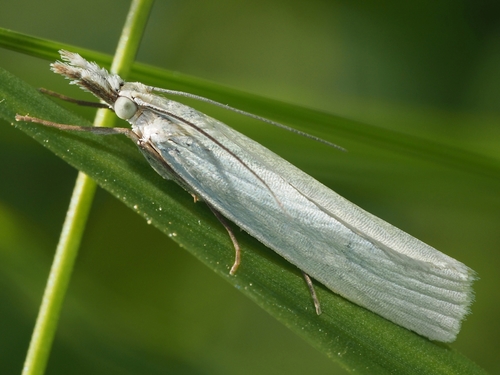
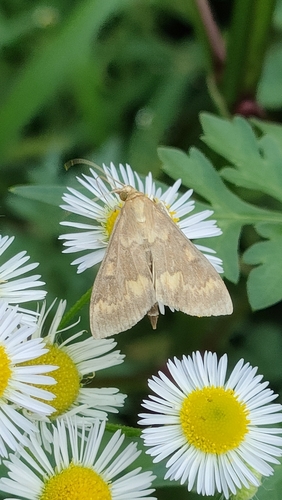
Mother Of Pearl

Mother Of Pearl

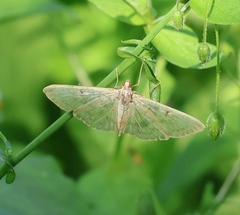
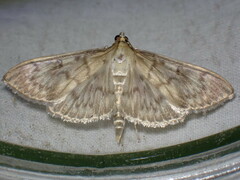
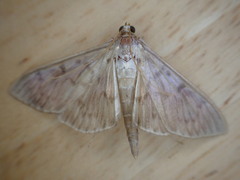
Patania ruralis

Daily sighting probability ~10% · With luck
at Wadden Sea National Park

In 3 days ~20% in a week ~40%

25 Verified sightings at Wadden Sea National Park From 2019 to 2026
133 In all 8 parks
August Best month
☀️🌙 Day & Night When it's spotted

About the Mother Of Pearl

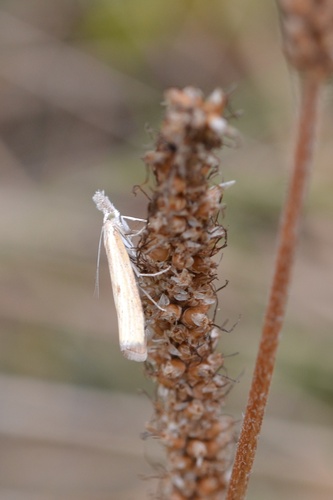
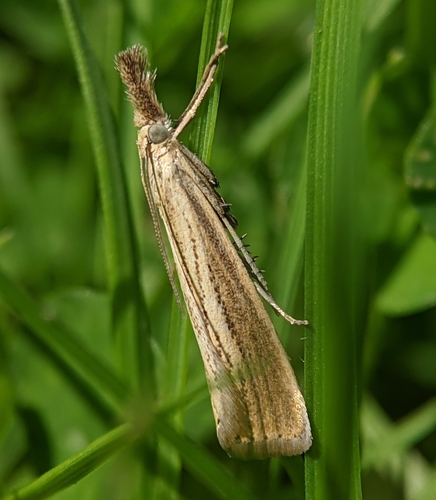
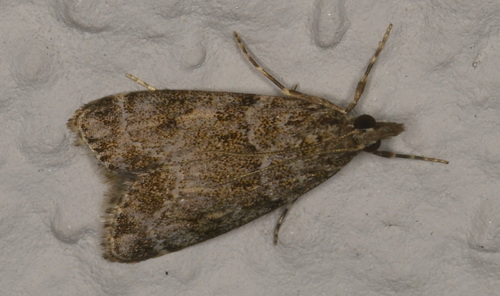
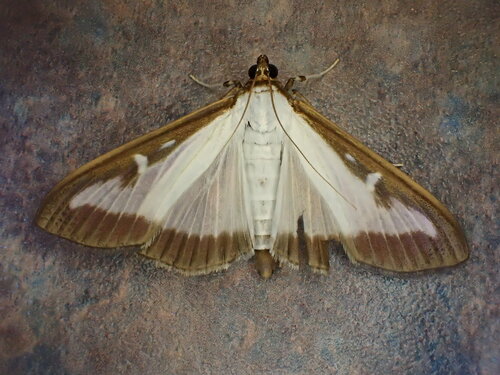
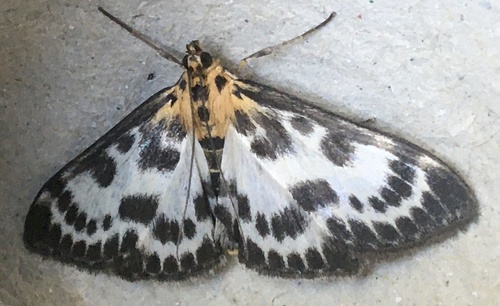
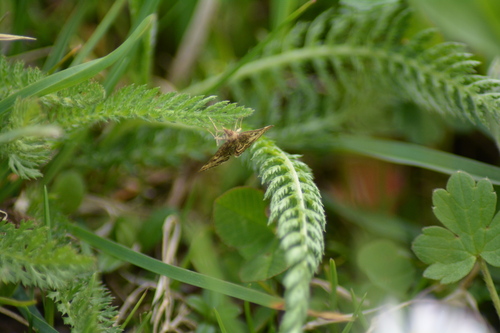
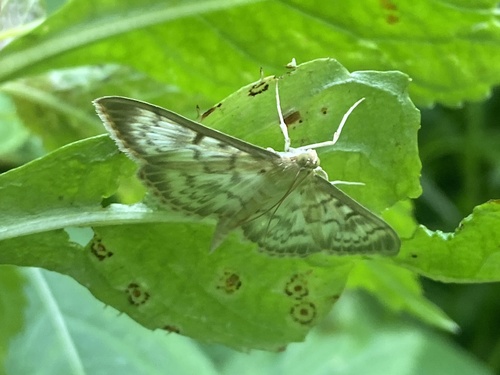
Patania ruralis, the mother of pearl moth, is a species of moth in the grass moth family Crambidae. It was described by Giovanni Antonio Scopoli in 1763. Its common name refers to its almost transparent wings which in oblique lighting show a pale blue pearlescent sheen. This is found in Europe, occurring almost across the continent and the nearshore islands, except for those in the Aegean and Western Mediterranean as well as Cyprus. The adults are on the wing from June to September depending on the location. The caterpillars eat mainly Urtica nettles; occasionally they are found on other eudicots.

The wingspan is 26–40 millimetres (1.0–1.6 in). The forewings are pale whitish-ochreous, yellowish-tinged; a grey subcostal suffusion and connected orbicular dot; lines rather dark grey, first straight, second serrate, curved, strongly broken inwards beneath middle; a dark grey discal mark, nearly followed by a grey blotch; a grey terminal band, edge parallel to second line. Hindwings with colour, discal mark, and posterior markings as in forewings. The caterpillar larva is whitish green, sides greener; dorsal line darker; head green.

The larvae feed mainly... Wikipedia →
Global Distribution

Parks Where Found

# Park Country Daily sighting probability
1 Białowieża National Park 🇵🇱 Poland
~20%
2 Biebrza National Park 🇵🇱 Poland
~20%
3 Bavarian Forest National Park 🇩🇪 Germany
~10%
4 Snowdonia National Park 🇬🇧 United Kingdom
~10%
5 Pyrénées National Park 🇫🇷 France
~10%
6 Wadden Sea National Park 🇩🇪 Germany
~10%
7 Cévennes National Park 🇫🇷 France
<5%
8 Sierra de Guadarrama National Park 🇪🇸 Spain
<5%

Cities Where Found

# City Country Daily sighting probability
1 Liverpool 🇬🇧 United Kingdom
~30%
2 Birmingham 🇬🇧 United Kingdom
~10%
3 Kyiv 🇺🇦 Ukraine
~10%
4 London 🇬🇧 United Kingdom
~10%
5 Nizhny Novgorod 🇷🇺 Russia
~10%
6 Helsinki 🇫🇮 Finland
~10%
7 Manchester 🇬🇧 United Kingdom
~10%
8 Moscow 🇷🇺 Russia
~10%
9 Kharkiv 🇺🇦 Ukraine
~10%
10 Turin 🇮🇹 Italy
~10%

Before you go

What are the chances of seeing a Mother Of Pearl in Wadden Sea National Park?

With luck

About 10% of wildlife watchers report a Mother Of Pearl sighting in Wadden Sea National Park on a given day, based on 25 verified sightings from GBIF citizen-science data from 2019 to 2026. It is the 234th most-seen of the 818 insects we can rate there. Over three days the chance rises to about 20%, and over a week to about 40%, if each day is a fresh chance.

When is the best time to see a Mother Of Pearl in Wadden Sea National Park?

July and August

In those months about 10% of wildlife watchers report a Mother Of Pearl in Wadden Sea National Park on a given day, against under 5% in September to June, the lowest months.

What time of day is best to see a Mother Of Pearl?

Between 10 pm and 1 am

Across all the parks we cover, that three-hour window holds the most Mother Of Pearl sightings with a recorded time, and about 7 in 10 of them come between 6 pm and 6 am: it is seen both by day and at night.

Which relatives of the Mother Of Pearl live in Wadden Sea National Park?

Same family: Crambidae

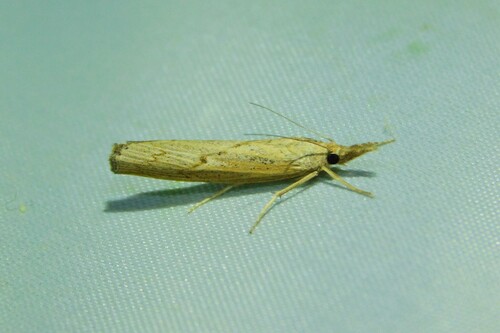
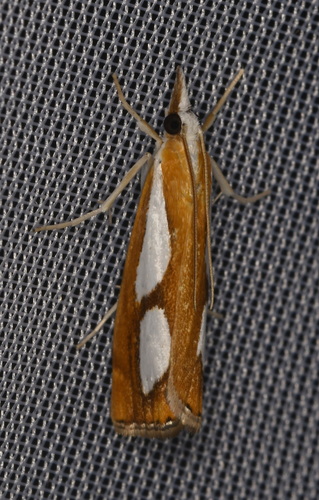
The closest relatives of the Mother Of Pearl that you can see in Wadden Sea National Park (family Crambidae, Crambid Snout Moths) are Garden Grass-Veneer (about 10%), Barred Grass-Veneer (about 10%) and Pearl Veneer (about 10%), with each one's daily chance of a sighting.

Where does the Mother Of Pearl sighting chance come from?

GBIF citizen-science records

It is estimated from how often the Mother Of Pearl is recorded against all the insects logged in Wadden Sea National Park (25 verified sightings from 2019 to 2026), calibrated against known sighting rates. Figures are rounded to the nearest 10% because citizen-science data supports honest approximations, not decimals, and months with records from fewer than five people show "—". How it works.

← Back to Wadden Sea National Park