


Completed

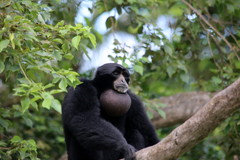


Siamang
Symphalangus syndactylus
Silhouette: Kai R. Caspar · PhyloPic
- KingdomAnimalia (Animals)
- PhylumChordata (Chordates)
- ClassMammalia (Mammals)
- OrderPrimates
- FamilyHylobatidae (Gibbons)
- GenusSymphalangus (Siamangs)
- SpeciesSymphalangus syndactylus (Siamang)
In 3 days ~80% in a week >90%
10 Verified sightings at Way Kambas National Park From 2019 to 2026
77 In all 3 parks
September Best month
🌅 Crepuscular When it's spotted
About the Siamang
The siamang (also UK:; Symphalangus syndactylus) is an endangered arboreal, black-furred gibbon native to the tropical rainforests of Indonesia, Malaysia, and Thailand. The largest of the gibbons, the siamang can be twice the size of other gibbons, reaching 1 m (3.3 ft) in height, and weighing up to 14 kg (31 lb). It is the only species in the genus Symphalangus. Fossils of siamangs date back to the Middle Pleistocene.
Two features distinguish the siamang from other gibbons. First, two digits on each foot—the second and third toes—are partially joined by a membrane, hence the specific name syndactylus, from the Ancient Greek σύν, sun-, "with" + δάκτυλος, daktulos, "finger". Second, a large gular sac (throat pouch), found in both males and females of the species, can be inflated to the size of the siamang's head, allowing it to make resonating calls.
Otherwise, the Malaysian individuals are only a population. The siamang occurs sympatrically with other gibbons; its two ranges are entirely within the combined ranges of the agile gibbon and the lar gibbon. The siamang can live to around 40 years in captivity. While the illegal pet trade takes a toll on wild populations, the principal threat to the siamang is habitat loss in both Indonesia and Malaysia. The palm oil production industry is clearing large swaths of forest, reducing the habitat of the siamang, along with those of other species, such as the Sumatran tiger. Wikipedia →
Sounds
Song1:22
Indonesia · 2016
© Frank Lambert · XC1031364 · CC BY-NC-ND 4.0
Song0:55
Malaysia · 2012
© Marc Anderson · XC960738 · CC BY-NC-ND 4.0
Recording0:28
Malaysia · 2011
© dbeadle · iNaturalist · CC BY-NC 4.0
Recent sightings of Siamang in Way Kambas National Park
LIVEiNaturalistGlobal Distribution
Parks Where Found
| # | Park | Country | Daily sighting probability |
|---|---|---|---|
| 1 | Kerinci Seblat National Park | 🇮🇩 Indonesia | |
| 2 | Way Kambas National Park | 🇮🇩 Indonesia | |
| 3 | Gunung Leuser National Park | 🇮🇩 Indonesia |
Zoos & Centres Where Found
| # | Zoo / Centre | Country | |
|---|---|---|---|
| 1 | Disney's Animal Kingdom | 🇺🇸 United States | |
| 2 | Ragunan Zoo | 🇮🇩 Indonesia | |
| 3 | Busch Gardens Tampa | 🇺🇸 United States | |
| 4 | San Diego Zoo | 🇺🇸 United States | |
| 5 | Pairi Daiza | 🇧🇪 Belgium | |
| 6 | National Zoological Park | 🇺🇸 United States | |
| 7 | Denver Zoo | 🇺🇸 United States | |
| 8 | Dublin Zoo | 🇮🇪 Ireland | |
| 9 | Lisbon Oceanarium | 🇵🇹 Portugal | |
| 10 | Tulsa Zoo | 🇺🇸 United States | |
| 11 | Fota Wildlife Park | 🇮🇪 Ireland | |
| 12 | Zoologic park de Lille | 🇫🇷 France | |
| 13 | Taronga Western Plains Zoo | 🇦🇺 Australia | |
| 14 | Nandankanan Zoological Park | 🇮🇳 India | |
| 15 | Zoo Miami | 🇺🇸 United States | |
| 16 | Taipei Zoo | 🇹🇼 Taiwan | |
| 17 | Columbus Zoo and Aquarium | 🇺🇸 United States | |
| 18 | Khao Kheow Open Zoo | 🇹🇭 Thailand | |
| 19 | Baton Rouge Zoo | 🇺🇸 United States | |
| 20 | Nashville Zoo at Grassmere | 🇺🇸 United States | |
| 21 | Omaha’s Henry Doorly Zoo and Aquarium | 🇺🇸 United States | |
| 22 | Milwaukee County Zoo | 🇺🇸 United States | |
| 23 | Orana Wildlife Park | 🇳🇿 New Zealand | |
| 24 | Oakland Zoo | 🇺🇸 United States | |
| 25 | Phoenix Zoo | 🇺🇸 United States | |
| 26 | Jacksonville Zoo and Gardens | 🇺🇸 United States | |
| 27 | Cape May County Park & Zoo | 🇺🇸 United States | |
| 28 | Leofoo Village Theme Park | 🇹🇼 Taiwan | |
| 29 | Louisville Zoo | 🇺🇸 United States | |
| 30 | Audubon Zoo | 🇺🇸 United States | |
| 31 | Dakota Zoo | 🇺🇸 United States | |
| 32 | Zoológico de San Juan de Aragón | 🇲🇽 Mexico | |
| 33 | Safari Niagara | 🇨🇦 Canada | |
| 34 | Woodland Park Zoo | 🇺🇸 United States | |
| 35 | Edinburgh Zoo | 🇬🇧 United Kingdom | |
| 36 | Zoológico de Goiânia | 🇧🇷 Brazil | |
| 37 | Chiba Zoological Park | 🇯🇵 Japan | |
| 38 | National Zoo of Malaysia | 🇲🇾 Malaysia | |
| 39 | ZooTampa | 🇺🇸 United States | |
| 40 | Dickerson Park Zoo | 🇺🇸 United States | |
| 41 | Gatorland | 🇺🇸 United States | |
| 42 | Lisbon Zoo | 🇵🇹 Portugal | |
| 43 | Metro Richmond Zoo | 🇺🇸 United States | |
| 44 | Montgomery Zoo | 🇺🇸 United States | |
| 45 | Virginia Zoological Park | 🇺🇸 United States | |
| 46 | Zoo de La Flèche | 🇫🇷 France | |
| 47 | Cleland Wildlife Park | 🇦🇺 Australia | |
| 48 | DierenPark Amersfoort | 🇳🇱 Netherlands | |
| 49 | Houston Zoo | 🇺🇸 United States | |
| 50 | Zoo Opole | 🇵🇱 Poland |
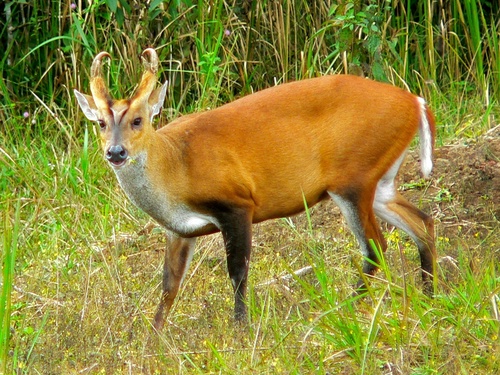
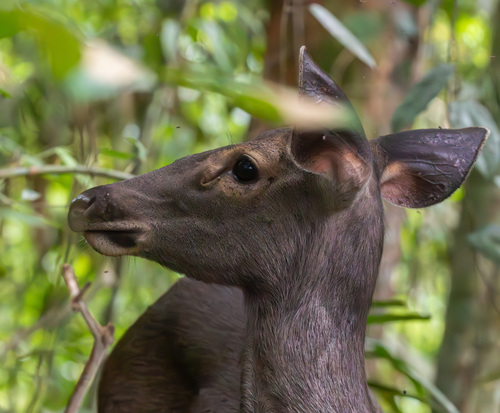
Closest Relatives at Way Kambas National Park





Before you go
What are the chances of seeing a Siamang in Way Kambas National Park?
Likely
About 50% of wildlife watchers report a Siamang sighting in Way Kambas National Park on a given day, based on 10 verified sightings from GBIF citizen-science data from 2019 to 2026. It is the 3rd most-seen of the 9 mammals we can rate there. Over three days the chance rises to about 80%, and over a week to over 90%, if each day is a fresh chance.
When is the best time to see a Siamang in Way Kambas National Park?
September
In that month about 70% of wildlife watchers report a Siamang in Way Kambas National Park on a given day, against about 10% in February and October, the lowest months. That is one of Way Kambas National Park's driest months, with about 120 mm of rain against 370 mm in March.
What time of day is best to see a Siamang?
Between 2 and 5 am
Across all the parks we cover, that three-hour window holds the most Siamang sightings with a recorded time, and about 6 in 10 of them come between 6 pm and 6 am: it is most active around dawn and dusk.
Is Way Kambas National Park the best place to see a Siamang?
Among the best
Of the 3 parks where we can rate Siamang sightings, Way Kambas National Park ranks 2nd at about 50%, level with the leaders once rounded. The best odds are in Kerinci Seblat National Park (Indonesia, about 50%).
Which relatives of the Siamang live in Way Kambas National Park?
Same order: Primates
The closest relatives of the Siamang that you can see in Way Kambas National Park (order Primates) are Crab-eating Macaque (about 60%) and Sunda Slow Loris (about 50%), with each one's daily chance of a sighting.
Where does the Siamang sighting chance come from?
GBIF citizen-science records
It is estimated from how often the Siamang is recorded against all the mammals logged in Way Kambas National Park (10 verified sightings from 2019 to 2026), calibrated against known sighting rates. Figures are rounded to the nearest 10% because citizen-science data supports honest approximations, not decimals, and months with records from fewer than five people show "—". How it works.
