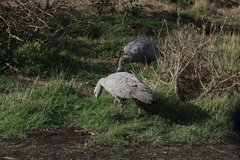

Cape Barren Goose

Cape Barren Goose

Cereopsis novaehollandiae

Silhouette: PhyloPic

LCLeast ConcernNTVUENCR Endemic
Daily sighting probability ~10% · With luck
at Wilsons Promontory National Park

In 3 days ~30% in a week ~50%

77 Verified sightings at Wilsons Promontory National Park From 2019 to 2026
932 In all 3 parks
October Best month
☀️ Diurnal When it's spotted

About the Cape Barren Goose

The Cape Barren goose (Cereopsis novaehollandiae), sometimes also known as the pig goose, is a species of goose endemic to southern Australia. It is a distinctive large, grey bird that is mostly terrestrial and is not closely related to other extant members of the subfamily Anserinae.

The Indigenous Jardwadjali people of western Victoria refer to this species as toolka. The Noongar people of south-western Western Australia use the name bibib. The common name "Cape Barren goose" was first ascribed to this species by shipwreck survivors in 1797. When Sydney Cove was wrecked off Preservation Island, south of Cape Barren Island, the sailors who survived the wreck used the geese as one of few sources of food on the island, and named it after Cape Barren, which was the name of the south-eastern tip of the island at that time, named by Tobias Furneaux in 1773.

The Cape Barren goose was first formally described by English ornithologist John Latham in 1801 as Cereopsis N. Hollandiae. The species had been earlier reported from the Bass Strait by George Bass and Matthew Flinders in 1798, who referred to it as a "Brent or Barnacle Goose".

The taxonomic placement of this... Wikipedia →

Sounds

Call0:10

Australia · 2023

© Peter Boesman · XC859724 · CC BY-NC-ND 4.0

Alarm call0:21

Australia · 2022

© nick talbot · XC736580 · CC BY-NC-SA 4.0

Call0:25

Australia · 2020

© Marc Anderson · XC608086 · CC BY-NC-ND 4.0

Global Distribution

Parks Where Found

# Park Country Daily sighting probability
1 Maria Island National Park 🇦🇺 Australia
~90%
2 Flinders Chase 🇦🇺 Australia
~50%
3 Wilsons Promontory National Park 🇦🇺 Australia
~10%

Zoos & Centres Where Found

# Zoo / Centre Country
1 Busch Gardens Tampa 🇺🇸 United States In captivity
2 Prague Zoo 🇨🇿 Czechia In captivity
3 ZooParc de Beauval 🇫🇷 France In captivity
4 Copenhagen Zoo 🇩🇰 Denmark In captivity
5 Zoo Pilsen 🇨🇿 Czechia In captivity
6 Parc des oiseaux 🇫🇷 France In captivity
7 Zoobotánico Jerez 🇪🇸 Spain In captivity
8 Werribee Open Range Zoo 🇦🇺 Australia In captivity
9 Bronx Zoo 🇺🇸 United States In captivity
10 Zoológico de Brasília 🇧🇷 Brazil In captivity
11 Brookfield Zoo 🇺🇸 United States In captivity
12 Beijing Zoo 🇨🇳 China In captivity
13 Zoo Gdańsk 🇵🇱 Poland In captivity
14 Orana Wildlife Park 🇳🇿 New Zealand In captivity
15 Slimbridge Wetland Centre 🇬🇧 United Kingdom In captivity
16 Wildlife World Zoo 🇺🇸 United States In captivity
17 São Paulo Zoo 🇧🇷 Brazil In captivity
18 Selwo Aventura 🇪🇸 Spain In captivity
19 Louisville Zoo 🇺🇸 United States In captivity
20 Warsaw Zoo 🇵🇱 Poland In captivity
21 Guadalajara Zoo 🇲🇽 Mexico In captivity
22 Kyiv Zoo 🇺🇦 Ukraine In captivity
23 Taronga Zoo 🇦🇺 Australia In captivity
24 Hamilton Zoo 🇳🇿 New Zealand In captivity
25 Singapore Zoo 🇸🇬 Singapore In captivity
26 Cleland Wildlife Park 🇦🇺 Australia In captivity
27 Zoo Opole 🇵🇱 Poland In captivity
28 Currumbin Wildlife Sanctuary 🇦🇺 Australia In captivity
29 Karlsruhe Zoo 🇩🇪 Germany In captivity
30 Parndana Wildlife Park 🇦🇺 Australia In captivity
31 Zoo Aquarium de Madrid 🇪🇸 Spain In captivity
32 Cologne Zoological Garden 🇩🇪 Germany In captivity
33 Philadelphia Zoo 🇺🇸 United States In captivity
34 Zoo Atlanta 🇺🇸 United States In captivity
35 Budapest Zoo & Botanical Garden 🇭🇺 Hungary In captivity
36 Łódź Zoo 🇵🇱 Poland In captivity
37 Phillip Island Wildlife Park 🇦🇺 Australia In captivity
38 Bird Paradise 🇸🇬 Singapore In captivity
39 bioparco 🇮🇹 Italy In captivity
40 Rainforest Wild Asia 🇸🇬 Singapore In captivity
41 Westküstenpark & Robbarium St. Peter-Ording 🇩🇪 Germany In captivity
42 Zoo das Aves 🇧🇷 Brazil In captivity
43 Bauru Zoo 🇧🇷 Brazil In captivity
44 East Coast Natureworld 🇦🇺 Australia In captivity
45 Biotropica 🇫🇷 France In captivity
46 Moonlit Sanctuary Wildlife Conservation Park 🇦🇺 Australia In captivity
47 Krasnodar Safari Park 🇷🇺 Russia In captivity
48 Adelaide Zoo 🇦🇺 Australia In captivity
49 Staglands Wildlife Reserve 🇳🇿 New Zealand In captivity
50 Екопарк Ковалівка 🇺🇦 Ukraine In captivity

Before you go

What are the chances of seeing a Cape Barren Goose in Wilsons Promontory National Park?

With luck

About 10% of wildlife watchers report a Cape Barren Goose sighting in Wilsons Promontory National Park on a given day, based on 77 verified sightings from GBIF citizen-science data from 2019 to 2026. It is the 54th most-seen of the 138 birds we can rate there. Over three days the chance rises to about 30%, and over a week to about 50%, if each day is a fresh chance.

When is the best time to see a Cape Barren Goose in Wilsons Promontory National Park?

January and October

In those months about 20% of wildlife watchers report a Cape Barren Goose in Wilsons Promontory National Park on a given day, against under 5% in May, July and September, the lowest months.

What time of day is best to see a Cape Barren Goose?

Between 2 and 5 pm

Across all the parks we cover, that three-hour window holds the most Cape Barren Goose sightings with a recorded time, and nearly all of them come between 6 am and 6 pm: it is a daytime animal.

Is Wilsons Promontory National Park the best place to see a Cape Barren Goose?

3rd of 3

Of the 3 parks where we can rate Cape Barren Goose sightings, Wilsons Promontory National Park ranks 3rd at about 10%. The best odds are in Maria Island National Park (Australia, about 90%) and Flinders Chase (Australia, about 50%).

Which relatives of the Cape Barren Goose live in Wilsons Promontory National Park?

Same family: Anatidae

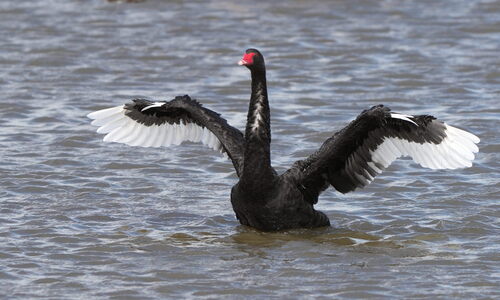
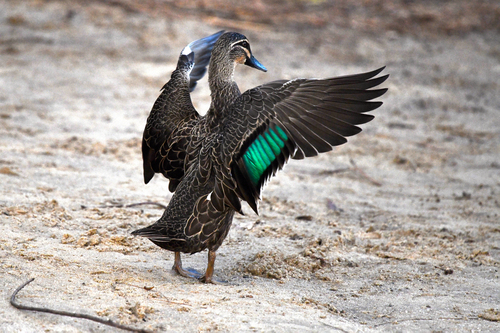
The closest relatives of the Cape Barren Goose that you can see in Wilsons Promontory National Park (family Anatidae, Ducks, Geese, and Swans) are Australian Wood Duck (about 50%), Black Swan (about 20%) and Pacific Black Duck (about 20%), with each one's daily chance of a sighting.

Where does the Cape Barren Goose sighting chance come from?

GBIF citizen-science records

It is estimated from how often the Cape Barren Goose is recorded against all the birds logged in Wilsons Promontory National Park (77 verified sightings from 2019 to 2026), calibrated against known sighting rates. Figures are rounded to the nearest 10% because citizen-science data supports honest approximations, not decimals, and months with records from fewer than five people show "—". How it works.

← Back to Wilsons Promontory National Park