Swift-Winged Sphinx

Swift-Winged Sphinx

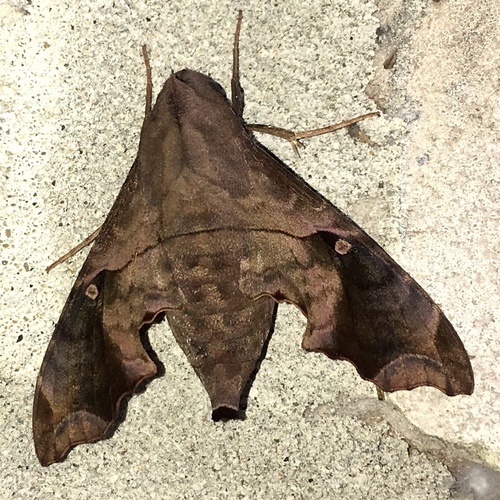
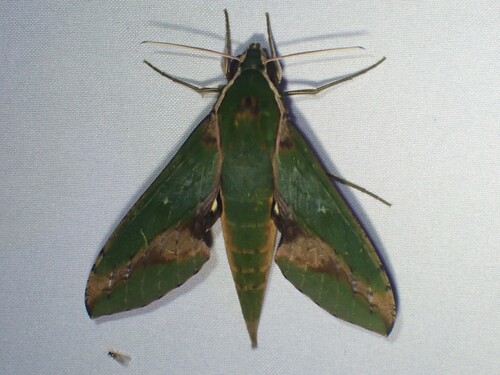
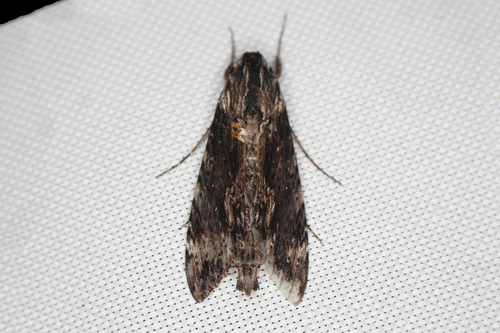
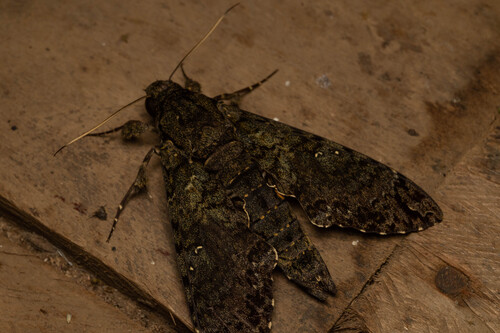
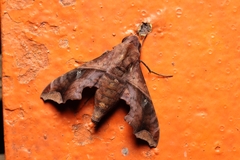
Enyo ocypete

Daily sighting probability ~10% · With luck
at Yasuní National Park

In 3 days ~30% in a week ~60%

14 Verified sightings at Yasuní National Park From 2019 to 2026
32 In all 3 parks
October Best month
🌅 Crepuscular When it's spotted

About the Swift-Winged Sphinx

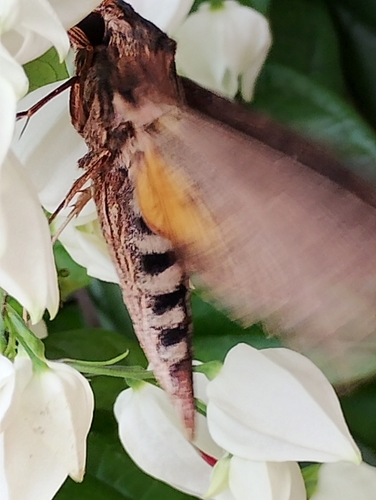
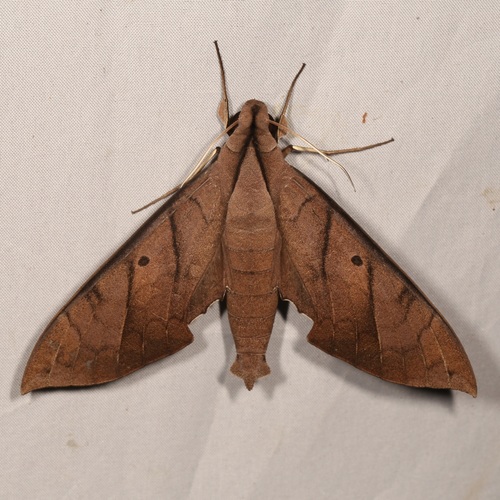
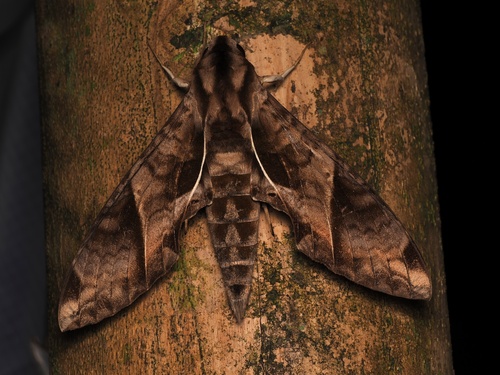
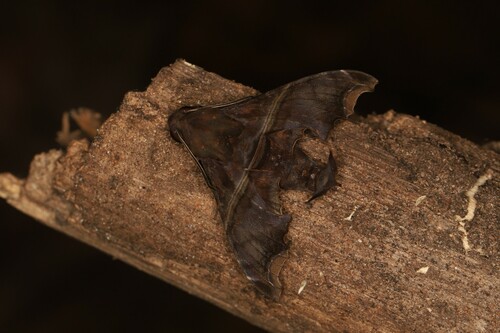
Enyo ocypete is a moth of the family Sphingidae. The species was first described by Carl Linnaeus in his 1758 10th edition of Systema Naturae. It is found from the southern United States, through Central America to Venezuela, Brazil, Peru, Bolivia, Paraguay and northern Argentina.

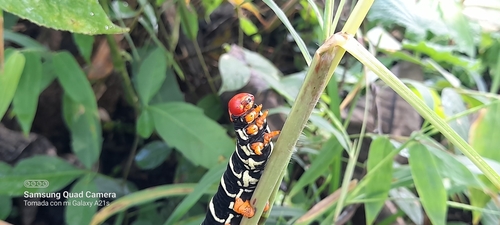
The wingspan is 60 mm. Adults are on wing year round in the tropics, southern Florida and Louisiana. They are on wing from August to November in the northern part of the range. The larvae probably feed on Caribbean grape (Vitis tiliifolia) and other Vitaceae and Dilleniaceae species, such as Vitis, Cissus rhombifolia and Ampelopsis, Tetracera volubilis, Curatella americana, Tetracera hydrophila and Doliocarpus multiflorus. Ludwigia of the family Onagraceae might also be a host plant.

Males of the Enyo ocypete exhibit a smaller wing size than females. The many reproductive flight advantages include the ability of males to fly faster and have better fitness for mating, while females possess slower flight which is used for selecting host plants and gathering resources. Wikipedia →
Global Distribution

Parks Where Found

# Park Country Daily sighting probability
1 Yasuní National Park 🇪🇨 Ecuador
~10%
2 Corcovado National Park 🇨🇷 Costa Rica
~10%
3 Braulio Carrillo National Park 🇨🇷 Costa Rica
~10%

Cities Where Found

# City Country Daily sighting probability
1 João Pessoa 🇧🇷 Brazil
~20%
2 Manaus 🇧🇷 Brazil
~10%
3 São Paulo 🇧🇷 Brazil
<5%

Before you go

What are the chances of seeing a Swift-Winged Sphinx in Yasuní National Park?

With luck

About 10% of wildlife watchers report a Swift-Winged Sphinx sighting in Yasuní National Park on a given day, based on 14 verified sightings from GBIF citizen-science data from 2019 to 2026. It is the 62nd most-seen of the 203 insects we can rate there. Over three days the chance rises to about 30%, and over a week to about 60%, if each day is a fresh chance.

When is the best time to see a Swift-Winged Sphinx in Yasuní National Park?

October and November

In those months about 30% of wildlife watchers report a Swift-Winged Sphinx in Yasuní National Park on a given day, against under 5% in March–June, September and December, the lowest months.

What time of day is best to see a Swift-Winged Sphinx?

Between 7 and 10 pm

Across all the parks we cover, that three-hour window holds the most Swift-Winged Sphinx sightings with a recorded time, and about 7 in 10 of them come between 6 pm and 6 am: it is most active around dawn and dusk.

Is Yasuní National Park the best place to see a Swift-Winged Sphinx?

Yes

Of the 3 parks where we can rate Swift-Winged Sphinx sightings, Yasuní National Park has the highest daily chance: about 10%. Next come Corcovado National Park (Costa Rica, about 10%) and Braulio Carrillo National Park (Costa Rica, about 10%).

Where does the Swift-Winged Sphinx sighting chance come from?

GBIF citizen-science records

It is estimated from how often the Swift-Winged Sphinx is recorded against all the insects logged in Yasuní National Park (14 verified sightings from 2019 to 2026), calibrated against known sighting rates. Figures are rounded to the nearest 10% because citizen-science data supports honest approximations, not decimals, and months with records from fewer than five people show "—". How it works.

← Back to Yasuní National Park