
Completed
Green-Banded Urania
Urania leilus
- KingdomAnimalia (Animals)
- PhylumArthropoda (Arthropods)
- ClassInsecta (Insects)
- OrderLepidoptera (Butterflies and Moths)
- FamilyUraniidae (Swallowtail Moths)
- GenusUrania
- SpeciesUrania leilus (Green-Banded Urania)
In 3 days ~90% in a week >90%
176 Verified sightings at Yasuní National Park From 2019 to 2026
431 In all 7 parks
December Best month
☀️ Diurnal When it's spotted
About the Green-Banded Urania
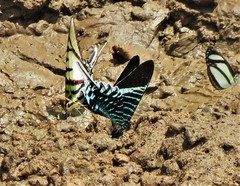
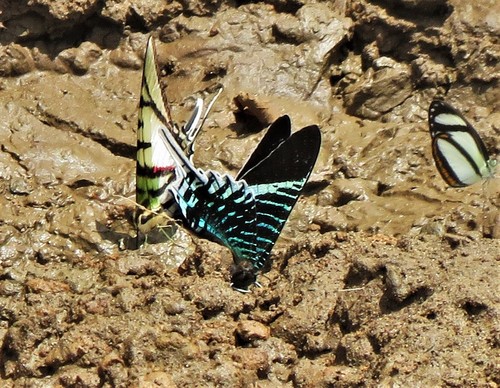
Urania leilus, the green-banded urania, is a day-flying moth of the family Uraniidae. The species was first described by Carl Linnaeus in his 1758 10th edition of Systema Naturae. It is found in tropical South America east of the Andes, especially in the Amazon rainforest. Its range includes Suriname, Guyana, French Guiana, eastern Colombia, Venezuela, eastern Ecuador, Brazil, northern Bolivia, eastern Peru, as well as the island of Trinidad. It has been recorded as a vagrant to the central and northern Lesser Antilles, such as St. Kitts, Barbados and Dominica. Their preferred habitat consists of riverbanks, in primary and secondary rainforest, at elevations between sea level and about 800 m (2,600 ft).
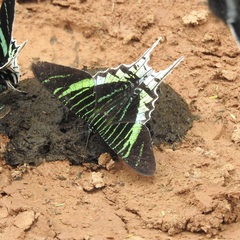
U. leilus is sometimes confused with the similar-looking U. fulgens, but that species has a separate distribution (west of the Andes in South America, Central America and Mexico) and is slightly smaller with less white to the "tail". Historically, the two have been treated as conspecific. It is theorized that these moths were once part of a single species, but were split into two when the Andean mountains formed about 5–2.7 million years ago, resulting in them becoming allopatric species. Whereas U. leilus is highly dependent in high rainfall, U. fulgens also tolerates habitats with somewhat lower rainfall levels.
The wingspan of U. leilus is about 70 mm (2.8 in). As appears to be the case for all Urania, the larvae of U. leilus feed exclusively on leaves of the toxic spurge Omphalea. Wikipedia →
Recent sightings of Green-Banded Urania in Yasuní National Park
LIVEiNaturalistGlobal Distribution
Parks Where Found
| # | Park | Country | Daily sighting probability |
|---|---|---|---|
| 1 | Yasuní National Park | 🇪🇨 Ecuador | |
| 2 | Cuyabeno Wildlife Reserve | 🇪🇨 Ecuador | |
| 3 | Tambopata National Reserve | 🇵🇪 Peru | |
| 4 | Manu National Park | 🇵🇪 Peru | |
| 5 | Amacayacu National Natural Park | 🇨🇴 Colombia | |
| 6 | Main Ridge Forest Reserve | 🇹🇹 Trinidad and Tobago | |
| 7 | Caroni Swamp | 🇹🇹 Trinidad and Tobago |
Cities Where Found
| # | City | Country | Daily sighting probability |
|---|---|---|---|
| 1 | Santa Cruz de la Sierra | 🇧🇴 Bolivia | |
| 2 | Manaus | 🇧🇷 Brazil | |
| 3 | Vitória | 🇧🇷 Brazil | |
| 4 | Bogota | 🇨🇴 Colombia |
Closest Relatives at Yasuní National Park

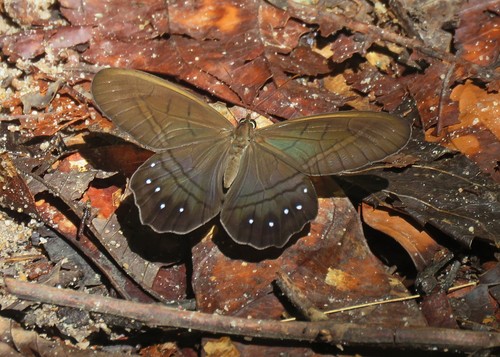
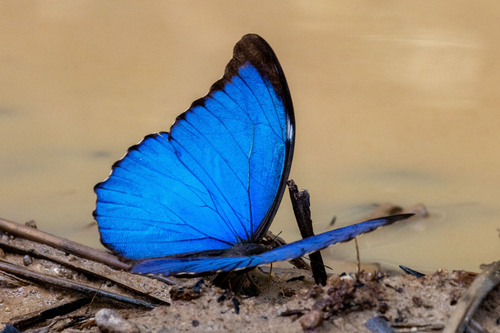
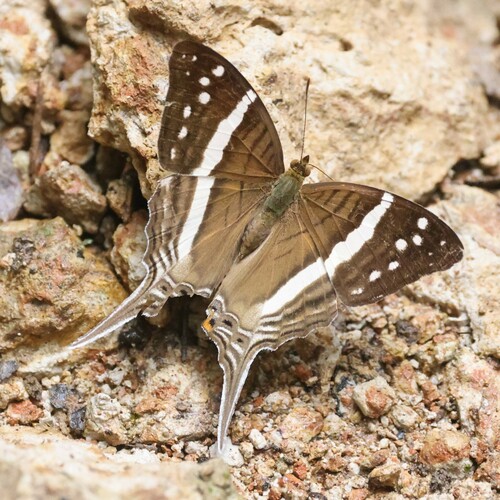
Before you go
What are the chances of seeing a Green-Banded Urania in Yasuní National Park?
Likely
About 50% of wildlife watchers report a Green-Banded Urania sighting in Yasuní National Park on a given day, based on 176 verified sightings from GBIF citizen-science data from 2019 to 2026. It is the 2nd most-seen of the 203 insects we can rate there. Over three days the chance rises to about 90%, and over a week to over 90%, if each day is a fresh chance.
When is the best time to see a Green-Banded Urania in Yasuní National Park?
December
In that month about 70% of wildlife watchers report a Green-Banded Urania in Yasuní National Park on a given day, against about 30% in April, the lowest month.
What time of day is best to see a Green-Banded Urania?
Between noon and 3 pm
Across all the parks we cover, that three-hour window holds the most Green-Banded Urania sightings with a recorded time, and about 9 in 10 of them come between 6 am and 6 pm: it is a daytime animal.
Is Yasuní National Park the best place to see a Green-Banded Urania?
Yes
Of the 7 parks where we can rate Green-Banded Urania sightings, Yasuní National Park has the highest daily chance: about 50%. Next come Cuyabeno Wildlife Reserve (Ecuador, about 40%) and Tambopata National Reserve (Peru, about 40%). All parks ranked.
Which relatives of the Green-Banded Urania live in Yasuní National Park?
Same order: Lepidoptera
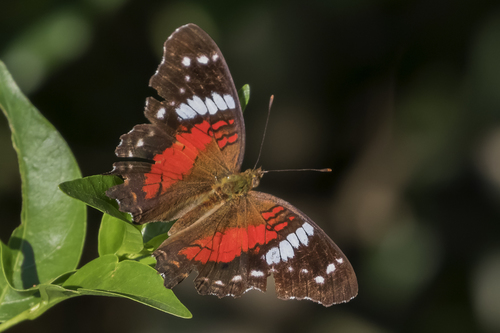
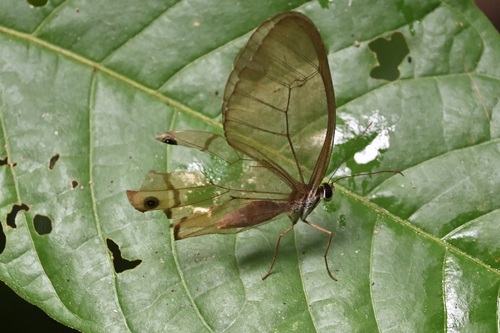
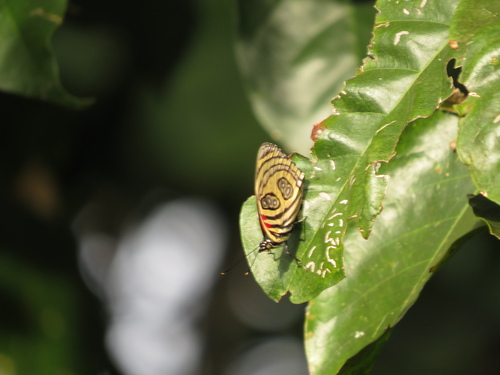
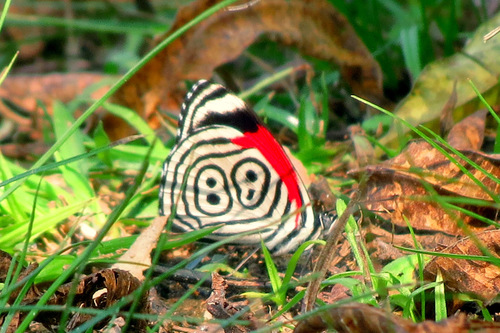
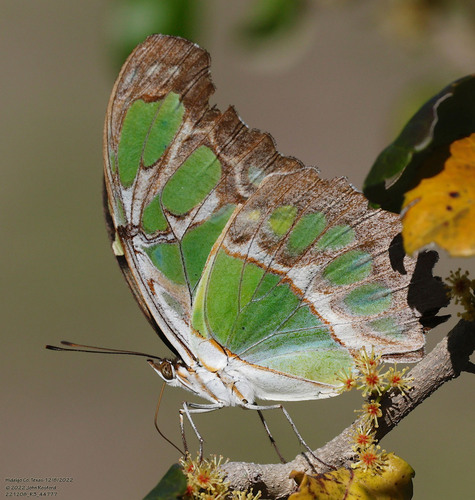
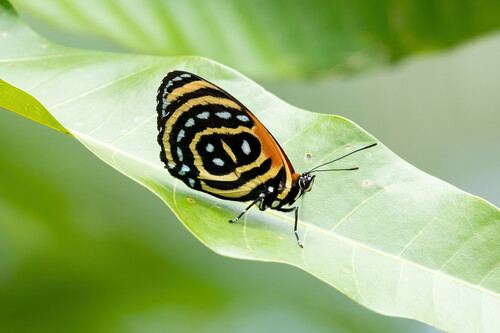
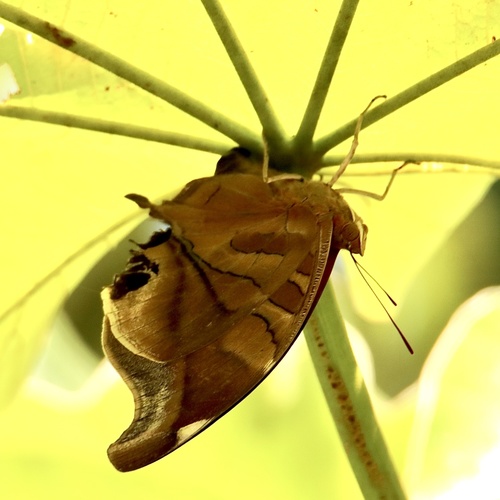
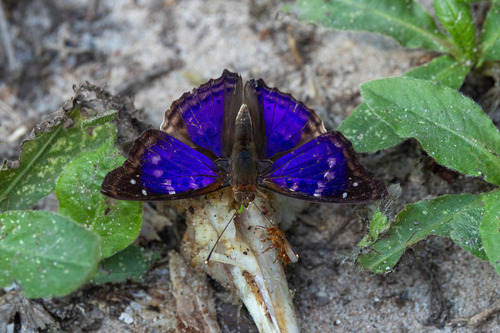
The closest relatives of the Green-Banded Urania that you can see in Yasuní National Park (order Lepidoptera, Butterflies and Moths) are Red Peacock (about 30%), Amber Phantom (about 30%) and Godart's Numberwing (about 20%), with each one's daily chance of a sighting.
Where does the Green-Banded Urania sighting chance come from?
GBIF citizen-science records
It is estimated from how often the Green-Banded Urania is recorded against all the insects logged in Yasuní National Park (176 verified sightings from 2019 to 2026), calibrated against known sighting rates. Figures are rounded to the nearest 10% because citizen-science data supports honest approximations, not decimals, and months with records from fewer than five people show "—". How it works.
