
Least Chipmunk

Least Chipmunk

Tamias minimus

Silhouette: Chloé Schmidt · PhyloPic

Daily sighting probability ~20% · Possible
at Yellowstone National Park

In 3 days ~50% in a week ~80%

94 Verified sightings at Yellowstone National Park From 2019 to 2026
572 In all 10 parks
September Best month
☀️ Diurnal When it's spotted

About the Least Chipmunk

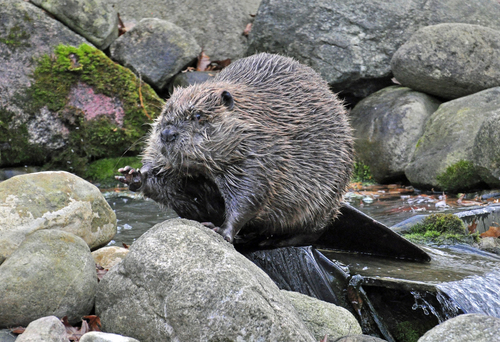
The least chipmunk (Neotamias minimus) is the smallest species of chipmunk and the most widespread in North America. It is the smallest species of chipmunk, measuring about 15.7–25 cm (6.2–9.8 in) in total length with a weight of 25–66 g (0.88–2.33 oz). The body is gray to reddish-brown on the sides, and grayish white on the underparts. The back is marked with five dark brown to black stripes separated by four white or cream-colored stripes, all of which run from the nape of the neck to the base of the tail. Two light and two dark stripes mark the face, running from the tip of the nose to the ears. The bushy tail is orange-brown in color, and measures 10–11 cm (3.9–4.3 in) long. In some areas, where range overlap with the yellow-pine chipmunk occurs, it may be difficult or impossible to distinguish the two species in the field; laboratory examination of skeletal structures may be required.

As in other chipmunks, there are four toes on each of the forefeet and five on the hindfeet. Females have eight teats. The brain to body mass ratio for least chipmunks is lower than that for other species of chipmunk living in the same area, suggesting that they prefer less complex... Wikipedia →

Sounds

Recording0:13

Canada · 2025

© olivia gilbert · iNaturalist · CC BY-NC 4.0

Recording0:31

United States · 2023

© kericolabroy · iNaturalist · CC BY-NC 4.0

Recording0:14

Canada · 2023

© jillyhurst42 · iNaturalist · CC BY-NC 4.0

Global Distribution

Parks Where Found

# Park Country Daily sighting probability
1 Badlands National Park 🇺🇸 United States
~60%
2 Kluane National Park 🇨🇦 Canada
~50%
3 Jasper National Park 🇨🇦 Canada
~30%
4 Rocky Mountain National Park 🇺🇸 United States
~20%
5 Banff National Park 🇨🇦 Canada
~20%
6 Grand Teton National Park 🇺🇸 United States
~20%
7 Yellowstone National Park 🇺🇸 United States
~20%
8 Glacier National Park 🇺🇸 United States
~10%
9 Riding Mountain National Park 🇨🇦 Canada
~10%
10 Grand Canyon National Park 🇺🇸 United States
~10%

Cities Where Found

# City Country Daily sighting probability
1 Edmonton 🇨🇦 Canada
~30%
2 Calgary 🇨🇦 Canada
<5%

Before you go

What are the chances of seeing a Least Chipmunk in Yellowstone National Park?

Possible

About 20% of wildlife watchers report a Least Chipmunk sighting in Yellowstone National Park on a given day, based on 94 verified sightings from GBIF citizen-science data from 2019 to 2026. It is the 18th most-seen of the 32 mammals we can rate there. Over three days the chance rises to about 50%, and over a week to about 80%, if each day is a fresh chance.

When is the best time to see a Least Chipmunk in Yellowstone National Park?

September

In that month about 30% of wildlife watchers report a Least Chipmunk in Yellowstone National Park on a given day, against under 5% in December to March, the lowest months.

What time of day is best to see a Least Chipmunk?

Between 8 and 11 am

Across all the parks we cover, that three-hour window holds the most Least Chipmunk sightings with a recorded time, and about 9 in 10 of them come between 6 am and 6 pm: it is a daytime animal.

Which relatives of the Least Chipmunk live in Yellowstone National Park?

Same genus: Tamias

The closest relatives of the Least Chipmunk that you can see in Yellowstone National Park (genus Tamias, Eastern Chipmunks) are Yellow-pine Chipmunk (about 20%) and Uinta Chipmunk (about 10%), with each one's daily chance of a sighting.

Where does the Least Chipmunk sighting chance come from?

GBIF citizen-science records

It is estimated from how often the Least Chipmunk is recorded against all the mammals logged in Yellowstone National Park (94 verified sightings from 2019 to 2026), calibrated against known sighting rates. Figures are rounded to the nearest 10% because citizen-science data supports honest approximations, not decimals, and months with records from fewer than five people show "—". How it works.

← Back to Yellowstone National Park