


Completed


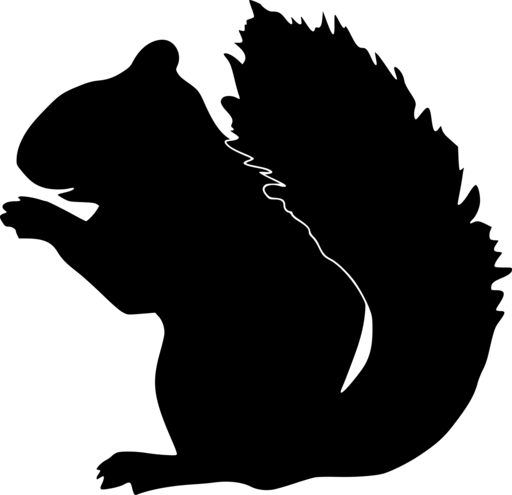
American Red Squirrel
Tamiasciurus hudsonicus
Silhouette: PhyloPic
- KingdomAnimalia (Animals)
- PhylumChordata (Chordates)
- ClassMammalia (Mammals)
- OrderRodentia (Rodents)
- FamilySciuridae (Squirrels)
- GenusTamiasciurus (Pine Squirrels)
- SpeciesTamiasciurus hudsonicus (American Red Squirrel)
In 3 days ~80% in a week >90%
393 Verified sightings at Yellowstone National Park From 2019 to 2026
3,803 In all 22 parks
September Best month
☀️ Diurnal When it's spotted
About the American Red Squirrel
The American red squirrel (Tamiasciurus hudsonicus) is one of three species of tree squirrels currently classified in the genus Tamiasciurus, known as the pine squirrels (the others are the Douglas squirrel, T. douglasii, and the southwestern red squirrel, T. fremonti). The American red squirrel is variously known as the pine squirrel or piney squirrel, North American red squirrel, chickaree, boomer, or simply red squirrel. The squirrel is a small, 200–250 g (7.1–8.8 oz), diurnal mammal that defends a year-round exclusive territory. It feeds primarily on the seeds of conifer cones, and is widely distributed across much of the United States and Canada wherever conifers are common, except in the southwestern United States, where it is replaced by the formerly conspecific southwestern red squirrel, and along the Pacific coast of the United States, where its cousin the Douglas squirrel is found instead.
The squirrel has been expanding its range into hardwood forests. American red squirrels should not be confused with Eurasian red squirrels (Sciurus vulgaris); since the ranges of these species do not overlap, they are both commonly referred to as simply "red squirrel" in the... Wikipedia →
Sounds
Call0:07
Canada · 2025
© Bram Piot · XC1060250 · CC BY-NC-SA 4.0
Call1:02
United States · 2025
© Greg Irving · XC1038745 · CC BY-NC-SA 4.0
Recording0:11
United States · 2026
Marj H. · iNaturalist · CC0
Recent sightings of American Red Squirrel in Yellowstone National Park
LIVEiNaturalistGlobal Distribution
Parks Where Found
| # | Park | Country | Daily sighting probability |
|---|---|---|---|
| 1 | Denali National Park | 🇺🇸 United States | |
| 2 | Isle Royale National Park | 🇺🇸 United States | |
| 3 | Voyageurs National Park | 🇺🇸 United States | |
| 4 | Acadia National Park | 🇺🇸 United States | |
| 5 | Elk Island National Park | 🇨🇦 Canada | |
| 6 | Cape Breton Highlands National Park | 🇨🇦 Canada | |
| 7 | Banff National Park | 🇨🇦 Canada | |
| 8 | Grand Teton National Park | 🇺🇸 United States | |
| 9 | Kluane National Park | 🇨🇦 Canada | |
| 10 | Jasper National Park | 🇨🇦 Canada | |
| 11 | Great Smoky Mountains National Park | 🇺🇸 United States | |
| 12 | Wrangell-St. Elias National Park | 🇺🇸 United States | |
| 13 | Yellowstone National Park | 🇺🇸 United States | |
| 14 | Glacier National Park | 🇺🇸 United States | |
| 15 | Katmai National Park | 🇺🇸 United States | |
| 16 | Gros Morne National Park | 🇨🇦 Canada | |
| 17 | Pacific Rim National Park Reserve | 🇨🇦 Canada | |
| 18 | Riding Mountain National Park | 🇨🇦 Canada | |
| 19 | Great Bear Rainforest | 🇨🇦 Canada | |
| 20 | Rocky Mountain National Park | 🇺🇸 United States | |
| 21 | Kenai Fjords National Park | 🇺🇸 United States | |
| 22 | Grand Canyon National Park | 🇺🇸 United States |
Cities Where Found
| # | City | Country | Daily sighting probability |
|---|---|---|---|
| 1 | Edmonton | 🇨🇦 Canada | |
| 2 | Anchorage | 🇺🇸 United States | |
| 3 | Toronto | 🇨🇦 Canada | |
| 4 | Salt Lake City | 🇺🇸 United States | |
| 5 | Minneapolis [Saint Paul] | 🇺🇸 United States | |
| 6 | Calgary | 🇨🇦 Canada | |
| 7 | Detroit | 🇺🇸 United States | |
| 8 | Montreal | 🇨🇦 Canada | |
| 9 | Boston | 🇺🇸 United States | |
| 10 | Chicago | 🇺🇸 United States |
Zoos & Centres Where Found
| # | Zoo / Centre | Country | |
|---|---|---|---|
| 1 | Ostrava Zoo | 🇨🇿 Czechia | |
| 2 | Ecomuseum Zoo | 🇨🇦 Canada | |
| 3 | Wildlife World Zoo | 🇺🇸 United States | |
| 4 | Hanover Zoo | 🇩🇪 Germany | |
| 5 | Van Blanckendaell Park | 🇳🇱 Netherlands | |
| 6 | Pyrénées Animal Park | 🇫🇷 France | |
| 7 | Dierenpark Zie-ZOO | 🇳🇱 Netherlands | |
| 8 | Kecskeméti Vadaskert | 🇭🇺 Hungary | |
| 9 | Yumemigasaki Zoological Park | 🇯🇵 Japan | |
| 10 | Almere Jungle | 🇳🇱 Netherlands | |
| 11 | Wildwood Devon | 🇬🇧 United Kingdom |
Closest Relatives at Yellowstone National Park






Before you go
What are the chances of seeing an American Red Squirrel in Yellowstone National Park?
Likely
About 40% of wildlife watchers report an American Red Squirrel sighting in Yellowstone National Park on a given day, based on 393 verified sightings from GBIF citizen-science data from 2019 to 2026. It is the 13th most-seen of the 32 mammals we can rate there. Over three days the chance rises to about 80%, and over a week to over 90%, if each day is a fresh chance.
When is the best time to see an American Red Squirrel in Yellowstone National Park?
September
In that month about 60% of wildlife watchers report an American Red Squirrel in Yellowstone National Park on a given day, against about 20% in January, April and November, the lowest months.
What time of day is best to see an American Red Squirrel?
Between 9 am and noon
Across all the parks we cover, that three-hour window holds the most American Red Squirrel sightings with a recorded time, and about 8 in 10 of them come between 6 am and 6 pm: it is a daytime animal.
Is Yellowstone National Park the best place to see an American Red Squirrel?
13th of 22
Of the 22 parks where we can rate American Red Squirrel sightings, Yellowstone National Park ranks 13th at about 40%. The best odds are in Denali National Park (United States, about 80%), Isle Royale National Park (United States, about 70%) and Voyageurs National Park (United States, about 60%). All parks ranked.
Which relatives of the American Red Squirrel live in Yellowstone National Park?
Same family: Sciuridae
The closest relatives of the American Red Squirrel that you can see in Yellowstone National Park (family Sciuridae, Squirrels) are Uinta Ground Squirrel (about 50%), Yellow-bellied Marmot (about 50%) and Golden-mantled Ground Squirrel (about 40%), with each one's daily chance of a sighting.
Where does the American Red Squirrel sighting chance come from?
GBIF citizen-science records
It is estimated from how often the American Red Squirrel is recorded against all the mammals logged in Yellowstone National Park (393 verified sightings from 2019 to 2026), calibrated against known sighting rates. Figures are rounded to the nearest 10% because citizen-science data supports honest approximations, not decimals, and months with records from fewer than five people show "—". How it works.
