Belding's Ground Squirrel

Belding's Ground Squirrel

Urocitellus beldingi

Silhouette: PhyloPic

LCLeast ConcernNTVUENCR Endemic
Daily sighting probability ~40% · Likely
at Yosemite National Park

In 3 days ~80% in a week >90%

366 Verified sightings at Yosemite National Park From 2019 to 2026
397 In all 2 parks
August Best month
☀️ Diurnal When it's spotted

About the Belding's Ground Squirrel

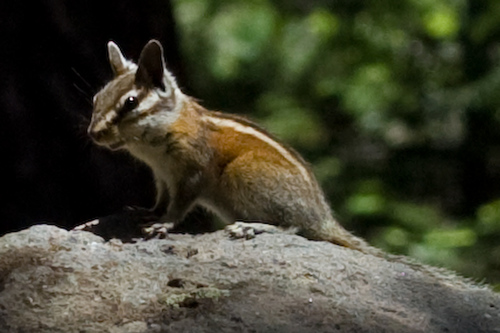
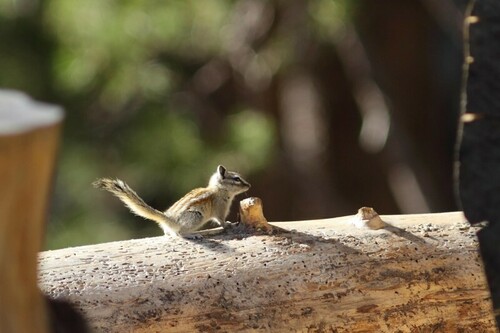
Belding's ground squirrel (Urocitellus beldingi), also called pot gut, sage rat or picket-pin, is a squirrel that lives on mountains in the western United States. In California, it often is found at 6,500 to 11,800 feet (2,000–3,600 m) in meadows between Lake Tahoe and Kings Canyon. This species is not of conservation concern, and its range includes some protected areas.

The Belding's ground squirrel is medium-sized with "a relatively short tail, short limbs, and small ears". It has a gray pelage that becomes more cinnamon at the underside and reddish-brown on the back. Its body length is 230 to 300 millimetres (9.1–11.8 in). The tail is 44 to 76 millimetres (1.7–3.0 in) and is bushy but also flattened. The distal hairs of the tail have three color bands, one black, one white, and one red. On average, the ground squirrel weighs 290 grams (0.64 lb). Its feet are covered in little to no hair. Compared to other ground squirrel species, its cheek pouches are moderate in size.

Being native to the northwestern United States, the Belding's ground squirrel ranges covers northeastern Oregon and part of Washington, north California... Wikipedia →

Sounds

Recording0:09

United States · 2026

© Richard Hasegawa · iNaturalist · CC BY-NC 4.0

Recording1:01

United States · 2022

© Sean Cozart · iNaturalist · CC BY-NC 4.0

Recording0:06

United States · 2021

Scott Loarie · iNaturalist · CC0

Global Distribution

Parks Where Found

# Park Country Daily sighting probability
1 Yosemite National Park 🇺🇸 United States
~40%
2 Sequoia and Kings Canyon National Parks 🇺🇸 United States
~20%

Before you go

What are the chances of seeing a Belding's Ground Squirrel in Yosemite National Park?

Likely

About 40% of wildlife watchers report a Belding's Ground Squirrel sighting in Yosemite National Park on a given day, based on 366 verified sightings from GBIF citizen-science data from 2019 to 2026. It is the 8th most-seen of the 21 mammals we can rate there. Over three days the chance rises to about 80%, and over a week to over 90%, if each day is a fresh chance.

When is the best time to see a Belding's Ground Squirrel in Yosemite National Park?

July and August

In those months about 50% of wildlife watchers report a Belding's Ground Squirrel in Yosemite National Park on a given day, against under 5% in November to April, the lowest months. Those are among Yosemite National Park's driest months, with about 25 mm of rain a month against 220 mm in January.

What time of day is best to see a Belding's Ground Squirrel?

Between 8 and 11 am

Across all the parks we cover, that three-hour window holds the most Belding's Ground Squirrel sightings with a recorded time, and about 9 in 10 of them come between 6 am and 6 pm: it is a daytime animal.

Is Yosemite National Park the best place to see a Belding's Ground Squirrel?

Yes

Of the 2 parks where we can rate Belding's Ground Squirrel sightings, Yosemite National Park has the highest daily chance: about 40%. Next come Sequoia and Kings Canyon National Parks (United States, about 20%).

Which relatives of the Belding's Ground Squirrel live in Yosemite National Park?

Same family: Sciuridae

The closest relatives of the Belding's Ground Squirrel that you can see in Yosemite National Park (family Sciuridae, Squirrels) are California Ground Squirrel (about 70%), Yellow-bellied Marmot (about 50%) and Douglas' Squirrel (about 40%), with each one's daily chance of a sighting.

Where does the Belding's Ground Squirrel sighting chance come from?

GBIF citizen-science records

It is estimated from how often the Belding's Ground Squirrel is recorded against all the mammals logged in Yosemite National Park (366 verified sightings from 2019 to 2026), calibrated against known sighting rates. Figures are rounded to the nearest 10% because citizen-science data supports honest approximations, not decimals, and months with records from fewer than five people show "—". How it works.

← Back to Yosemite National Park