Milkweed Tussock Moth

Milkweed Tussock Moth

Euchaetes egle

Daily sighting probability ~10% · With luck
at Acadia National Park

In 3 days ~30% in a week ~60%

46 Verified sightings at Acadia National Park From 2019 to 2026
230 In all 4 parks
September Best month
☀️ Diurnal When it's spotted

About the Milkweed Tussock Moth

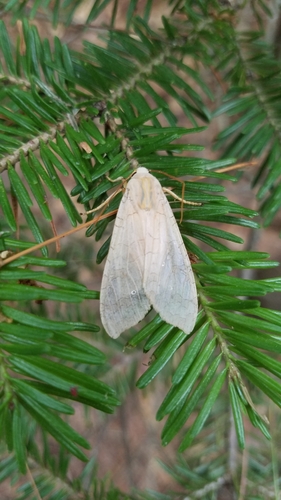
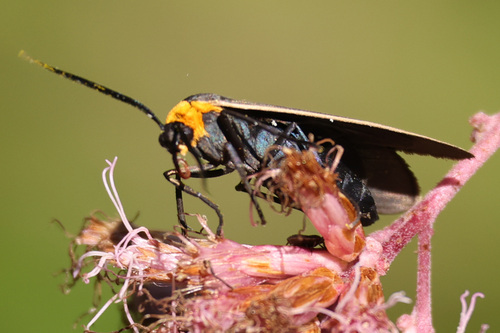
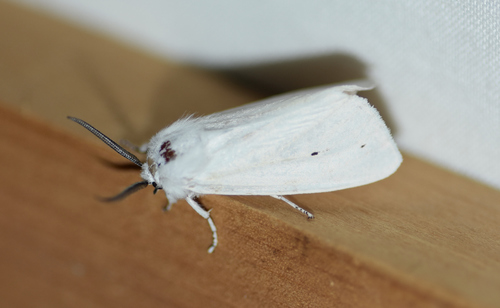
Euchaetes egle, the milkweed tiger moth or milkweed tussock moth, is a moth in the family Erebidae and the tribe Arctiini, the tiger moths. The species was first described by Dru Drury in 1773. It is a common mid- through late summer feeder on milkweeds and dogbane. Like most species in this family, it has chemical defenses it acquires from its host plants, in this case, cardiac glycosides. These are retained in adults and deter bats, and presumably other predators, from feeding on them. Only very high cardiac glycoside concentrations deterred bats as predators. Adults indicate their unpalatability to bats with ultrasonic clicks from their tymbal organs.

It is found from southern Canada and south through Texas and Florida in North America. One generation per year occurs in the north, and two or more may occur in the south. Females lay eggs in masses on the undersides of leaves.

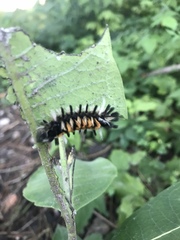
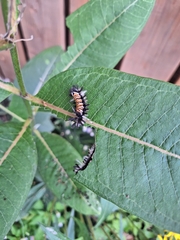
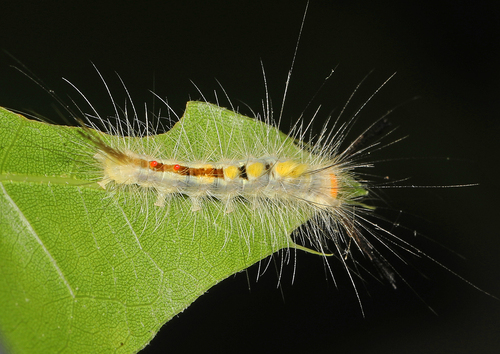
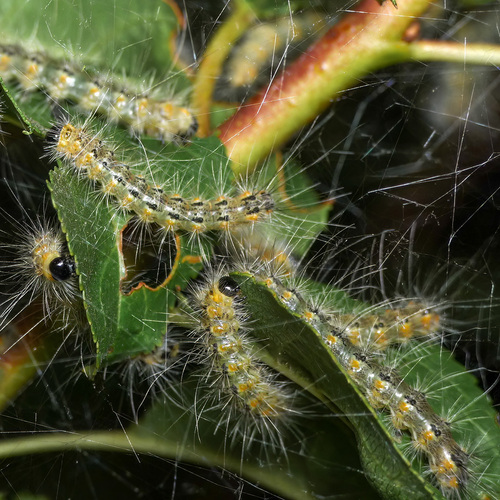
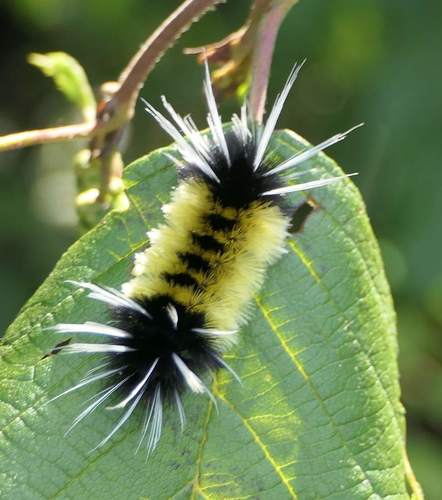
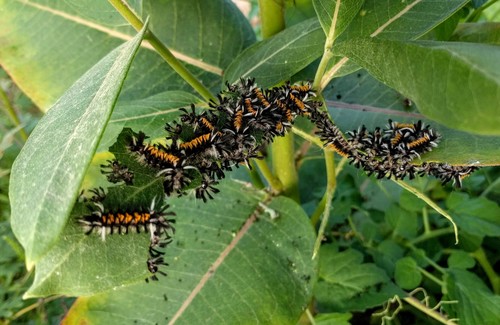
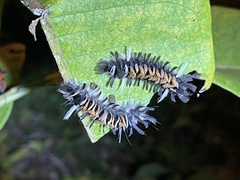
Early instars appear slightly hairy and gray. They skeletonize whole leaves gregariously, leaving lacy leaf remnants. They are gregarious until their third instar. Later instars sport tufts of black, white and orange (sometimes yellow) setae (hairs). The head... Wikipedia →
Global Distribution

Parks Where Found

# Park Country Daily sighting probability
1 Shenandoah National Park 🇺🇸 United States
~30%
2 Acadia National Park 🇺🇸 United States
~10%
3 Point Pelee National Park 🇨🇦 Canada
~10%
4 Great Smoky Mountains National Park 🇺🇸 United States
~10%

Cities Where Found

# City Country Daily sighting probability
1 Detroit 🇺🇸 United States
~10%
2 Minneapolis [Saint Paul] 🇺🇸 United States
~10%
3 Chicago 🇺🇸 United States
~10%
4 Montreal 🇨🇦 Canada
~10%
5 Baltimore 🇺🇸 United States
~10%
6 Washington 🇺🇸 United States
<5%
7 Toronto 🇨🇦 Canada
<5%
8 Austin 🇺🇸 United States
<5%
9 Philadelphia 🇺🇸 United States
<5%
10 New York City 🇺🇸 United States
<5%

Before you go

What are the chances of seeing a Milkweed Tussock Moth in Acadia National Park?

With luck

About 10% of wildlife watchers report a Milkweed Tussock Moth sighting in Acadia National Park on a given day, based on 46 verified sightings from GBIF citizen-science data from 2019 to 2026. It is the 58th most-seen of the 405 insects we can rate there. Over three days the chance rises to about 30%, and over a week to about 60%, if each day is a fresh chance.

When is the best time to see a Milkweed Tussock Moth in Acadia National Park?

September

In that month about 30% of wildlife watchers report a Milkweed Tussock Moth in Acadia National Park on a given day, against under 5% in October to June, the lowest months.

What time of day is best to see a Milkweed Tussock Moth?

Between 10 am and 1 pm

Across all the parks we cover, that three-hour window holds the most Milkweed Tussock Moth sightings with a recorded time, and about 9 in 10 of them come between 6 am and 6 pm: it is a daytime animal.

Is Acadia National Park the best place to see a Milkweed Tussock Moth?

2nd of 4

Of the 4 parks where we can rate Milkweed Tussock Moth sightings, Acadia National Park ranks 2nd at about 10%. The best odds are in Shenandoah National Park (United States, about 30%).

Which relatives of the Milkweed Tussock Moth live in Acadia National Park?

Same family: Erebidae

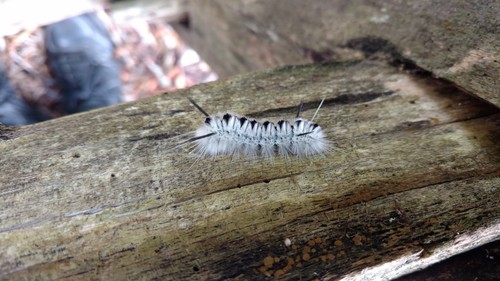
The closest relatives of the Milkweed Tussock Moth that you can see in Acadia National Park (family Erebidae, Underwing, Tiger, Tussock, and Allied Moths) are Hickory Tussock Moth (about 30%), Brown-Tail Moth (about 20%) and Isabella Tiger Moth (about 20%), with each one's daily chance of a sighting.

Where does the Milkweed Tussock Moth sighting chance come from?

GBIF citizen-science records

It is estimated from how often the Milkweed Tussock Moth is recorded against all the insects logged in Acadia National Park (46 verified sightings from 2019 to 2026), calibrated against known sighting rates. Figures are rounded to the nearest 10% because citizen-science data supports honest approximations, not decimals, and months with records from fewer than five people show "—". How it works.

← Back to Acadia National Park