
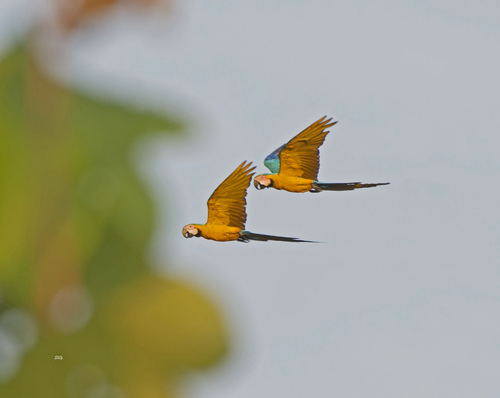
Festive Parrot

Festive Parrot

Amazona festiva

Silhouette: Ferran Sayol · PhyloPic

LCLeast ConcernNTVUENCR
Daily sighting probability ~20% · Possible
at Amacayacu National Natural Park

In 3 days ~50% in a week ~80%

146 Verified sightings at Amacayacu National Natural Park From 2019 to 2026
519 In all 4 parks
December Best month
☀️ Diurnal When it's spotted

About the Festive Parrot

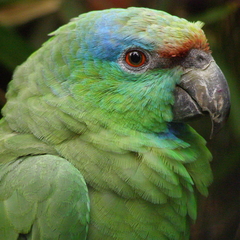
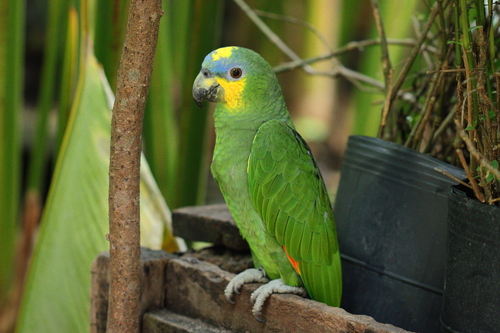
The festive amazon (Amazona festiva), also known as the festive parrot, is a species of parrot in the family Psittacidae. It is found in Brazil, Colombia, Ecuador, Bolivia, Guyana, Peru, and Venezuela. It is associated with forest (especially Várzea) and woodland growing near major rivers. Locally, it is also found in coastal mangroves (primarily in Amapá).

The festive amazon was formally described in 1758 by the Swedish naturalist Carl Linnaeus, in the tenth edition of his Systema Naturae. He placed it with all the other parrots in the genus Psittacus and coined the binomial name Psittacus festivus. Linnaeus mistakenly specified the type location as "Indies". It was later designated as the Amazon River in Brazil. The festive amazon is now one of around thirty species placed in the genus Amazona that was introduced by the French naturalist René Lesson in 1830. The genus name is a Latinized version of the name Amazone used in the 18th century by the Comte de Buffon. The specific epithet festivus is Latin for "festive" or "cheerful".

Two subspecies are recognised: Wikipedia →

Sounds

Call1:06

Colombia · 2022

© Frank Lambert · XC773636 · CC BY-NC-ND 4.0

Flight call0:30

Brazil · 1996

© Dante Buzzetti · XC690824 · CC BY-NC-SA 4.0

Song0:04

Colombia · 2013

© Sandra V. Valderrama & David W. Bradley · XC124244 · CC BY-NC-ND 3.0

Global Distribution

Parks Where Found

# Park Country Daily sighting probability
1 Anavilhanas National Park 🇧🇷 Brazil
~60%
2 Amacayacu National Natural Park 🇨🇴 Colombia
~20%
3 Caroni Swamp 🇹🇹 Trinidad and Tobago
~10%
4 Cuyabeno Wildlife Reserve 🇪🇨 Ecuador
~10%

Cities Where Found

# City Country Daily sighting probability
1 Manaus 🇧🇷 Brazil
<5%

Zoos & Centres Where Found

# Zoo / Centre Country
1 Zoo das Aves 🇧🇷 Brazil In captivity
2 Amaru 🇪🇨 Ecuador In captivity
3 Loro Parque 🇪🇸 Spain In captivity
4 Agroflori Parque de las Aves 🇧🇴 Bolivia In captivity
5 Aquarium Barcelona 🇪🇸 Spain In captivity
6 Selva Viva Park 🇵🇪 Peru In captivity
7 Tropical Manaus Zoo 🇧🇷 Brazil In captivity
8 Zoológico do Acre 🇧🇷 Brazil In captivity
9 GüiráOga 🇦🇷 Argentina In captivity

Before you go

What are the chances of seeing a Festive Parrot in Amacayacu National Natural Park?

Possible

About 20% of wildlife watchers report a Festive Parrot sighting in Amacayacu National Natural Park on a given day, based on 146 verified sightings from GBIF citizen-science data from 2019 to 2026. It is the 68th most-seen of the 436 birds we can rate there. Over three days the chance rises to about 50%, and over a week to about 80%, if each day is a fresh chance.

When is the best time to see a Festive Parrot in Amacayacu National Natural Park?

February, July, September and December

In those months about 30% of wildlife watchers report a Festive Parrot in Amacayacu National Natural Park on a given day, against under 5% in June, the lowest month.

What time of day is best to see a Festive Parrot?

Between 6 and 9 am

Across all the parks we cover, that three-hour window holds the most Festive Parrot sightings with a recorded time, and about 8 in 10 of them come between 6 am and 6 pm: it is a daytime animal.

Is Amacayacu National Natural Park the best place to see a Festive Parrot?

2nd of 4

Of the 4 parks where we can rate Festive Parrot sightings, Amacayacu National Natural Park ranks 2nd at about 20%. The best odds are in Anavilhanas National Park (Brazil, about 60%).

Where does the Festive Parrot sighting chance come from?

GBIF citizen-science records

It is estimated from how often the Festive Parrot is recorded against all the birds logged in Amacayacu National Natural Park (146 verified sightings from 2019 to 2026), calibrated against known sighting rates. Figures are rounded to the nearest 10% because citizen-science data supports honest approximations, not decimals, and months with records from fewer than five people show "—". How it works.

← Back to Amacayacu National Natural Park