Tui Parakeet

Tui Parakeet

Brotogeris sanctithomae

Silhouette: Myriam Ramirez · PhyloPic

LCLeast ConcernNTVUENCR
Daily sighting probability ~40% · Likely
at Amacayacu National Natural Park

In 3 days ~80% in a week >90%

343 Verified sightings at Amacayacu National Natural Park From 2019 to 2026
836 In all 3 parks
August Best month
☀️ Diurnal When it's spotted

About the Tui Parakeet

The tui parakeet (Brotogeris sanctithomae) is a species of bird in subfamily Arinae of the family Psittacidae, the African and New World parrots. It is found in Bolivia, Brazil, Colombia, Peru, and possibly Ecuador. The tui parakeet shares genus Brotogeris with seven other species of parakeets.

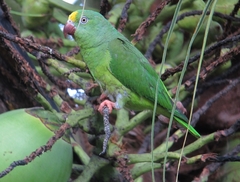
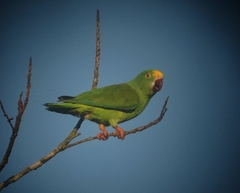
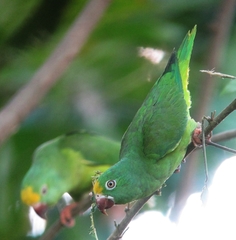
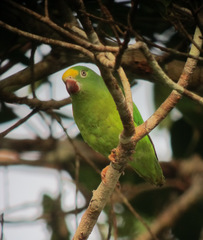
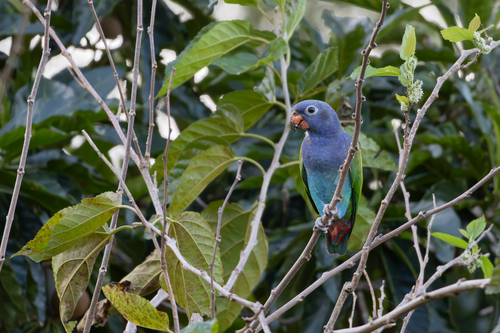
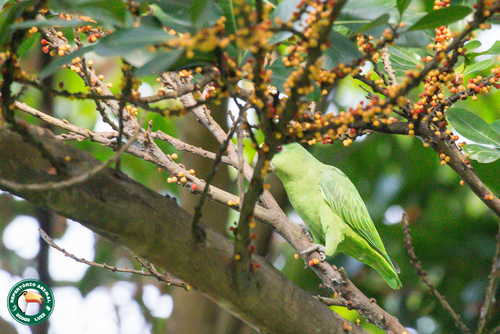
The tui parakeet is 17 to 19 cm (6.7 to 7.5 in) long and weighs an average of 59 g (2.1 oz). Adults are mostly green that is yellower on the rump and underparts. They have yellow lores and forehead and a bluish tinge on the face. Their primaries are a darker green than the body and bluish on their underside. Their bill is brown. Subspecies B. s. takatsukasae differs from the nominate only by adding a yellow streak behind the eye. Immature birds are essentially the same as adults.

The nominate subspecies of the tui parakeet is found in the Amazon Basin of extreme southeastern Colombia, eastern Peru, northern Bolivia, and Brazil east to the Rio Madeira. Undocumented sight records in eastern Ecuador lead the... Wikipedia →

Sounds

Call0:10

Brazil · 1996

© Dante Buzzetti · XC690829 · CC BY-NC-SA 4.0

Canto0:21

Brazil · 2018

© Caio Brito · XC556174 · CC BY-NC-SA 4.0

Song0:05

Brazil · 2019

© JAYRSON ARAUJO DE OLIVEIRA · XC493815 · CC BY-NC-SA 4.0

Global Distribution

Parks Where Found

# Park Country Daily sighting probability
1 Amacayacu National Natural Park 🇨🇴 Colombia
~40%
2 Manu National Park 🇵🇪 Peru
~10%
3 Tambopata National Reserve 🇵🇪 Peru
<5%

Cities Where Found

# City Country Daily sighting probability
1 Manaus 🇧🇷 Brazil
<5%

Before you go

What are the chances of seeing a Tui Parakeet in Amacayacu National Natural Park?

Likely

About 40% of wildlife watchers report a Tui Parakeet sighting in Amacayacu National Natural Park on a given day, based on 343 verified sightings from GBIF citizen-science data from 2019 to 2026. It is the 7th most-seen of the 436 birds we can rate there. Over three days the chance rises to about 80%, and over a week to over 90%, if each day is a fresh chance.

When is the best time to see a Tui Parakeet in Amacayacu National Natural Park?

August

In that month about 70% of wildlife watchers report a Tui Parakeet in Amacayacu National Natural Park on a given day, against about 10% in January, the lowest month. That is one of Amacayacu National Natural Park's driest months, with about 160 mm of rain against 390 mm in March.

What time of day is best to see a Tui Parakeet?

Between 2 and 5 pm

Across all the parks we cover, that three-hour window holds the most Tui Parakeet sightings with a recorded time, and about 8 in 10 of them come between 6 am and 6 pm: it is a daytime animal.

Is Amacayacu National Natural Park the best place to see a Tui Parakeet?

Yes

Of the 3 parks where we can rate Tui Parakeet sightings, Amacayacu National Natural Park has the highest daily chance: about 40%. Next come Manu National Park (Peru, about 10%) and Tambopata National Reserve (Peru, under 5%).

Which relatives of the Tui Parakeet live in Amacayacu National Natural Park?

Same genus: Brotogeris

The closest relatives of the Tui Parakeet that you can see in Amacayacu National Natural Park (genus Brotogeris, Brotogeris Parakeets) are White-winged Parakeet (about 20%) and Cobalt-winged Parakeet (about 10%), with each one's daily chance of a sighting.

Where does the Tui Parakeet sighting chance come from?

GBIF citizen-science records

It is estimated from how often the Tui Parakeet is recorded against all the birds logged in Amacayacu National Natural Park (343 verified sightings from 2019 to 2026), calibrated against known sighting rates. Figures are rounded to the nearest 10% because citizen-science data supports honest approximations, not decimals, and months with records from fewer than five people show "—". How it works.

← Back to Amacayacu National Natural Park