Rufous Potoo

Rufous Potoo

Phyllaemulor bracteatus

Silhouette: Dominic Sherony (photo) and Albertonykus (silhouette) · PhyloPic

LCLeast ConcernNTVUENCR
Daily sighting probability ~20% · Possible
at Amacayacu National Natural Park

In 3 days ~40% in a week ~70%

134 Verified sightings at Amacayacu National Natural Park From 2019 to 2026
145 In all 2 parks
June Best month
☀️🌙 Day & Night When it's spotted

About the Rufous Potoo

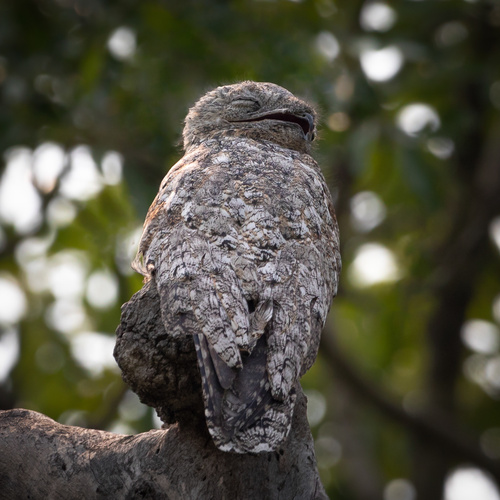
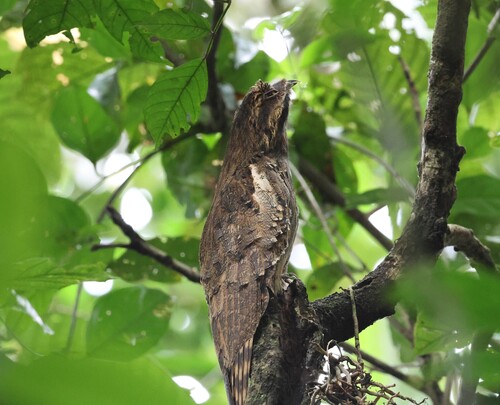
The rufous potoo (Phyllaemulor bracteatus) is a species of bird in the family Nyctibiidae. It is the only member of the genus Phyllaemulor. It is found in Brazil, Colombia, Ecuador, French Guiana, Suriname Guyana, Peru, and Venezuela.

A 2009 publication suggested that the rufous potoo differed enough in cranial structure and genetic divergence from other potoos (in the genus Nyctibius) that it deserved to be in its own genus, Phyllaemulor. This genus was officially described by Costa et al. in 2017. As of 2022, the BirdLife International Handbook of the Birds of the World, the International Ornithological Committee (IOC), and the South American Classification Committee of the American Ornithological Society (AOS-SACC) have followed in reclassified it into Phyllaemulor. The Clements taxonomy retains it in genus Nyctibius.

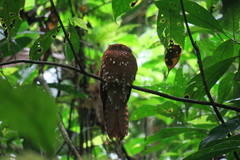
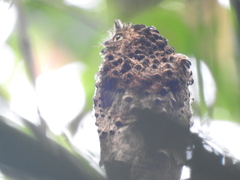
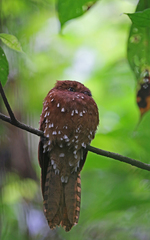
The rufous potoo is monotypic. The rufous potoo is 21 to 25 cm (8.3 to 9.8 in) long and weighs 46 to 58 g (1.6 to 2.0 oz). The rufous potoo is the smallest member of its family, and the most unusually colored. It is overall a deep orange-red with large white spots; the color is paler on the throat. The spots on the upper... Wikipedia →

Sounds

Recording0:15

Peru · 2008

© dbeadle · iNaturalist · CC BY-NC 4.0

Global Distribution

Parks Where Found

# Park Country Daily sighting probability
1 Amacayacu National Natural Park 🇨🇴 Colombia
~20%
2 Anavilhanas National Park 🇧🇷 Brazil
<5%

Before you go

What are the chances of seeing a Rufous Potoo in Amacayacu National Natural Park?

Possible

About 20% of wildlife watchers report a Rufous Potoo sighting in Amacayacu National Natural Park on a given day, based on 134 verified sightings from GBIF citizen-science data from 2019 to 2026. It is the 74th most-seen of the 436 birds we can rate there. Over three days the chance rises to about 40%, and over a week to about 70%, if each day is a fresh chance.

When is the best time to see a Rufous Potoo in Amacayacu National Natural Park?

June, August–September and November

In those months about 30% of wildlife watchers report a Rufous Potoo in Amacayacu National Natural Park on a given day, against under 5% in January, the lowest month.

What time of day is best to see a Rufous Potoo?

Between 11 pm and 2 am

Across all the parks we cover, that three-hour window holds the most Rufous Potoo sightings with a recorded time, and about 6 in 10 of them come between 6 pm and 6 am: it is seen both by day and at night.

Is Amacayacu National Natural Park the best place to see a Rufous Potoo?

Yes

Of the 2 parks where we can rate Rufous Potoo sightings, Amacayacu National Natural Park has the highest daily chance: about 20%. Next come Anavilhanas National Park (Brazil, under 5%).

Which relatives of the Rufous Potoo live in Amacayacu National Natural Park?

Same family: Nyctibiidae

The closest relatives of the Rufous Potoo that you can see in Amacayacu National Natural Park (family Nyctibiidae, Potoos) are Great Potoo (about 10%) and Common Potoo (about 10%), with each one's daily chance of a sighting.

Where does the Rufous Potoo sighting chance come from?

GBIF citizen-science records

It is estimated from how often the Rufous Potoo is recorded against all the birds logged in Amacayacu National Natural Park (134 verified sightings from 2019 to 2026), calibrated against known sighting rates. Figures are rounded to the nearest 10% because citizen-science data supports honest approximations, not decimals, and months with records from fewer than five people show "—". How it works.

← Back to Amacayacu National Natural Park