Wattled Curassow

Wattled Curassow

Crax globulosa

Silhouette: Sheatherius · PhyloPic

LCNTVUENEndangeredCR
Daily sighting probability <5% · Rare
at Amacayacu National Natural Park

In 3 days ~10%

12 Verified sightings at Amacayacu National Natural Park From 2019 to 2026
12 In 1 park
June Best month
☀️ Diurnal When it's spotted

About the Wattled Curassow

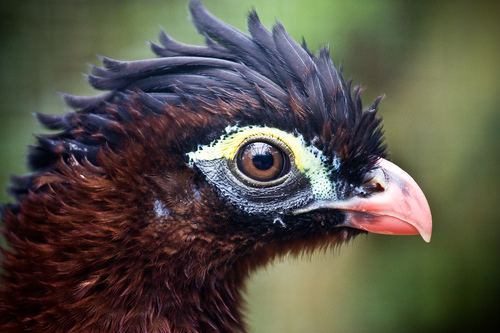
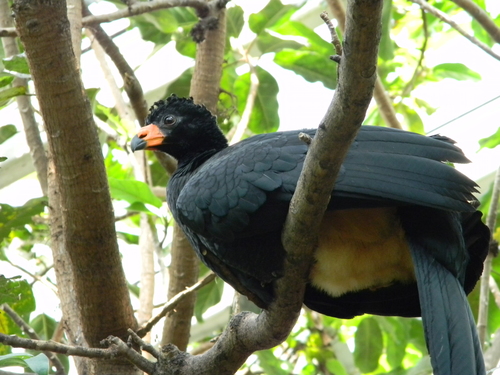
The wattled curassow (Crax globulosa) is a threatened member of the family Cracidae, the curassows, guans, and chachalacas. It is found in remote rainforests in the western Amazon basin in South America. Males have black plumage, except for a white crissum (the area around the cloaca), with curly feathers on the head and red bill ornaments and wattles. Females and juveniles are similar but lack the bill ornamentation and have a reddish-buff crissum area. The wattled curassow is sister to other southern Crax curassows. In captivity, it sometimes hybridises with the blue-billed curassow.

The habitat of the wattled curassow is gallery forests and seasonally-flooded forests where it feeds in small groups on the ground. The diet is largely fruit, but invertebrates and some small vertebrates are opportunistically taken. Little is known of its breeding habits, but it is known that the nest is built of sticks and leaves and two eggs are usually laid. The population of this species is declining. It is threatened by loss of habitat, as the rainforest is progressively cleared, and by hunting, and the International Union for Conservation of Nature has rated its conservation status as "endangered... Wikipedia →

Sounds

Call0:26

Peru · 2010

© Peter Boesman · XC270665 · CC BY-NC-ND 4.0

Song0:22

Peru · 2011

© David Geale · XC87263 · CC BY-NC-ND 2.5

Alarm call0:57

Bolivia · 2001

© A. Bennett Hennessey · XC3265 · CC BY-NC-ND 2.5

Global Distribution

Parks Where Found

# Park Country Daily sighting probability
1 Amacayacu National Natural Park 🇨🇴 Colombia
<5%

More parks will be added in future updates.

Zoos & Centres Where Found

# Zoo / Centre Country
1 National Aviary 🇺🇸 United States In captivity
2 Downtown Aquarium, Houston 🇺🇸 United States In captivity

Before you go

What are the chances of seeing a Wattled Curassow in Amacayacu National Natural Park?

Rare

Under 5% of wildlife watchers report a Wattled Curassow sighting in Amacayacu National Natural Park on a given day, based on 12 verified sightings from GBIF citizen-science data from 2019 to 2026. It is the 356th most-seen of the 436 birds we can rate there. Over three days the chance rises to about 10%, if each day is a fresh chance.

When is the best time to see a Wattled Curassow in Amacayacu National Natural Park?

Any time of year

In every month with enough records, under 5% of wildlife watchers report a Wattled Curassow in Amacayacu National Natural Park on a given day, so our monthly data shows no clear season.

What time of day is best to see a Wattled Curassow?

Between 9 am and noon

Across all the parks we cover, that three-hour window holds the most Wattled Curassow sightings with a recorded time, and about 8 in 10 of them come between 6 am and 6 pm: it is a daytime animal.

Where else can you see a Wattled Curassow?

Only Amacayacu National Natural Park, in our data

Amacayacu National Natural Park is the only park on Wallace's Line with enough records to rate Wattled Curassow sightings: under 5% of wildlife watchers there report one on a given day.

Which relatives of the Wattled Curassow live in Amacayacu National Natural Park?

Same family: Cracidae

The closest relatives of the Wattled Curassow that you can see in Amacayacu National Natural Park (family Cracidae, Guans, Chachalacas, and Curassows) are Speckled Chachalaca (about 30%), Spix's Guan (about 10%) and Blue-throated Piping-Guan (about 10%), with each one's daily chance of a sighting.

Where does the Wattled Curassow sighting chance come from?

GBIF citizen-science records

It is estimated from how often the Wattled Curassow is recorded against all the birds logged in Amacayacu National Natural Park (12 verified sightings from 2019 to 2026), calibrated against known sighting rates. Figures are rounded to the nearest 10% because citizen-science data supports honest approximations, not decimals, and months with records from fewer than five people show "—". How it works.
← Back to Amacayacu National Natural Park