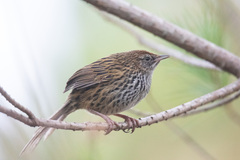
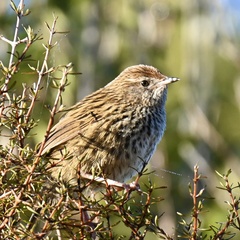
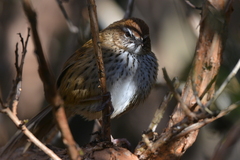
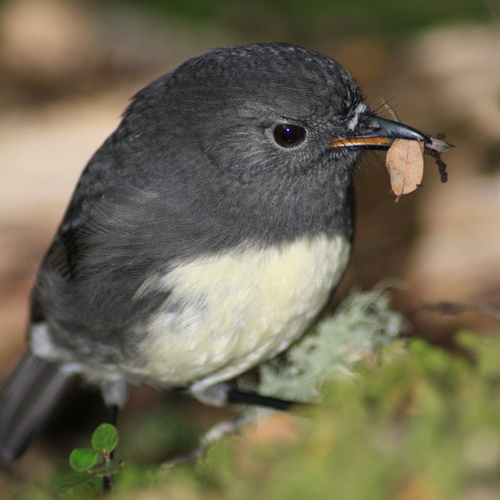
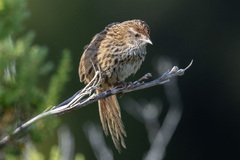
Fernbird

Fernbird

Poodytes punctatus

Silhouette: Sheatherius · PhyloPic

LCLeast ConcernNTVUENCR Endemic
Daily sighting probability <5% · Rare
at Arthur's Pass National Park

In 3 days ~10%

16 Verified sightings at Arthur's Pass National Park From 2019 to 2026
301 In all 5 parks
December Best month
☀️ Diurnal When it's spotted

About the Fernbird

The New Zealand fernbird or simply fernbird (Poodytes punctatus) is an insectivorous bird endemic to New Zealand. In the Māori language, it is named kōtātā or mātātā. The New Zealand fernbird, Poodytes punctatus, was described by the French zoologists Jean Quoy and Joseph Gaimard in 1832 from a specimen collected in Tasman Bay / Te Tai-o-Aorere, South Island, New Zealand. They coined the binomial name, Synallaxis punctata.

In the past, this species had the binomial names Bowdleria punctatus, and more recently, Megalurus punctatus. Recent moluecular phylogenetic studies of the grassbird family Locustellidae have shown that the genus Megalurus was not monophyletic, resulting in the New Zealand fernbird, and four other Australasian species, now considered to be in the genus Poodytes.

There are five subspecies of New Zealand fernbird present on different islands. They differ in extent of reddish-brown and intensity of streaking, as well as size: Poodytes punctatus vealeae (Kemp, R, 1912) – North Island (New Zealand)

Poodytes punctatus punctatus (Quoy & Gaimard, 1832) – South Island (New Zealand) Poodytes punctatus stewartianus (Oliver, 1930) – Stewart Island (New Zealand... Wikipedia →
Sounds

Song0:34

New Zealand · 2018

© Daniel Hinckley · XC543012 · CC BY-NC-SA 4.0

Call0:17

New Zealand · 2020

© James Lidster · XC526615 · CC BY-NC-SA 4.0

Song1:21

New Zealand · 2018

© Dan Lane · XC466565 · CC BY-NC-SA 4.0

Global Distribution

Parks Where Found

# Park Country Daily sighting probability
1 Abel Tasman National Park 🇳🇿 New Zealand
~20%
2 Fiordland National Park 🇳🇿 New Zealand
~10%
3 Egmont National Park 🇳🇿 New Zealand
<5%
4 Arthur's Pass National Park 🇳🇿 New Zealand
<5%
5 Rakiura National Park 🇳🇿 New Zealand
<5%

Cities Where Found

# City Country Daily sighting probability
1 Auckland 🇳🇿 New Zealand
<5%

Before you go

What are the chances of seeing a Fernbird in Arthur's Pass National Park?

Rare

Under 5% of wildlife watchers report a Fernbird sighting in Arthur's Pass National Park on a given day, based on 16 verified sightings from GBIF citizen-science data from 2019 to 2026. It is the 47th most-seen of the 48 birds we can rate there. Over three days the chance rises to about 10%, if each day is a fresh chance.

When is the best time to see a Fernbird in Arthur's Pass National Park?

June and December

In those months about 10% of wildlife watchers report a Fernbird in Arthur's Pass National Park on a given day, against under 5% in January–May and July–November, the lowest months.

What time of day is best to see a Fernbird?

Between 10 am and 1 pm

Across all the parks we cover, that three-hour window holds the most Fernbird sightings with a recorded time, and about 9 in 10 of them come between 6 am and 6 pm: it is a daytime animal.

Is Arthur's Pass National Park the best place to see a Fernbird?

4th of 5

Of the 5 parks where we can rate Fernbird sightings, Arthur's Pass National Park ranks 4th at under 5%. The best odds are in Abel Tasman National Park (New Zealand, about 20%), Fiordland National Park (New Zealand, about 10%) and Egmont National Park (New Zealand, under 5%).

Which relatives of the Fernbird live in Arthur's Pass National Park?

Same order: Passeriformes

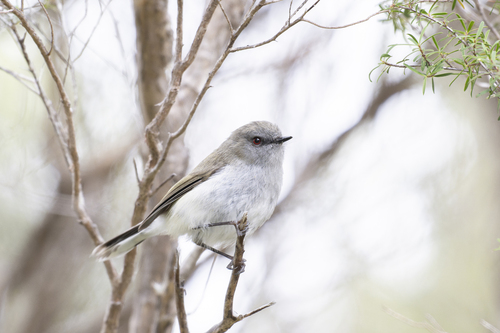
The closest relatives of the Fernbird that you can see in Arthur's Pass National Park (order Passeriformes, Perching Birds) are New Zealand Bellbird (about 90%), Miromiro (about 90%) and Grey Warbler (about 90%), with each one's daily chance of a sighting.

Where does the Fernbird sighting chance come from?

GBIF citizen-science records

It is estimated from how often the Fernbird is recorded against all the birds logged in Arthur's Pass National Park (16 verified sightings from 2019 to 2026), calibrated against known sighting rates. Figures are rounded to the nearest 10% because citizen-science data supports honest approximations, not decimals, and months with records from fewer than five people show "—". How it works.

← Back to Arthur's Pass National Park