Grivet

Grivet

Chlorocebus aethiops

Silhouette: PhyloPic

LCLeast ConcernNTVUENCR
Daily sighting probability ~70% · Very likely
at Awash National Park

In 3 days >90%

12 Verified sightings at Awash National Park From 2019 to 2026
12 In 1 park
July Best month
☀️ Diurnal When it's spotted

About the Grivet

The grivet (Chlorocebus aethiops) is an Old World monkey with long white tufts of hair along the sides of its face. Some authorities consider this and all of the members of the genus Chlorocebus to be a single species, Cercopithecus aethiops. As here defined, the grivet is restricted to Ethiopia, Sudan, Djibouti, and Eritrea. In the southern part of its range, it comes into contact with the closely related vervet monkey (C. pygerythrus) and Bale Mountains vervet (C. djamdjamensis). Hybridization between them is possible, and may present a threat to the vulnerable Bale Mountains vervet. Unlike that species, the grivet is common and rated as least concern by the IUCN.

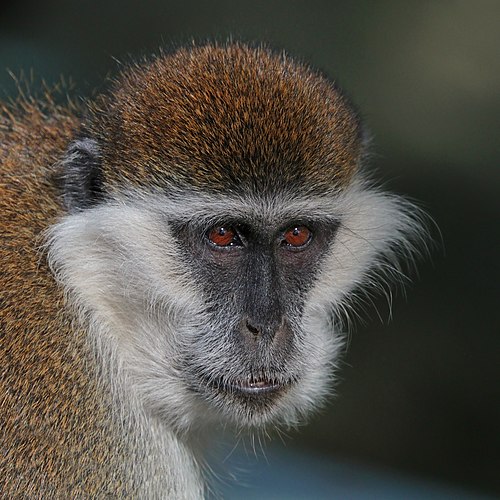
The grivet's facial skin, hands, and feet are black. The face has a white line above the eyes. It has long, white whiskers on the cheeks. The fur on the back has an olive color, while the front is white. The skin on the stomach has a blue tint. The fur has a bristly feel. The approximate head and body length for males is 49 cm (19 in) and 42.6 cm (16.8 in) for females. The length of the tail for males is about 30–50 cm (12–20 in). The body mass ranges from 3.4 to 8.0 kg (7.5 to 17.6 lb), with females... Wikipedia →
Global Distribution

Parks Where Found

# Park Country Daily sighting probability
1 Awash National Park 🇪🇹 Ethiopia
~70%

More parks will be added in future updates.

Cities Where Found

# City Country Daily sighting probability
1 Addis Ababa 🇪🇹 Ethiopia
~20%

Zoos & Centres Where Found

# Zoo / Centre Country
1 Karagandy Zoo 🇰🇿 Kazakhstan In captivity
2 Xinjiang Tianshan Safari Park 🇨🇳 China In captivity
3 Beijing Zoo 🇨🇳 China In captivity
4 Safari Madrid 🇪🇸 Spain In captivity
5 西霞口神雕山野生動物世界 🇨🇳 China In captivity
6 Seoul Zoo 🇰🇷 South Korea In captivity
7 Selwo Aventura 🇪🇸 Spain In captivity
8 Zoo La Barben 🇫🇷 France In captivity
9 Giza Zoo 🇪🇬 Egypt In captivity
10 无锡动物园 🇨🇳 China In captivity
11 Catoctin Wildlife Preserve and Zoo 🇺🇸 United States In captivity
12 Parc de l'Auxois 🇫🇷 France In captivity
13 Zoologischer Garten Magdeburg 🇩🇪 Germany In captivity
14 Öland Zoo and Amusement Park 🇸🇪 Sweden In captivity
15 Havana Zoo 🇨🇺 Cuba In captivity
16 Wingham Wildlife Park 🇬🇧 United Kingdom In captivity
17 Seville Zoo 🇪🇸 Spain In captivity
18 Monkeyland 🇿🇦 South Africa In captivity
19 Van Blanckendaell Park 🇳🇱 Netherlands In captivity
20 Natura Parc 🇪🇸 Spain In captivity
21 Zoo de Martinique 🇫🇷 France In captivity
22 At Adası 🇹🇷 Türkiye In captivity
23 Dijital Hayvanat Bahçesi 🇹🇷 Türkiye In captivity
24 Тюменский зоопарк 🇷🇺 Russia In captivity

Before you go

What are the chances of seeing a Grivet in Awash National Park?

Very likely

About 70% of wildlife watchers report a Grivet sighting in Awash National Park on a given day, based on 12 verified sightings from GBIF citizen-science data from 2019 to 2026. It is the 4th most-seen of the 6 mammals we can rate there. Over three days the chance rises to over 90%, if each day is a fresh chance.

When is the best time to see a Grivet in Awash National Park?

January and July

In those months about 80% of wildlife watchers report a Grivet in Awash National Park on a given day, against about 30% in October, the lowest month. April–June, August and December have too few records to rate.

What time of day is best to see a Grivet?

Between 2 and 5 pm

Across all the parks we cover, that three-hour window holds the most Grivet sightings with a recorded time, and about 7 in 10 of them come between 6 am and 6 pm: it is a daytime animal.

Where else can you see a Grivet?

Only Awash National Park, in our data

Awash National Park is the only park on Wallace's Line with enough records to rate Grivet sightings: about 70% of wildlife watchers there report one on a given day.

Where does the Grivet sighting chance come from?

GBIF citizen-science records

It is estimated from how often the Grivet is recorded against all the mammals logged in Awash National Park (12 verified sightings from 2019 to 2026), calibrated against known sighting rates. Figures are rounded to the nearest 10% because citizen-science data supports honest approximations, not decimals, and months with records from fewer than five people show "—". How it works.

← Back to Awash National Park